Thalictrum longistylum
Thalictrum longistylum · Accepted scientific name
Scientific literature: Very Sparse (13 studies) · ★☆☆☆☆
Thalictrum longistylum, scientifically known as Thalictrum longistylum, is a remarkable medicinal herb native to specific mountainous regions. Renowned for its unique botanical characteristics, this plant holds significant value in traditional medicine. Researchers continue to explore its bioactive compounds, aiming to uncover potential therapeutic applications for various health conditions.
- Family
- Ranunculaceae
- Native range
- Southern America
- Parts used
- Root
- Common names
- Not available
- Scientific synonyms
- Thalictrum Lasiostylum · Thalictrum Rutidocarpum
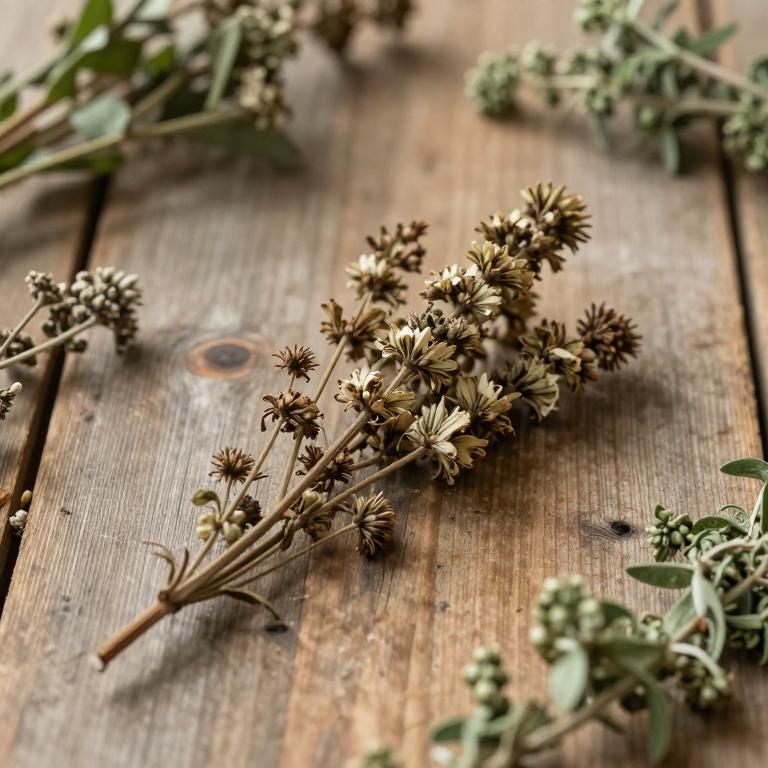
Names and Synonyms
Scientific Names
Accepted name
Thalictrum longistylumSynonyms
- Thalictrum lasiostylum
- Thalictrum rutidocarpum
Sources: Wikidata, Catalogue of Life
Taxonomical Classification
This plant belongs to the kingdom Plantae within the phylum Streptophyta and the class Equisetopsida. It is further classified under the subclass Magnoliidae in the order Ranunculales. Finally, it is a member of the family Ranunculaceae within the genus Thalictrum.
| Rank | Classification |
|---|---|
| Kingdom | Plantae |
| Phylum | Streptophyta |
| Class | Equisetopsida |
| Subclass | Magnoliidae |
| Order | Ranunculales |
| Family | Ranunculaceae |
| Genus | Thalictrum |
Sources: The World Checklist of Vascular Plants (WCVP)
Distribution
This plant is primarily located within the diverse ecosystems of Western South America. Its specific geographical range is concentrated in the Andean regions of the continent. Detailed studies show that it can be found growing in the country of Bolivia. Additionally, the species is documented to inhabit various territories across Ecuador. Finally, its distribution extends further south into the landscapes of Peru.
| Region | Area |
|---|---|
| Western South America | Bolivia |
| Western South America | Ecuador |
| Western South America | Peru |
Sources: The World Checklist of Vascular Plants (WCVP)
Botanical Identification
Morphology
The morphology of Thalictrum longistylum is characterized by its growth form as a non-woody herb, functioning as an independent organism without parasitic tendencies. It is classified as a terrestrial plant, lacking aquatic or semiaquatic adaptations, and does not exhibit epiphytic behavior, remaining firmly rooted in the soil. The plant maintains a self-supporting structure, as it is neither a climber, vine, nor liana, and it lacks any woody tissue, instead possessing a soft, herbaceous stem.
- Aquatic :
- terrestrial
- Climber :
- self-supporting
- Epiphyte :
- terrestrial
- Growth form :
- herb
- Parasite :
- independent
- Woodiness :
- non-woody
Sources: Global Inventory of Floras and Traits (GIFT)
Plant Parts
Thalictrum longistylum has 1 reported plant parts identified across 2 scientific publications and several other databases that are studied for medicinal purposes. The most consistently reported plant part include root.
| Plant part | Supporting sources | Consensus |
|---|---|---|
| Root | 2 supporting sources | ★☆☆☆☆ |
Root
- Journal of natural products
- Lloydia
Chemicals
Thalictrum longistylum has 11 reported phytochemicals identified across 2 scientific publications and several other databases. The most consistently reported chemicals include 8-Trichloromethyldihydroberberine, Columbamine, Jatrorrhizine, Longiberine, Magnoflorine.
| Chemical | Supporting sources | Consensus |
|---|---|---|
| 8-Trichloromethyldihydroberberine | 1 supporting sources | ★☆☆☆☆ |
| Columbamine | 1 supporting sources | ★☆☆☆☆ |
| Jatrorrhizine | 1 supporting sources | ★☆☆☆☆ |
| Longiberine | 1 supporting sources | ★☆☆☆☆ |
| Magnoflorine | 1 supporting sources | ★☆☆☆☆ |
| O-Methyllongiberine | 1 supporting sources | ★☆☆☆☆ |
| Oxyberberine | 1 supporting sources | ★☆☆☆☆ |
| Palmatine | 1 supporting sources | ★☆☆☆☆ |
| THALIBRINE | 1 supporting sources | ★☆☆☆☆ |
| Thaliglucinone | 1 supporting sources | ★☆☆☆☆ |
8-Trichloromethyldihydroberberine
- Lloydia
Columbamine
- Lloydia
Jatrorrhizine
- Lloydia
Longiberine
- Journal of natural products
Magnoflorine
- Lloydia
O-Methyllongiberine
- Journal of natural products
Oxyberberine
- Lloydia
Palmatine
- Lloydia
THALIBRINE
- Lloydia
Thaliglucinone
- Lloydia