Thalictrum faberi
Thalictrum faberi · Accepted scientific name
Scientific literature: Very Sparse (4 studies) · ★☆☆☆☆
Thalictrum faberi, scientifically known as Thalictrum faberi, is a distinctive herbaceous perennial native to specific montane regions. Often valued for its unique botanical characteristics, this plant belongs to the Ranunculaceae family. While primarily studied for its ecological niche, its specific medicinal properties continue to intrigue botanical researchers worldwide.
- Family
- Ranunculaceae
- Native range
- Asia-Temperate
- Parts used
- Root
- Common names
- Not available
- Scientific synonyms
- Not available
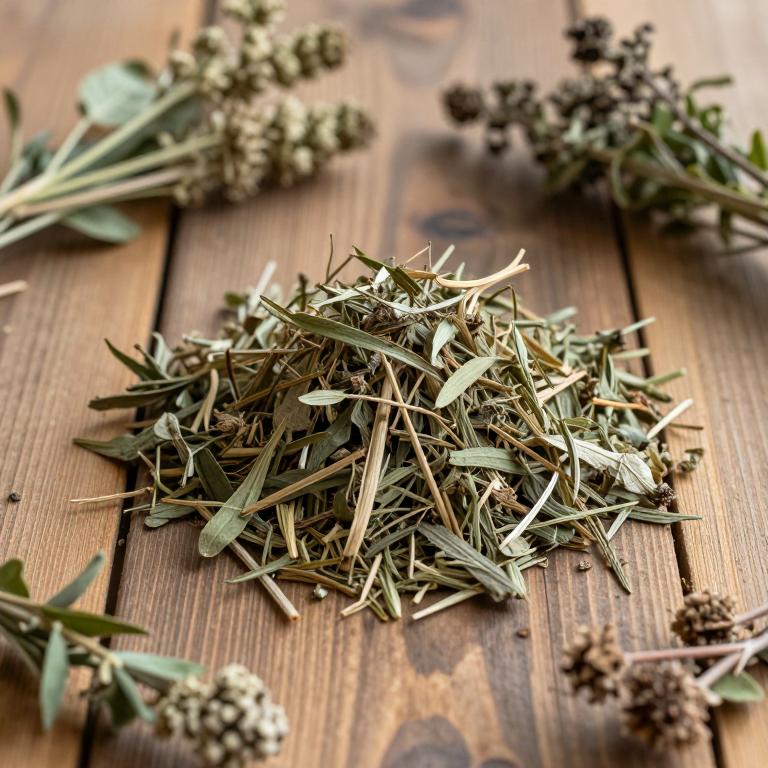
Names and Synonyms
Scientific Names
Accepted name
Thalictrum faberiSources: Wikidata, Catalogue of Life
Taxonomical Classification
This plant, Thalictrum faberi, belongs to the kingdom Plantae and the phylum Streptophyta. It is classified within the class Equisetopsida and subclass Magnoliidae, falling under the order Ranunculales. Finally, it is a member of the family Ranunculaceae and the genus Thalictrum.
| Rank | Classification |
|---|---|
| Kingdom | Plantae |
| Phylum | Streptophyta |
| Class | Equisetopsida |
| Subclass | Magnoliidae |
| Order | Ranunculales |
| Family | Ranunculaceae |
| Genus | Thalictrum |
Sources: The World Checklist of Vascular Plants (WCVP)
Distribution
This plant is primarily found within the specific regions of Southeast China. Its geographical range is relatively concentrated within this particular part of the country. Because of this limited distribution, it is considered a native species of the Chinese Southeast landscape. Researchers often focus on these specific habitats when studying its natural environment. Consequently, understanding its presence in Southeast China is essential for its conservation.
| Region | Area |
|---|---|
| China | China Southeast |
Sources: The World Checklist of Vascular Plants (WCVP)
Botanical Identification
Ecology
The ecology of Thalictrum faberi is characterized by its specific distribution across varying altitudinal gradients within its native montane habitats. This species occupies a distinct elevational niche, typically found at altitudes ranging from a minimum of 600 m AMSL to a maximum of 1300 m AMSL. Within this vertical range, the plant maintains a mean elevation of approximately 950 m AMSL, suggesting a preference for mid-elevation montane ecosystems where environmental conditions such as temperature, moisture availability, and soil composition are optimized for its growth and survival.
- Elevational range max:
- 1300 m AMSL
- Elevational range mean:
- 950 m AMSL
- Elevational range min:
- 600 m AMSL
Life history
The life history of Thalictrum faberi is characterized by its status as a perennial species, meaning it persists through multiple growing seasons rather than completing its life cycle in a single year. As a perennial, the plant establishes a robust root system that allows it to survive dormant periods, typically during winter or unfavorable environmental conditions, before emerging again in subsequent years. This lifecycle enables the plant to accumulate resources over time, often leading to increased biomass and more prolific flowering and seed production as the individual matures. Through this perennial strategy, Thalictrum faberi can maintain a stable presence within its ecological niche, utilizing its recurring growth cycles to adapt to seasonal fluctuations.
- Lifecycle :
- perennial
Morphology
The morphology of Thalictrum faberi is characterized by its growth form as a herb, presenting a structure that lacks significant lignification. It is classified as non-woody in terms of its woodiness, maintaining a succulent or herbaceous consistency throughout its stems. Additionally, the plant functions as a self-supporting climber, meaning it possesses the structural integrity to ascend or spread without relying on obligatory or facultative climbing mechanisms to maintain its upright or spreading posture.
- Climber :
- self-supporting
- Growth form :
- herb
- Woodiness :
- non-woody
Physiology
The physiology of Thalictrum faberi is characterized by distinct morphological dimensions in its foliar structures, which play a critical role in its photosynthetic capacity and resource acquisition. The leaf morphology exhibits significant variability, with leaf lengths ranging from a minimum of 5 cm to a maximum of 10 cm, resulting in a calculated mean leaf length of 7.5 cm. Similarly, the leaf width shows a broad physiological range, spanning from a minimum of 3.5 cm to a maximum of 9 cm, with a mean width of 6.25 cm. These dimensions suggest a flexible leaf surface area adaptation, allowing the plant to optimize light interception and gas exchange within its specific ecological niche.
- Leaf length max:
- 10 cm
- Leaf length mean:
- 7.5 cm
- Leaf length min:
- 5 cm
- Leaf width max:
- 9 cm
- Leaf width mean:
- 6.25 cm
- Leaf width min:
- 3.5 cm
Reproduction
The reproduction of Thalictrum faberi is characterized by its specific inflorescence and fruit development patterns. The plant produces an inflorescence that typically ranges in length from a minimum of 0.2 m to a maximum of 0.4 m. Following pollination, the development of the fruit is marked by relatively small dimensions, with fruit lengths measuring as little as 0.5 cm at the minimum and reaching up to 0.6 cm at the maximum. On average, the fruit length of this species is approximately 0.55 cm, reflecting a consistent reproductive structure throughout its growth cycle.
- Fruit length max:
- 0.6 cm
- Fruit length mean:
- 0.55 cm
- Fruit length min:
- 0.5 cm
- Inflorescence length max:
- 0.4 m
- Inflorescence length min:
- 0.2 m
Sources: Global Inventory of Floras and Traits (GIFT)
Plant Parts
Thalictrum faberi has 1 reported plant parts identified across 1 scientific publications and several other databases that are studied for medicinal purposes. The most consistently reported plant part include root.
| Plant part | Supporting sources | Consensus |
|---|---|---|
| Root | 1 supporting sources | ★☆☆☆☆ |
Root
- Phytochemistry
Activities
Thalictrum faberi has 2 reported activities identified across 1 scientific publications and several other databases. The most consistently reported activities include Antimalarial, Cytotoxic.
| Activity | Supporting sources | Consensus |
|---|---|---|
| Antimalarial | 1 supporting sources | ★☆☆☆☆ |
| Cytotoxic | 1 supporting sources | ★☆☆☆☆ |
Antimalarial
- Phytochemistry
Cytotoxic
- Phytochemistry
Conditions
Thalictrum faberi has 1 reported investigations on conditions identified across 1 scientific publications and several other databases. The most consistently reported conditions include antimalarial.
| Condition | Supporting sources | Consensus |
|---|---|---|
| Antimalarial | 1 supporting sources | ★☆☆☆☆ |
Antimalarial
- Phytochemistry