Teucrium yemense
Teucrium yemense · Accepted scientific name
Scientific literature: Very Sparse (20 studies) · ★☆☆☆☆
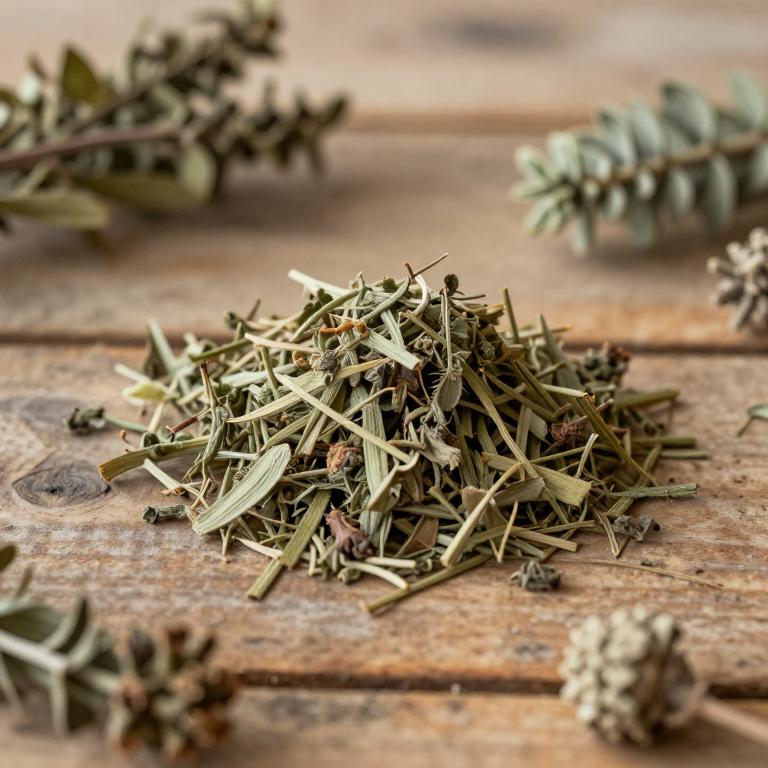
, scientifically known as Teucrium yemense, is a charming evergreen shrub prized for its silvery-grey foliage and delicate lavender blooms. Often used in ornamental landscaping, this hardy plant thrives in sunny spots. Beyond its beauty, it holds traditional significance in various cultures for its potential therapeutic and medicinal properties.
- Family
- Lamiaceae
- Native range
- Africa
- Parts used
- Not available
- Common names
- Not available
- Scientific synonyms
- Teucrium Spicastrum
Names and Synonyms
Scientific Names
Accepted name
Teucrium yemenseSynonyms
- Teucrium spicastrum
Sources: Wikidata
Taxonomical Classification
This plant belongs to the kingdom Plantae and the phylum Streptophyta. Within the class Equisetopsida and subclass Magnoliidae, it is classified under the order Lamiales and the family Lamiaceae. Finally, its specific taxonomic designation is within the genus Teucrium.
| Rank | Classification |
|---|---|
| Kingdom | Plantae |
| Phylum | Streptophyta |
| Class | Equisetopsida |
| Subclass | Magnoliidae |
| Order | Lamiales |
| Family | Lamiaceae |
| Genus | Teucrium |
Sources: The World Checklist of Vascular Plants (WCVP)
Distribution
This plant exhibits a specific geographical range concentrated within Northeast Tropical Africa and the Arabian Peninsula. In the African region, it can be found across several countries including Djibouti, Ethiopia, and Somalia. Its distribution also extends through the territory of Sudan and South Sudan. Moving into the Middle East, the species is recorded in the Arabian Peninsula. Specifically, it is known to inhabit the nation of Oman.
| Region | Area |
|---|---|
| Northeast Tropical Africa | Djibouti |
| Northeast Tropical Africa | Ethiopia |
| Northeast Tropical Africa | Somalia |
| Northeast Tropical Africa | Sudan-South Sudan |
| Arabian Peninsula | Oman |
| Arabian Peninsula | Saudi Arabia |
| Arabian Peninsula | Yemen |
Sources: The World Checklist of Vascular Plants (WCVP)
Botanical Identification
Life history
The life history of Teucrium yemense is characterized by its growth habit as a chamaephyte, a life form where the majority of the plant's shoot system remains close to the soil surface, often protected by the ground or leaf litter. This perennial strategy allows the plant to persist through varying environmental conditions by maintaining a compact, low-growing structure. As it progresses through its life cycle, the plant develops woody stems that can exhibit characteristics transitioning between a chamaephyte and a nanophanerophyte, depending on the specific environmental niche and the extent of its perennial woody development. Its reproductive phase involves the production of small, specialized flowers that facilitate genetic dispersal, while its vegetative persistence is supported by a resilient root system that anchors its low-profile canopy, ensuring survival across multiple growing seasons.
- Life form :
- chamaephyte
Morphology
The morphology of Teucrium yemense is characterized by a shrub growth form that exhibits a woody structure. It functions as an independent organism, meaning it does not act as a parasite, and it maintains a terrestrial existence rather than an epiphytic one. Although it possesses certain spreading qualities, its climbing habit is classified as self-supporting.
- Climber :
- self-supporting
- Epiphyte :
- terrestrial
- Growth form :
- shrub
- Parasite :
- independent
- Woodiness :
- woody
Sources: Global Inventory of Floras and Traits (GIFT)
Chemicals
Teucrium yemense has 9 reported phytochemicals identified across 0 scientific publications and several other databases. The most consistently reported chemicals include 8-Acetylharpagide, Fatimanol A, Fatimanol B, Fatimanol C, Fatimanol D.
| Chemical | Supporting sources | Consensus |
|---|---|---|
| 8-Acetylharpagide | 1 supporting sources | ★☆☆☆☆ |
| Fatimanol A | 1 supporting sources | ★☆☆☆☆ |
| Fatimanol B | 1 supporting sources | ★☆☆☆☆ |
| Fatimanol C | 1 supporting sources | ★☆☆☆☆ |
| Fatimanol D | 1 supporting sources | ★☆☆☆☆ |
| Fatimanol E | 1 supporting sources | ★☆☆☆☆ |
| Fatimanone | 1 supporting sources | ★☆☆☆☆ |
| Neoclerodanes | 1 supporting sources | ★☆☆☆☆ |
| teucardosid | 1 supporting sources | ★☆☆☆☆ |
8-Acetylharpagide
- RSC advances
Fatimanol A
- Journal of natural products
Fatimanol B
- Journal of natural products
Fatimanol C
- Journal of natural products
Fatimanol D
- Journal of natural products
Fatimanol E
- Journal of natural products
Fatimanone
- Journal of natural products
Neoclerodanes
- Scientific reports
teucardosid
- RSC advances
Activities
Teucrium yemense has 2 reported activities identified across 0 scientific publications and several other databases. The most consistently reported activities include Anthelmintic, Antimicrobial.
| Activity | Supporting sources | Consensus |
|---|---|---|
| Anthelmintic | 1 supporting sources | ★☆☆☆☆ |
| Antimicrobial | 1 supporting sources | ★☆☆☆☆ |
Anthelmintic
- Journal of natural products
Antimicrobial
- Journal of natural products
Conditions
Teucrium yemense has 4 reported investigations on conditions identified across 0 scientific publications and several other databases. The most consistently reported conditions include rheumatism, Gram-positive bacteria, infections, kidney diseases.
| Condition | Supporting sources | Consensus |
|---|---|---|
| Rheumatism | 2 supporting sources | ★☆☆☆☆ |
| Gram-positive bacteria | 1 supporting sources | ★☆☆☆☆ |
| Infections | 1 supporting sources | ★☆☆☆☆ |
| Kidney diseases | 1 supporting sources | ★☆☆☆☆ |
Rheumatism
- Scientific reports
- RSC advances
Gram-positive bacteria
- Die Pharmazie
Infections
- Scientific reports
Kidney diseases
- Scientific reports
Preparations
Teucrium yemense has 2 reported preparations identified across 0 scientific publications and several other databases. The most consistently reported preparations include dried aerial parts of the plant with methanol, ethanolic extracts.
| Preparation | Supporting sources | Consensus |
|---|---|---|
| Dried aerial parts of the plant with methanol | 1 supporting sources | ★☆☆☆☆ |
| Ethanolic extracts | 1 supporting sources | ★☆☆☆☆ |
Dried aerial parts of the plant with methanol
- Scientific reports
Ethanolic extracts
- Journal of gastrointestinal cancer