Teucrium stocksianum
Teucrium stocksianum · Accepted scientific name
Scientific literature: Very Sparse (41 studies) · ★☆☆☆☆
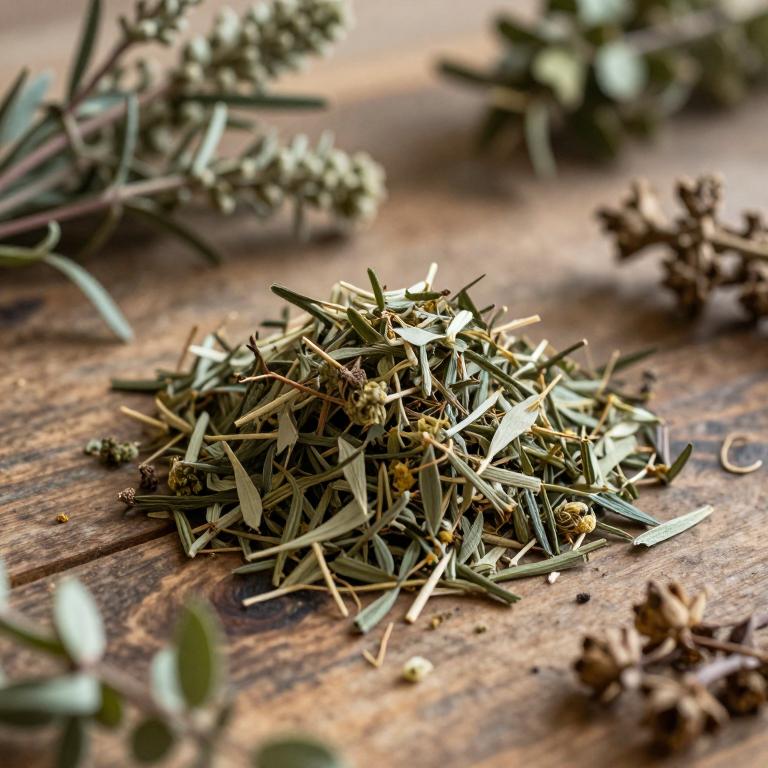
Teucrium stocksianum, scientifically known as Teucrium stocksianum, is a distinctive medicinal herb native to specific Mediterranean regions. Valued for its unique phytochemical profile, this plant offers traditional therapeutic potential. Exploring its botanical characteristics and bioactive properties provides essential insights into its role within ethnobotanical practices and natural pharmacology.
- Family
- Lamiaceae
- Native range
- Asia-Temperate
- Parts used
- Not available
- Common names
- Not available
- Scientific synonyms
- Not available
Names and Synonyms
Scientific Names
Accepted name
Teucrium stocksianumSources: Wikidata
Taxonomical Classification
This plant belongs to the kingdom Plantae within the phylum Streptophyta and the class Equisetopsida. Following the subclass Magnoliidae, it is classified under the order Lamiales and the family Lamiaceae. Finally, it is identified by the genus Teucrium.
| Rank | Classification |
|---|---|
| Kingdom | Plantae |
| Phylum | Streptophyta |
| Class | Equisetopsida |
| Subclass | Magnoliidae |
| Order | Lamiales |
| Family | Lamiaceae |
| Genus | Teucrium |
Sources: The World Checklist of Vascular Plants (WCVP)
Distribution
This plant is distributed across several key regions within Western Asia and the Arabian Peninsula. In Western Asia, its range extends through the territories of Afghanistan and Iran. Moving toward the Arabian Peninsula, it is found throughout the various Gulf States. The species also has a notable presence in the country of Oman. Finally, its geographical reach includes the vast landscapes of Saudi Arabia.
| Region | Area |
|---|---|
| Western Asia | Afghanistan |
| Western Asia | Iran |
| Arabian Peninsula | Gulf States |
| Arabian Peninsula | Oman |
| Arabian Peninsula | Saudi Arabia |
| Indian Subcontinent | India |
| Indian Subcontinent | Pakistan |
Sources: The World Checklist of Vascular Plants (WCVP)
Botanical Identification
Ecology
The ecology of Teucrium stocksianum is closely tied to its specific altitudinal distribution, which dictates its environmental adaptations and habitat preferences. This species thrives across a significant vertical gradient, occupying diverse montane zones within its range. Its distribution begins at lower elevations of approximately 700 m AMSL and extends upward to a maximum altitude of 2100 m AMSL. The species reaches its ecological optimum at a mean elevation of 1300 m AMSL, suggesting that its physiological requirements for temperature, moisture, and light are most effectively met within this mid-altitude belt. This wide elevational breadth indicates a degree of adaptability to varying atmospheric pressures and thermal fluctuations characteristic of sloping terrains.
- Elevational range max:
- 2100 m AMSL
- Elevational range mean:
- 1300 m AMSL
- Elevational range min:
- 700 m AMSL
Sources: Global Inventory of Floras and Traits (GIFT)
Chemicals
Teucrium stocksianum has 7 reported phytochemicals identified across 0 scientific publications and several other databases. The most consistently reported chemicals include Flavonoids, Germacrene D, LIMONENE, MYRCENE, Saponins.
| Chemical | Supporting sources | Consensus |
|---|---|---|
| Flavonoids | 1 supporting sources | ★☆☆☆☆ |
| Germacrene D | 1 supporting sources | ★☆☆☆☆ |
| LIMONENE | 1 supporting sources | ★☆☆☆☆ |
| MYRCENE | 1 supporting sources | ★☆☆☆☆ |
| Saponins | 1 supporting sources | ★☆☆☆☆ |
| Tannins | 1 supporting sources | ★☆☆☆☆ |
| Terpenoids | 1 supporting sources | ★☆☆☆☆ |
Flavonoids
- BMC complementary and alternative medicine
Germacrene D
- BMC complementary and alternative medicine
LIMONENE
- BMC complementary and alternative medicine
MYRCENE
- BMC complementary and alternative medicine
Saponins
- BMC complementary and alternative medicine
Tannins
- BMC complementary and alternative medicine
Terpenoids
- BMC complementary and alternative medicine
Activities
Teucrium stocksianum has 9 reported activities identified across 0 scientific publications and several other databases. The most consistently reported activities include Antioxidant, Antinociceptive, Analgesic, Anthelmintic, Antibacterial.
| Activity | Supporting sources | Consensus |
|---|---|---|
| Antioxidant | 3 supporting sources | ★★☆☆☆ |
| Antinociceptive | 2 supporting sources | ★☆☆☆☆ |
| Analgesic | 1 supporting sources | ★☆☆☆☆ |
| Anthelmintic | 1 supporting sources | ★☆☆☆☆ |
| Antibacterial | 1 supporting sources | ★☆☆☆☆ |
| Antifungal | 1 supporting sources | ★☆☆☆☆ |
| Antimicrobial | 1 supporting sources | ★☆☆☆☆ |
| Antispasmodic | 1 supporting sources | ★☆☆☆☆ |
| Cytotoxic | 1 supporting sources | ★☆☆☆☆ |
Antioxidant
- Toxicology and industrial health
- Pakistan journal of pharmaceutical sciences
- BMC complementary and alternative medicine
Antinociceptive
- BMC complementary and alternative medicine
- Pakistan journal of pharmaceutical sciences
Analgesic
- BMC complementary and alternative medicine
Anthelmintic
- BMC complementary and alternative medicine
Antibacterial
- Toxicology and industrial health
Antifungal
- Toxicology and industrial health
Antimicrobial
- Toxicology and industrial health
Antispasmodic
- BMC complementary and alternative medicine
Cytotoxic
- BMC complementary and alternative medicine
Conditions
Teucrium stocksianum has 18 reported investigations on conditions identified across 0 scientific publications and several other databases. The most consistently reported conditions include Aspergillus flavus, Aspergillus fumigatus, Aspergillus niger, Bacillus subtilis, Escherichia coli.
| Condition | Supporting sources | Consensus |
|---|---|---|
| Aspergillus flavus | 1 supporting sources | ★☆☆☆☆ |
| Aspergillus fumigatus | 1 supporting sources | ★☆☆☆☆ |
| Aspergillus niger | 1 supporting sources | ★☆☆☆☆ |
| Bacillus subtilis | 1 supporting sources | ★☆☆☆☆ |
| Escherichia coli | 1 supporting sources | ★☆☆☆☆ |
| Hiv | 1 supporting sources | ★☆☆☆☆ |
| Leishmania tropica | 1 supporting sources | ★☆☆☆☆ |
| Salmonella typhi | 1 supporting sources | ★☆☆☆☆ |
| Shigella flexneri | 1 supporting sources | ★☆☆☆☆ |
| Staphylococcus aureus | 1 supporting sources | ★☆☆☆☆ |
Aspergillus flavus
- Toxicology and industrial health
Aspergillus fumigatus
- Toxicology and industrial health
Aspergillus niger
- Toxicology and industrial health
Bacillus subtilis
- Toxicology and industrial health
Escherichia coli
- Toxicology and industrial health
Hiv
- Journal of medical virology
Leishmania tropica
- Toxicology and industrial health
Salmonella typhi
- Toxicology and industrial health
Shigella flexneri
- Toxicology and industrial health
Staphylococcus aureus
- Toxicology and industrial health
Preparations
Teucrium stocksianum has 9 reported preparations identified across 0 scientific publications and several other databases. The most consistently reported preparations include Essential oil, aqueous extract, crude extract, crude methanolic extract, essential oil.
| Preparation | Supporting sources | Consensus |
|---|---|---|
| Essential oil | 1 supporting sources | ★☆☆☆☆ |
| Aqueous extract | 1 supporting sources | ★☆☆☆☆ |
| Crude extract | 1 supporting sources | ★☆☆☆☆ |
| Crude methanolic extract | 1 supporting sources | ★☆☆☆☆ |
| Essential oil | 1 supporting sources | ★☆☆☆☆ |
| Ethanolic extract | 1 supporting sources | ★☆☆☆☆ |
| Extracts | 1 supporting sources | ★☆☆☆☆ |
| Isolated water fraction | 1 supporting sources | ★☆☆☆☆ |
| Methanolic extract | 1 supporting sources | ★☆☆☆☆ |
Essential oil
- BMC complementary and alternative medicine
Aqueous extract
- BMC complementary and alternative medicine
Crude extract
- Toxicology and industrial health
Crude methanolic extract
- Pakistan journal of pharmaceutical sciences
Essential oil
- BMC complementary and alternative medicine
Ethanolic extract
- General pharmacology
Extracts
- Journal of medical virology
Isolated water fraction
- Pakistan journal of pharmaceutical sciences
Methanolic extract
- BMC complementary and alternative medicine