Camel Bush
Teucrium sessiliflorum · Accepted scientific name
Scientific literature: Very Sparse (6 studies) · ★☆☆☆☆
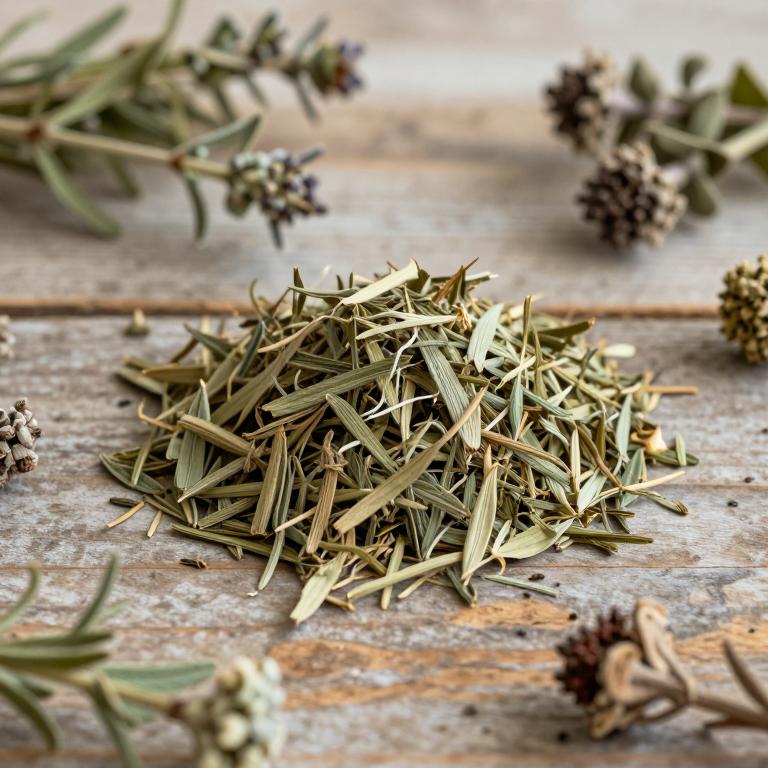
Camel Bush, scientifically known as Teucrium sessiliflorum, is a resilient medicinal shrub native to specific arid regions. Renowned for its therapeutic potential, this plant is traditionally utilized in folk medicine to treat various ailments. Its unique chemical composition offers intriguing possibilities for pharmacological research and natural healing practices.
- Family
- Lamiaceae
- Native range
- Australasia
- Parts used
- Leaf
- Common names
- Camel Bush
- Scientific synonyms
- Not available
Names and Synonyms
Common Names
- Camel Bush
Scientific Names
Accepted name
Teucrium sessiliflorumSources: Wikidata, Catalogue of Life
Taxonomical Classification
This plant belongs to the kingdom Plantae and is classified under the phylum Streptophyta and class Equisetopsida. Within the subclass Magnoliidae, it is ordered under Lamiales and placed in the family Lamiaceae. Finally, it is identified by the genus Teucrium, specifically as the species Teucrium sessiliflorum.
| Rank | Classification |
|---|---|
| Kingdom | Plantae |
| Phylum | Streptophyta |
| Class | Equisetopsida |
| Subclass | Magnoliidae |
| Order | Lamiales |
| Family | Lamiaceae |
| Genus | Teucrium |
Sources: The World Checklist of Vascular Plants (WCVP)
Distribution
This plant is native to the diverse landscapes found across several different regions of Australia. Its geographical range is notably broad, spanning multiple states within the continent. Specifically, it can be located in the eastern state of New South Wales. Furthermore, populations of this species are established in South Australia and Victoria. Finally, its distribution extends all the way to the western reaches of Western Australia.
| Region | Area |
|---|---|
| Australia | New South Wales |
| Australia | South Australia |
| Australia | Victoria |
| Australia | Western Australia |
Sources: The World Checklist of Vascular Plants (WCVP)
Botanical Identification
Life history
The life history of Teucrium sessiliflorum is characterized by its status as a perennial species, meaning it persists through multiple growing seasons rather than completing its life cycle in a single year. As a perennial, the plant maintains a stable presence in its habitat, often developing robust root systems or woody bases that allow it to survive periods of dormancy and regrow during favorable environmental conditions. This long-term survival strategy enables the plant to accumulate resources over several years, contributing to its reproductive longevity and its ability to inhabit specific ecological niches within its range.
- Lifecycle :
- perennial
Morphology
The morphology of Teucrium sessiliflorum is characterized by a low-growing, herbaceous growth form that is strictly non-woody in structure. As a self-supporting plant, it lacks climbing mechanisms and functions as an independent organism, showing no parasitic or epiphytic tendencies, as it is primarily terrestrial in its habitat. The plant maintains a diminutive stature, with a height ranging from a minimum of 0.05 m to a maximum of 0.3 m. Its ecological niche is defined by its terrestrial nature, though it can inhabit environments ranging from aquatic to semiaquatic conditions.
- Aquatic :
- terrestrial
- Climber :
- self-supporting
- Epiphyte :
- terrestrial
- Growth form :
- herb
- Parasite :
- independent
- Plant height max:
- 0.3 m
- Plant height min:
- 0.05 m
- Woodiness :
- non-woody
Physiology
The physiology of Teucrium sessiliflorum is closely integrated with its morphological structure, particularly regarding its foliar characteristics which govern gas exchange and photosynthetic efficiency. The leaves exhibit significant dimensional variability, with individual lengths ranging from a minimum of 0.5 cm to a maximum of 3 cm. This variation in surface area is complemented by a width profile that fluctuates between a minimum of 0.3 cm and a maximum of 1.5 cm. These specific leaf dimensions play a critical role in the plant's metabolic processes, as the ratio of length to width influences the transpiration rates and the capacity for light interception within its specific ecological niche. By managing these leaf dimensions, the plant optimizes its physiological response to environmental stressors, balancing the necessity of carbon fixation through its surface area with the regulatory requirements of moisture retention.
- Leaf length max:
- 3 cm
- Leaf length min:
- 0.5 cm
- Leaf width max:
- 1.5 cm
- Leaf width min:
- 0.3 cm
Sources: Global Inventory of Floras and Traits (GIFT)
Plant Parts
Teucrium sessiliflorum has 1 reported plant parts identified across 1 scientific publications and several other databases that are studied for medicinal purposes. The most consistently reported plant part include leaf.
| Plant part | Supporting sources | Consensus |
|---|---|---|
| Leaf | 1 supporting sources | ★☆☆☆☆ |
Leaf
- Plants (Basel, Switzerland)
Chemicals
Teucrium sessiliflorum has 3 reported phytochemicals identified across 1 scientific publications and several other databases. The most consistently reported chemicals include Condensed Tannin, Flavonoid, polyphenols.
| Chemical | Supporting sources | Consensus |
|---|---|---|
| Condensed Tannin | 1 supporting sources | ★☆☆☆☆ |
| Flavonoid | 1 supporting sources | ★☆☆☆☆ |
| polyphenols | 1 supporting sources | ★☆☆☆☆ |
Condensed Tannin
- Heliyon
Flavonoid
- Heliyon
polyphenols
- Heliyon
Activities
Teucrium sessiliflorum has 2 reported activities identified across 1 scientific publications and several other databases. The most consistently reported activities include Antimicrobial, Antioxidant.
| Activity | Supporting sources | Consensus |
|---|---|---|
| Antimicrobial | 1 supporting sources | ★☆☆☆☆ |
| Antioxidant | 1 supporting sources | ★☆☆☆☆ |
Antimicrobial
- Heliyon
Antioxidant
- Heliyon
Preparations
Teucrium sessiliflorum has 2 reported preparations identified across 1 scientific publications and several other databases. The most consistently reported preparations include aqueous extract, distilled water.
| Preparation | Supporting sources | Consensus |
|---|---|---|
| Aqueous extract | 1 supporting sources | ★☆☆☆☆ |
| Distilled water | 1 supporting sources | ★☆☆☆☆ |
Aqueous extract
- Plants (Basel, Switzerland)
Distilled water
- Heliyon