Teucrium ramosissimum
Teucrium ramosissimum · Accepted scientific name
Scientific literature: Very Sparse (12 studies) · ★☆☆☆☆
Teucrium ramosissimum, scientifically known as Teucrium ramosissimum, is a resilient medicinal shrub prized for its therapeutic properties. Belonging to the Lamiaceae family, this plant is often utilized in traditional healing practices to address various ailments, offering a natural approach to wellness through its unique phytochemical composition and bioactive compounds.
- Family
- Lamiaceae
- Native range
- Africa
- Parts used
- Leaf
- Common names
- Not available
- Scientific synonyms
- Teucrium Saxatile Var. Getulum
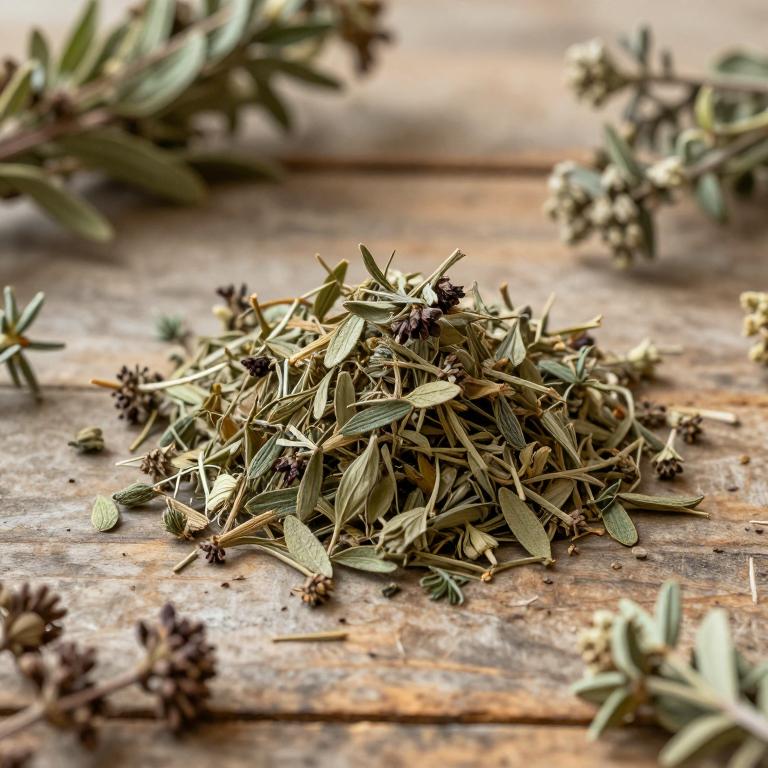
Names and Synonyms
Scientific Names
Accepted name
Teucrium ramosissimumSynonyms
- Teucrium saxatile var. getulum
Sources: Wikidata
Taxonomical Classification
This plant belongs to the kingdom Plantae and is classified within the phylum Streptophyta and the class Equisetopsida. As a member of the subclass Magnoliidae and the order Lamiales, it falls under the family Lamiaceae. Finally, its specific taxonomic identity is defined by the genus Teucrium.
| Rank | Classification |
|---|---|
| Kingdom | Plantae |
| Phylum | Streptophyta |
| Class | Equisetopsida |
| Subclass | Magnoliidae |
| Order | Lamiales |
| Family | Lamiaceae |
| Genus | Teucrium |
Sources: The World Checklist of Vascular Plants (WCVP)
Distribution
This plant is native to the specific landscapes found across Northern Africa. Its presence is primarily concentrated within the territories of Algeria, Morocco, and Tunisia. Within these Mediterranean regions, it occupies distinct ecological niches that support its growth. The distribution pattern shows a clear regional focus across these three North African nations. Consequently, its natural habitat is limited to this particular part of the African continent.
| Region | Area |
|---|---|
| Northern Africa | Algeria |
| Northern Africa | Morocco |
| Northern Africa | Tunisia |
Sources: The World Checklist of Vascular Plants (WCVP)
Plant Parts
Teucrium ramosissimum has 1 reported plant parts identified across 1 scientific publications and several other databases that are studied for medicinal purposes. The most consistently reported plant part include leaf.
| Plant part | Supporting sources | Consensus |
|---|---|---|
| Leaf | 1 supporting sources | ★☆☆☆☆ |
Leaf
- Environmental toxicology and pharmacology
Chemicals
Teucrium ramosissimum has 8 reported phytochemicals identified across 1 scientific publications and several other databases. The most consistently reported chemicals include Genkwanin, Apigenin 7-glucoside, CHLOROFORM, Cirsimaritin, ETHYL ACETATE.
| Chemical | Supporting sources | Consensus |
|---|---|---|
| Genkwanin | 2 supporting sources | ★☆☆☆☆ |
| Apigenin 7-glucoside | 1 supporting sources | ★☆☆☆☆ |
| CHLOROFORM | 1 supporting sources | ★☆☆☆☆ |
| Cirsimaritin | 1 supporting sources | ★☆☆☆☆ |
| ETHYL ACETATE | 1 supporting sources | ★☆☆☆☆ |
| Flavonoids | 1 supporting sources | ★☆☆☆☆ |
| apigenin | 1 supporting sources | ★☆☆☆☆ |
| naringenin | 1 supporting sources | ★☆☆☆☆ |
Genkwanin
- Tumour biology : the journal of the International Society for Oncodevelopmental Biology and Medicine
- Environmental toxicology and pharmacology
Apigenin 7-glucoside
- Tumour biology : the journal of the International Society for Oncodevelopmental Biology and Medicine
CHLOROFORM
- Immunopharmacology and immunotoxicology
Cirsimaritin
- Environmental toxicology and pharmacology
ETHYL ACETATE
- Immunopharmacology and immunotoxicology
Flavonoids
- Immunopharmacology and immunotoxicology
apigenin
- Environmental toxicology and pharmacology
naringenin
- Tumour biology : the journal of the International Society for Oncodevelopmental Biology and Medicine
Activities
Teucrium ramosissimum has 1 reported activities identified across 1 scientific publications and several other databases. The most consistently reported activities include Antiulcerogenic.
| Activity | Supporting sources | Consensus |
|---|---|---|
| Antiulcerogenic | 1 supporting sources | ★☆☆☆☆ |
Antiulcerogenic
- Immunopharmacology and immunotoxicology
Conditions
Teucrium ramosissimum has 1 reported investigations on conditions identified across 1 scientific publications and several other databases. The most consistently reported conditions include inflammation.
| Condition | Supporting sources | Consensus |
|---|---|---|
| Inflammation | 1 supporting sources | ★☆☆☆☆ |
Inflammation
- Immunopharmacology and immunotoxicology