mountain germander
Teucrium montanum · Accepted scientific name
Scientific literature: Very Extensive (286 studies) · ★★★★★
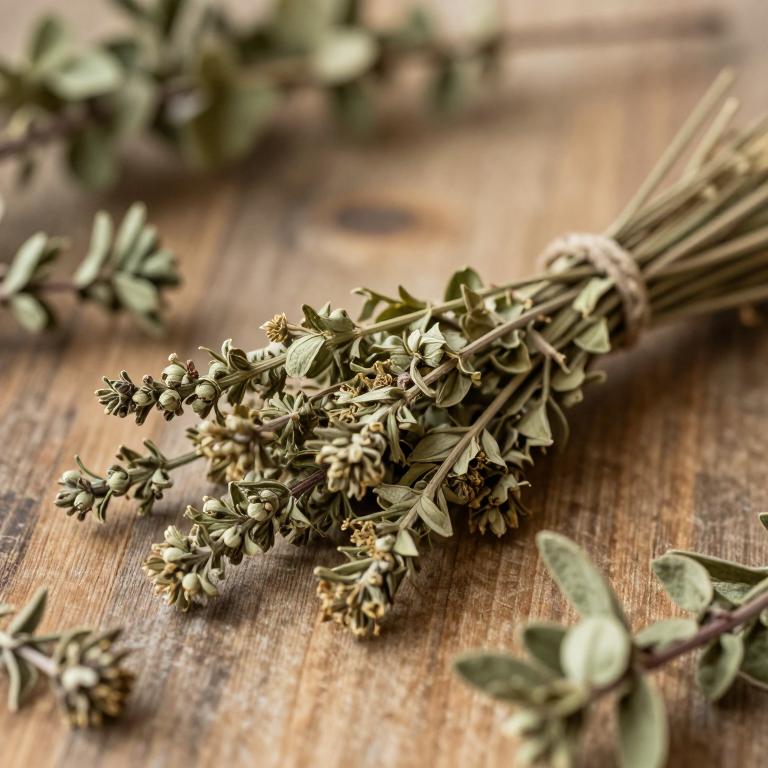
Mountain germander, scientifically known as Teucrium montanum, is a perennial herb native to the mountainous regions of Africa. Traditionally valued in folk medicine, this plant is frequently utilized for its potential therapeutic properties, particularly in treating respiratory ailments, digestive issues, and inflammatory conditions through its diverse bioactive compounds.
- Family
- Lamiaceae
- Native range
- Europe
- Parts used
- Leaf
- Common names
- Mountain Germander
- Scientific synonyms
- Polium Montanum · Chamaedrys Montana
Names and Synonyms
Common Names
- Mountain Germander
Scientific Names
Accepted name
Teucrium montanumSynonyms
- Polium montanum
- Chamaedrys montana
Regional and Traditional Names
Spanish:
- Chamaedrys montana
- Polium montanum
- zamarrilla de hojas de espliego
German:
- Berg-Gamander
- Berg-Gamander
French:
- Germandrée des montagnes
- Germandree des montagnes
- germandrée des montagnes
- Germandree des montagnes
- Germandrée des montagnes
Sources: Wikidata, Catalogue of Life
Taxonomical Classification
This plant belongs to the kingdom Plantae and is classified within the phylum Streptophyta and the class Equisetopsida. Under the subclass Magnoliidae, it is placed in the order Lamiales and the family Lamiaceae. Finally, it is identified by its specific genus, Teucrium.
| Rank | Classification |
|---|---|
| Kingdom | Plantae |
| Phylum | Streptophyta |
| Class | Equisetopsida |
| Subclass | Magnoliidae |
| Order | Lamiales |
| Family | Lamiaceae |
| Genus | Teucrium |
Sources: The World Checklist of Vascular Plants (WCVP)
Distribution
This plant exhibits a specific presence across various regions within Middle Europe. It can be found growing in the landscapes of Austria and Germany. Its distribution also extends to the territories of Belgium. Furthermore, the species is documented within the Czechia-Slovakia region. Finally, the geographical range of this medicinal plant includes Hungary.
| Region | Area |
|---|---|
| Middle Europe | Austria |
| Middle Europe | Belgium |
| Middle Europe | Czechia-Slovakia |
| Middle Europe | Germany |
| Middle Europe | Hungary |
| Middle Europe | Netherlands |
| Middle Europe | Poland |
| Middle Europe | Switzerland |
| Southwestern Europe | France |
| Southwestern Europe | Sardegna |
Sources: The World Checklist of Vascular Plants (WCVP)
Botanical Identification
Ecology
The ecology of Teucrium montanum is fundamentally defined by its specialized adaptation to calcareous landscapes, specifically thriving within limestone-rich environments. This species occupies rocky, well-drained terrains where the alkaline nature of the substrate dictates the available nutrient profile and soil chemistry. By colonizing these limestone habitats, the plant has developed a niche tolerance for high calcium concentrations and the physiological stresses associated with thin, rocky soils. This preference for lithic substrates suggests a dependency on the specific drainage patterns and thermal properties provided by limestone outcrops, which influence the microclimate and moisture retention essential for its survival in its natural ecosystem.
- Habitat :
- limestone
Life history
The life history of Teucrium montanum is characterized by its existence as a perennial species, allowing it to persist through multiple growing seasons. It functions as a chamaephyte, a life form where the majority of the plant's biomass is held close to the ground, often with buds located just above the soil surface. This growth habit is complemented by its evergreen nature, as the plant retains its foliage throughout the year rather than shedding it seasonally. Together, these traits define its ecological strategy, enabling it to maintain a stable presence within its specialized habitat.
- Deciduousness :
- evergreen
- Life form :
- chamaephyte
- Lifecycle :
- perennial
Morphology
The morphology of Teucrium montanum is characterized by its growth form as a woody subshrub. This self-supporting plant typically exhibits a low-lying stature, with a plant height ranging from a minimum of 0.05 m to a maximum of 0.4 m, maintaining an average height of approximately 0.2 m. As a terrestrial species, it does not function as an epiphyte or an aquatic plant, nor does it exhibit climbing habits such as a liana or vine, instead remaining entirely self-supporting. Furthermore, it is an independent organism, showing no parasitic tendencies in its development.
- Aquatic :
- terrestrial
- Climber :
- self-supporting
- Epiphyte :
- terrestrial
- Growth form :
- shrub
- Growth form :
- subshrub
- Parasite :
- independent
- Plant height max:
- 0.4 m
- Plant height mean:
- 0.2 m
- Plant height min:
- 0.05 m
- Woodiness :
- woody
Physiology
The physiology of Teucrium montanum is characterized by a C3 photosynthetic pathway, which dictates its carbon fixation processes and metabolic efficiency. The plant exhibits a non-carnivorous nutritional strategy, relying on traditional soil-based nutrient uptake rather than capturing prey. Morphologically, its leaves are relatively small, with a mean leaf size of 0.45 cm², a characteristic that contributes to its specific leaf area (SLA). The mean SLA is measured at 179.3 cm²/g, reflecting the relationship between its leaf surface area and its dry mass density.
- Carnivory :
- non-carnivorous
- Leaf size mean:
- 0.45 cm²
- Photosynthetic pathway :
- C3
- Specific Leaf Area (SLA) mean:
- 179.3 cm²/g
Reproduction
The reproduction of Teucrium montanum is characterized by a specialized sexual process that relies on biotic mechanisms, as asexual reproduction is entirely absent. The flowering period typically occurs between June and August, during which the plant utilizes a biotic pollination syndrome specifically driven by insects, with bees serving as a primary pollinator. To ensure genetic diversity, self-fertilization is absent in this species. Following successful pollination, the plant produces very small seeds, with a mean mass of approximately 0.0007251665 g, ranging from a minimum of 0.0005 g to a maximum of 0.00088 g. These seeds are dispersed via an anemochorous syndrome, meaning they are primarily spread by the wind.
- Dispersal syndrome :
- anemochorous
- Flowering time :
- Jun
- Flowering time :
- Aug
- Pollination syndrome :
- insect
- Pollination syndrome :
- bee
- Pollination syndrome :
- biotic
- Reproduction asexual :
- absent
- Seed mass max:
- 0.00088 g
- Seed mass mean:
- 0.0007251665 g
- Seed mass min:
- 5e-04 g
- Self fertilization :
- absent
Sources: Global Inventory of Floras and Traits (GIFT)
Plant Parts
Teucrium montanum has 1 reported plant parts identified across 1 scientific publications and several other databases that are studied for medicinal purposes. The most consistently reported plant part include leaf.
| Plant part | Supporting sources | Consensus |
|---|---|---|
| Leaf | 1 supporting sources | ★☆☆☆☆ |
Leaf
- Biometals : an international journal on the role of metal ions in biology, biochemistry, and medicine
Chemicals
Teucrium montanum has 38 reported phytochemicals identified across 1 scientific publications and several other databases. The most consistently reported chemicals include CU, FE, MN, ZN, 7-epi-trans-Sesquisabinene hydrate.
| Chemical | Supporting sources | Consensus |
|---|---|---|
| CU | 2 supporting sources | ★☆☆☆☆ |
| FE | 2 supporting sources | ★☆☆☆☆ |
| MN | 2 supporting sources | ★☆☆☆☆ |
| ZN | 2 supporting sources | ★☆☆☆☆ |
| 7-epi-trans-Sesquisabinene hydrate | 1 supporting sources | ★☆☆☆☆ |
| Al | 1 supporting sources | ★☆☆☆☆ |
| As | 1 supporting sources | ★☆☆☆☆ |
| CA | 1 supporting sources | ★☆☆☆☆ |
| CD | 1 supporting sources | ★☆☆☆☆ |
| CO | 1 supporting sources | ★☆☆☆☆ |
CU
- Environmental monitoring and assessment
- Biometals : an international journal on the role of metal ions in biology, biochemistry, and medicine
FE
- Environmental monitoring and assessment
- Biometals : an international journal on the role of metal ions in biology, biochemistry, and medicine
MN
- Environmental monitoring and assessment
- Biometals : an international journal on the role of metal ions in biology, biochemistry, and medicine
ZN
- Environmental monitoring and assessment
- Biometals : an international journal on the role of metal ions in biology, biochemistry, and medicine
7-epi-trans-Sesquisabinene hydrate
- Molecules (Basel, Switzerland)
Al
- Environmental monitoring and assessment
As
- Environmental monitoring and assessment
CA
- Environmental monitoring and assessment
CD
- Environmental monitoring and assessment
CO
- Environmental monitoring and assessment
Activities
Teucrium montanum has 236 reported activities identified across 1 scientific publications and several other databases. The most consistently reported activities include Antioxidant, 11B-HSD-Inhibitor, 5-Lipoxygenase-Inhibitor, ACE-Inhibitor, ATPase-Inhibitor.
| Activity | Supporting sources | Consensus |
|---|---|---|
| Antioxidant | 3 supporting sources | ★★☆☆☆ |
| 11B-HSD-Inhibitor | 1 supporting sources | ★☆☆☆☆ |
| 5-Lipoxygenase-Inhibitor | 1 supporting sources | ★☆☆☆☆ |
| ACE-Inhibitor | 1 supporting sources | ★☆☆☆☆ |
| ATPase-Inhibitor | 1 supporting sources | ★☆☆☆☆ |
| Absorbent | 1 supporting sources | ★☆☆☆☆ |
| Acetylcholinergic | 1 supporting sources | ★☆☆☆☆ |
| Aggregant | 1 supporting sources | ★☆☆☆☆ |
| Aldehyde-Oxidase-Inhibitor | 1 supporting sources | ★☆☆☆☆ |
| Aldose-Reductase-Inhibitor | 1 supporting sources | ★☆☆☆☆ |
Antioxidant
- Dr. Duke
- Molecules (Basel, Switzerland)
- Biometals : an international journal on the role of metal ions in biology, biochemistry, and medicine
11B-HSD-Inhibitor
- Dr. Duke
5-Lipoxygenase-Inhibitor
- Dr. Duke
ACE-Inhibitor
- Dr. Duke
ATPase-Inhibitor
- Dr. Duke
Absorbent
- Dr. Duke
Acetylcholinergic
- Dr. Duke
Aggregant
- Dr. Duke
Aldehyde-Oxidase-Inhibitor
- Dr. Duke
Aldose-Reductase-Inhibitor
- Dr. Duke
Conditions
Teucrium montanum has 2 reported investigations on conditions identified across 1 scientific publications and several other databases. The most consistently reported conditions include oxidative stress, inflammation.
| Condition | Supporting sources | Consensus |
|---|---|---|
| Oxidative stress | 2 supporting sources | ★☆☆☆☆ |
| Inflammation | 1 supporting sources | ★☆☆☆☆ |
Oxidative stress
- Saudi pharmaceutical journal : SPJ : the official publication of the Saudi Pharmaceutical Society
- Biometals : an international journal on the role of metal ions in biology, biochemistry, and medicine
Inflammation
- Biometals : an international journal on the role of metal ions in biology, biochemistry, and medicine
Preparations
Teucrium montanum has 2 reported preparations identified across 1 scientific publications and several other databases. The most consistently reported preparations include Aqueous and 40% ethanol extracts, Ethanolic leaf extracts.
| Preparation | Supporting sources | Consensus |
|---|---|---|
| Aqueous and 40% ethanol extracts | 1 supporting sources | ★☆☆☆☆ |
| Ethanolic leaf extracts | 1 supporting sources | ★☆☆☆☆ |
Aqueous and 40% ethanol extracts
- Molecules (Basel, Switzerland)
Ethanolic leaf extracts
- Biometals : an international journal on the role of metal ions in biology, biochemistry, and medicine