Teucrium leucocladum
Teucrium leucocladum · Accepted scientific name
Scientific literature: Very Sparse (10 studies) · ★☆☆☆☆
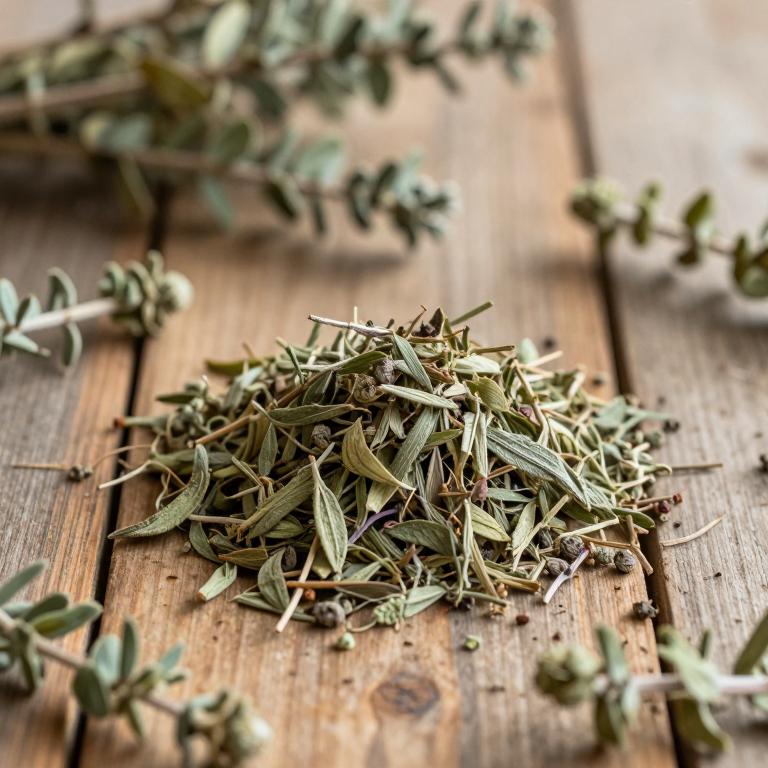
, scientifically known as Teucrium leucocladum, is a medicinal herb native to the Mediterranean region. Belonging to the Lamiaceae family, it is traditionally valued for its diverse therapeutic properties. Often used in folk medicine, this plant is studied for its potential antioxidant, anti-inflammatory, and antimicrobial effects in natural healing.
- Family
- Lamiaceae
- Native range
- Africa
- Parts used
- Leaf · Stem
- Common names
- Not available
- Scientific synonyms
- Not available
Names and Synonyms
Scientific Names
Accepted name
Teucrium leucocladumSources: Wikidata, Catalogue of Life
Taxonomical Classification
This plant belongs to the kingdom Plantae and is classified under the phylum Streptophyta and the class Equisetopsida. Within the subclass Magnoliidae, it falls under the order Lamiales and the family Lamiaceae. Finally, it is identified by its specific genus, Teucrium.
| Rank | Classification |
|---|---|
| Kingdom | Plantae |
| Phylum | Streptophyta |
| Class | Equisetopsida |
| Subclass | Magnoliidae |
| Order | Lamiales |
| Family | Lamiaceae |
| Genus | Teucrium |
Sources: The World Checklist of Vascular Plants (WCVP)
Distribution
This plant exhibits a specific geographical distribution across several key regions in the Middle East and North Africa. In Northern Africa, it can be found growing within the borders of Egypt. Its presence extends into Western Asia, where it is documented in Palestine and the Sinai region. Furthermore, the species reaches the Arabian Peninsula, specifically inhabiting areas of Saudi Arabia. Together, these locations define the natural range of this medicinal species.
| Region | Area |
|---|---|
| Northern Africa | Egypt |
| Western Asia | Palestine |
| Western Asia | Sinai |
| Arabian Peninsula | Saudi Arabia |
Sources: The World Checklist of Vascular Plants (WCVP)
Botanical Identification
Life history
The life history of Teucrium leucocladum is characterized by its classification as a chamaphyte, a life form that dictates its survival strategy through low-growing architecture where the perennating buds are located close to the soil surface. Specifically, it functions as a chamaphyte within the broader ecological spectrum, distinguishing itself from phanerophytes, hemicryptophytes, cryptophytes, or therophytes by maintaining its regenerative structures just above the ground level. This growth habit allows the plant to navigate its specific environmental niche effectively, utilizing its chamaephyte status to balance protection against seasonal stressors with the ability to capture sufficient light for its developmental cycles.
- Life form :
- chamaephyte
Morphology
The morphology of Teucrium leucocladium is characterized by a growth form that functions as both a shrub and a subshrub, exhibiting a distinctly woody structure. As a terrestrial plant, it does not inhabit aquatic or semiaquatic environments, nor does it function as an epiphyte. The species is an independent organism, lacking any parasitic tendencies, and is strictly self-supporting rather than acting as a climber.
- Aquatic :
- terrestrial
- Climber :
- self-supporting
- Epiphyte :
- terrestrial
- Growth form :
- shrub
- Growth form :
- subshrub
- Parasite :
- independent
- Woodiness :
- woody
Sources: Global Inventory of Floras and Traits (GIFT)
Plant Parts
Teucrium leucocladum has 2 reported plant parts identified across 2 scientific publications and several other databases that are studied for medicinal purposes. The most consistently reported plant part include leaf, stem.
| Plant part | Supporting sources | Consensus |
|---|---|---|
| Leaf | 1 supporting sources | ★☆☆☆☆ |
| Stem | 1 supporting sources | ★☆☆☆☆ |
Leaf
- Evidence-based complementary and alternative medicine : eCAM
Stem
- Evidence-based complementary and alternative medicine : eCAM
Activities
Teucrium leucocladum has 4 reported activities identified across 2 scientific publications and several other databases. The most consistently reported activities include Antihyperglycemic, Antihyperlipidemic, Hypoglycemic, Hypolipidemic.
| Activity | Supporting sources | Consensus |
|---|---|---|
| Antihyperglycemic | 1 supporting sources | ★☆☆☆☆ |
| Antihyperlipidemic | 1 supporting sources | ★☆☆☆☆ |
| Hypoglycemic | 1 supporting sources | ★☆☆☆☆ |
| Hypolipidemic | 1 supporting sources | ★☆☆☆☆ |
Antihyperglycemic
- Evidence-based complementary and alternative medicine : eCAM
Antihyperlipidemic
- Evidence-based complementary and alternative medicine : eCAM
Hypoglycemic
- Evidence-based complementary and alternative medicine : eCAM
Hypolipidemic
- Evidence-based complementary and alternative medicine : eCAM
Conditions
Teucrium leucocladum has 3 reported investigations on conditions identified across 2 scientific publications and several other databases. The most consistently reported conditions include Hyperglycemia, Hyperlipidemia, Oxidative Stress.
| Condition | Supporting sources | Consensus |
|---|---|---|
| Hyperglycemia | 1 supporting sources | ★☆☆☆☆ |
| Hyperlipidemia | 1 supporting sources | ★☆☆☆☆ |
| Oxidative stress | 1 supporting sources | ★☆☆☆☆ |
Hyperglycemia
- Evidence-based complementary and alternative medicine : eCAM
Hyperlipidemia
- Evidence-based complementary and alternative medicine : eCAM
Oxidative stress
- Evidence-based complementary and alternative medicine : eCAM
Preparations
Teucrium leucocladum has 2 reported preparations identified across 2 scientific publications and several other databases. The most consistently reported preparations include extract, hydrophilic (water) extract.
| Preparation | Supporting sources | Consensus |
|---|---|---|
| Extract | 1 supporting sources | ★☆☆☆☆ |
| Hydrophilic (water) extract | 1 supporting sources | ★☆☆☆☆ |
Extract
- Evidence-based complementary and alternative medicine : eCAM
Hydrophilic (water) extract
- Evidence-based complementary and alternative medicine : eCAM