Yellow Germander
Teucrium flavum · Accepted scientific name
Scientific literature: Very Sparse (5 studies) · ★☆☆☆☆
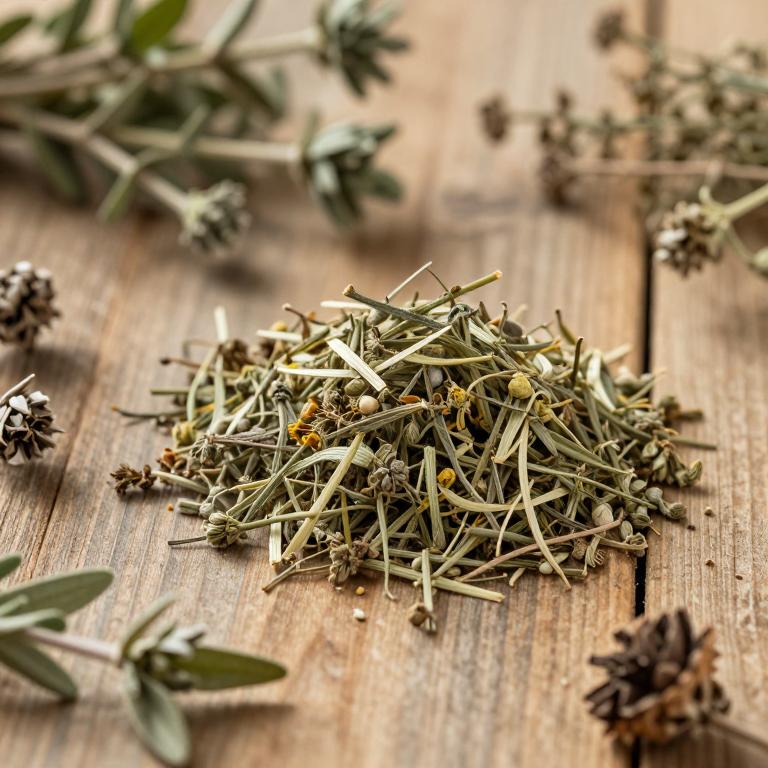
Yellow Germander, scientifically known as Teucrium flavum, is a resilient perennial herb native to the Mediterranean region. Characterized by its vibrant yellow flowers and aromatic foliage, this plant is valued in traditional herbalism. It serves as an important component in biodiversity, attracting pollinators within its natural coastal habitats.
- Family
- Lamiaceae
- Native range
- Europe
- Parts used
- Not available
- Common names
- Yellow Germander
- Scientific synonyms
- Chamaedrys Flava
Names and Synonyms
Common Names
- Yellow Germander
Scientific Names
Accepted name
Teucrium flavumSynonyms
- Chamaedrys flava
Regional and Traditional Names
French:
- Germandrée jaune
Sources: Wikidata, Catalogue of Life
Taxonomical Classification
This plant belongs to the kingdom Plantae within the phylum Streptophyta and the class Equisetopsida. It is further classified under the subclass Magnoliidae, the order Lamiales, and the family Lamiaceae. Finally, it is identified by the genus Teucrium.
| Rank | Classification |
|---|---|
| Kingdom | Plantae |
| Phylum | Streptophyta |
| Class | Equisetopsida |
| Subclass | Magnoliidae |
| Order | Lamiales |
| Family | Lamiaceae |
| Genus | Teucrium |
Sources: The World Checklist of Vascular Plants (WCVP)
Distribution
This plant exhibits a diverse geographical distribution across several European regions. In Middle Europe, it can be found growing within Germany. Its presence is also significant in Southwestern Europe, where it inhabits the Baleares. Furthermore, the species is located in the French territories of Corse and France. Finally, its range extends to the Mediterranean island of Sardegna.
| Region | Area |
|---|---|
| Middle Europe | Germany |
| Southwestern Europe | Baleares |
| Southwestern Europe | Corse |
| Southwestern Europe | France |
| Southwestern Europe | Sardegna |
| Southwestern Europe | Spain |
| Southeastern Europe | Albania |
| Southeastern Europe | Greece |
| Southeastern Europe | Italy |
| Southeastern Europe | Kriti |
Sources: The World Checklist of Vascular Plants (WCVP)
Botanical Identification
Life history
The life history of Teucrium flavum is characterized by its classification as a perennial plant, allowing it to persist through multiple growing seasons. In terms of its structural growth strategy and ecological positioning, it is identified as a chamaephyte, a life form where the permanent shoots are located close to the ground level, often protected by leaf litter or soil during unfavorable conditions. This chamaephyte designation is consistent across its developmental stages, defining its physical architecture and its ability to survive within its specific environmental niche.
- Life form :
- chamaephyte
- Lifecycle :
- perennial
Morphology
The morphology of Teucrium flavum is characterized by its growth form as a woody subshrub, exhibiting a self-supporting structure rather than acting as a climber. As an independent organism, it functions without parasitic relationships and maintains a terrestrial existence, neither being aquatic nor an epiphyte. Its physical constitution is defined by its woody nature, providing the structural stability necessary for its habit as a perennial subshrub.
- Aquatic :
- terrestrial
- Climber :
- self-supporting
- Epiphyte :
- terrestrial
- Growth form :
- subshrub
- Parasite :
- independent
- Woodiness :
- woody
Physiology
The physiology of Teucrium flavum is characterized by its metabolic adaptation to Mediterranean environments, primarily functioning through a C3 photosynthetic pathway. This pathway involves the direct fixation of atmospheric carbon dioxide by the enzyme RuBisCO during the Calvin cycle, which is typical for many members of the Lamiaceae family. To mitigate the physiological stress imposed by high light intensity and periodic water scarcity, the plant employs various xerophytic adaptations, including regulated stomatal conductance and specialized leaf morphology to optimize gas exchange while minimizing transpirational water loss. The metabolic processes are geared toward maintaining cellular homeostasis under thermal fluctuations, ensuring that the C3 carbon fixation remains efficient during the growing season.
- Photosynthetic pathway :
- C3
Reproduction
The reproduction of Teucrium flavum is characterized by the production of specialized seeds that exhibit high uniformity in their physical dimensions. Based on botanical data, the seeds produced by this species demonstrate a consistent mass with no recorded variance across the sampled population. The seed mass is strictly measured at a mean value of 0.0016 g, a figure that is simultaneously represented by both the maximum and minimum recorded seed mass values of 0.0016 g. This lack of deviation in seed mass suggests a highly standardized reproductive output, ensuring that each individual seed carries a consistent nutrient load and physical profile for dispersal and subsequent germination.
- Seed mass mean:
- 0.0016 g
Sources: Global Inventory of Floras and Traits (GIFT)
Chemicals
Teucrium flavum has 3 reported phytochemicals identified across 0 scientific publications and several other databases. The most consistently reported chemicals include Flavonoid, caffeic acid, quercetin.
| Chemical | Supporting sources | Consensus |
|---|---|---|
| Flavonoid | 1 supporting sources | ★☆☆☆☆ |
| caffeic acid | 1 supporting sources | ★☆☆☆☆ |
| quercetin | 1 supporting sources | ★☆☆☆☆ |
Flavonoid
- Mutation research. Genetic toxicology and environmental mutagenesis
caffeic acid
- Mutation research. Genetic toxicology and environmental mutagenesis
quercetin
- Mutation research. Genetic toxicology and environmental mutagenesis
Activities
Teucrium flavum has 2 reported activities identified across 0 scientific publications and several other databases. The most consistently reported activities include Cytotoxic, Genotoxic.
| Activity | Supporting sources | Consensus |
|---|---|---|
| Cytotoxic | 1 supporting sources | ★☆☆☆☆ |
| Genotoxic | 1 supporting sources | ★☆☆☆☆ |
Cytotoxic
- Mutation research. Genetic toxicology and environmental mutagenesis
Genotoxic
- Mutation research. Genetic toxicology and environmental mutagenesis