Cretan germander
Teucrium creticum · Accepted scientific name
Scientific literature: Very Sparse (2 studies) · ★☆☆☆☆
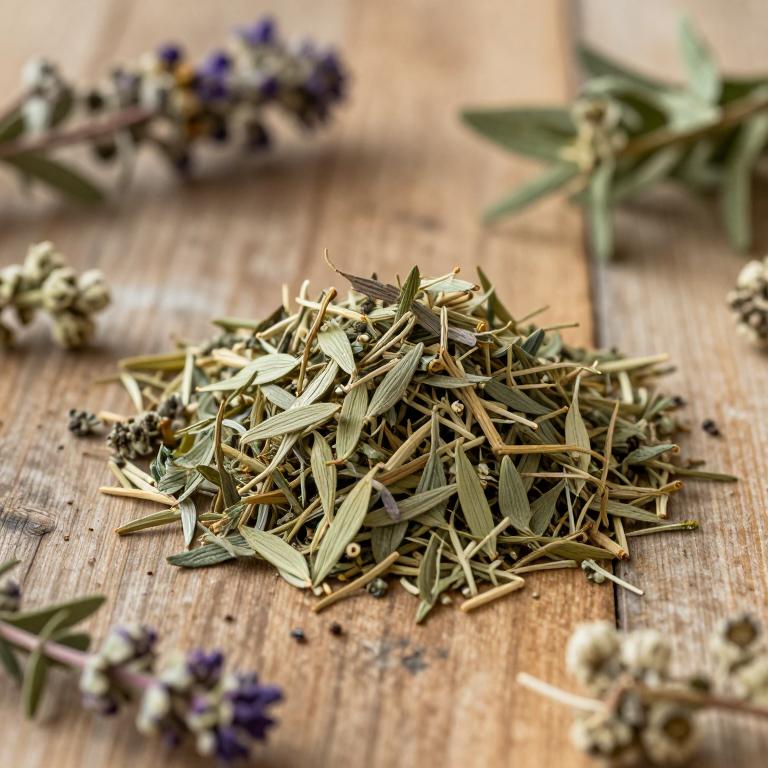
Cretan germander, scientifically known as Teucrium creticum, is a resilient perennial herb native to the Mediterranean. Characterized by its distinctive white flowers and woody stems, this plant has long been utilized in traditional medicine for its anti-inflammatory and antimicrobial properties, offering a natural approach to supporting digestive health.
- Family
- Lamiaceae
- Native range
- Asia-Temperate
- Parts used
- Not available
- Common names
- Cretan Germander
- Scientific synonyms
- Chamaedrys Cretica · Teucrium Rosmarinifolium · 2 more
Names and Synonyms
Common Names
- Cretan germander
Scientific Names
Accepted name
Teucrium creticumSynonyms
- Chamaedrys cretica
- Teucrium rosmarinifolium
- Teucrium charamoniense
- Teucrium hyssopifolium
Regional and Traditional Names
French:
- Germandrée à feuilles de romarin
- Germandrée À Feuilles De Romarins
- Germandree a feuilles de romarins
- Germandrée à feuilles de romarins
- Germandrée à feuilles de romarin
Sources: Wikidata, Catalogue of Life
Taxonomical Classification
This plant belongs to the kingdom Plantae and is classified under the phylum Streptophyta within the class Equisetopsida. As a member of the subclass Magnoliidae and the order Lamiales, it is situated in the family Lamiaceae. Finally, it is categorized under the genus Teucrium.
| Rank | Classification |
|---|---|
| Kingdom | Plantae |
| Phylum | Streptophyta |
| Class | Equisetopsida |
| Subclass | Magnoliidae |
| Order | Lamiales |
| Family | Lamiaceae |
| Genus | Teucrium |
Sources: The World Checklist of Vascular Plants (WCVP)
Distribution
This plant, known as Teucrium creticum, exhibits a specific geographical distribution within the Western Asia region. It can be found growing across the island of Cyprus. The species also inhabits the coastal and inland areas of Lebanon and Syria. Furthermore, its presence extends into the territories of Palestine. Finally, its range reaches into the diverse landscapes of Türkiye.
| Region | Area |
|---|---|
| Western Asia | Cyprus |
| Western Asia | Lebanon-Syria |
| Western Asia | Palestine |
| Western Asia | Türkiye |
Sources: The World Checklist of Vascular Plants (WCVP)
Botanical Identification
Life history
The life history of Teucrium creticum is characterized by a complex growth strategy that can be classified through various life form categories depending on environmental conditions and developmental stages. Primarily, it exhibits a life form as a phanerophyte, where its regenerative buds are located well above the ground on woody stems, allowing it to establish a more substantial vertical presence. However, in more exposed or harsh environments, it may also function as a nanophanerophyte, maintaining its buds at a very low height just above the soil surface to mitigate the effects of wind and desiccation. This adaptability in its life form enables the plant to persist in diverse Mediterranean habitats, transitioning between these structural states to optimize its survival and reproductive success throughout its life cycle.
- Life form :
- nanophanerophyte
- Life form :
- phanerophyte
Morphology
The morphology of Teucrium creticum is characterized by its growth form as a woody subshrub that functions as a self-supporting plant. It is an independent species, lacking any parasitic or epiphytic lifestyle, and is strictly terrestrial in its habitat rather than being aquatic or semiaquatic. The plant exhibits significant woodiness in its structure, distinguishing it from purely herbaceous species, and maintains a stable, upright posture without the need for climbing mechanisms.
- Aquatic :
- terrestrial
- Climber :
- self-supporting
- Epiphyte :
- terrestrial
- Growth form :
- shrub
- Growth form :
- subshrub
- Parasite :
- independent
- Woodiness :
- woody
Reproduction
The reproduction of Teucrium creticum is characterized by the production of small seeds that exhibit specific quantitative variations in mass. The reproductive output of this species involves seeds with a mean mass of 0.00306 g, indicating a highly standardized seed size within the population. Detailed measurements show that the individual seed mass ranges from a minimum of 0.003 g to a maximum of 0.00311 g. These narrow physiological parameters suggest a consistent investment in seed development, which is essential for the successful establishment and dispersal of the species in its natural habitat.
- Seed mass max:
- 0.00311 g
- Seed mass mean:
- 0.00306 g
- Seed mass min:
- 0.003 g
Sources: Global Inventory of Floras and Traits (GIFT)
Activities
Teucrium creticum has 2 reported activities identified across 0 scientific publications and several other databases. The most consistently reported activities include Antioxidant, Antitumor.
| Activity | Supporting sources | Consensus |
|---|---|---|
| Antioxidant | 1 supporting sources | ★☆☆☆☆ |
| Antitumor | 1 supporting sources | ★☆☆☆☆ |
Antioxidant
- Pharmaceutical biology
Antitumor
- Pharmaceutical biology