Teucrium botrys
Teucrium botrys · Accepted scientific name
Scientific literature: Extensive (198 studies) · ★★★★☆
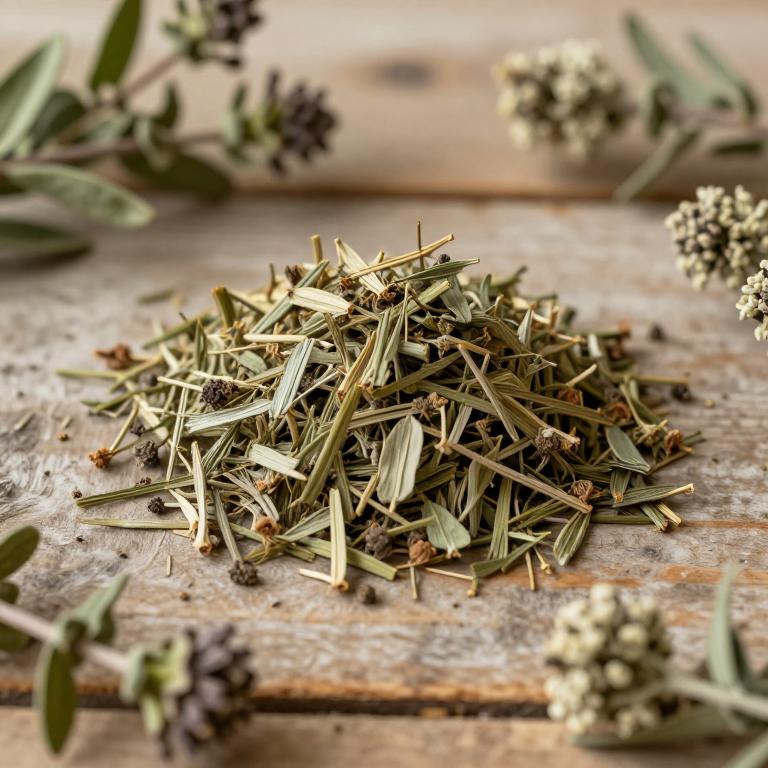
, scientifically known as Teucrium botrys, is a perennial herb belonging to the Lamiaceae family. Commonly called bastard rue, this plant is distinguished by its small, white-to-pinkish flowers and aromatic foliage. Traditionally used in herbal medicine, it possesses various bioactive properties valued for its potential therapeutic applications in traditional practices.
- Family
- Not available
- Native range
- Europe
- Parts used
- Not available
- Common names
- Not available
- Scientific synonyms
- Not available
Names and Synonyms
Scientific Names
Accepted name
Teucrium botrysDistribution
This plant exhibits a specific distribution across several regions of the European continent. In Northern Europe, its presence can be documented within Great Britain. Moving into Middle Europe, it is found inhabiting the landscapes of Austria and Belgium. The species also extends its range through the territories of Czechia-Slovakia. Finally, its geographical footprint includes the various regions of Germany.
| Region | Area |
|---|---|
| Northern Europe | Great Britain |
| Middle Europe | Austria |
| Middle Europe | Belgium |
| Middle Europe | Czechia-Slovakia |
| Middle Europe | Germany |
| Middle Europe | Hungary |
| Middle Europe | Netherlands |
| Middle Europe | Poland |
| Middle Europe | Switzerland |
| Southwestern Europe | Baleares |
Sources: The World Checklist of Vascular Plants (WCVP)
Botanical Identification
Ecology
The ecology of Teucrium botrys is characterized by its preference for rugged and open landscapes, where it typically thrives in hills, shrubberies, and stony places. It is frequently found colonizing rocky terrains and calcareous soils, often growing amidst sparse vegetation or within the undergrowth of scrublands. By occupying these disturbed or nutrient-poor stony habitats, the plant demonstrates an ability to withstand varying levels of solar exposure and well-drained soil conditions common to hilly environments.
- Habitat :
- hills, shrubberies, stony places
Life history
The life history of Teucrium botrys is characterized by its classification as a therophyte, meaning it completes its biological cycle through a rapid growth phase that culminates in seed production before the plant dies off. As a therophyte, it follows an annual lifecycle, dedicating its existence to a single reproductive season. Furthermore, the plant exhibits a deciduous nature, shedding its foliage as part of its seasonal cycle.
- Deciduousness :
- deciduous
- Life form :
- therophyte
- Lifecycle :
- annual
Morphology
The morphology of Teucrium botrys is characterized by its growth form as a non-woody herb and forb, functioning as a self-supporting plant rather than a climber or liana. It is a terrestrial species that grows independently, lacking any parasitic or epiphytic tendencies. In terms of stature, the plant exhibits a relatively low profile with a height ranging from a minimum of 0.07 m to a maximum of 0.6 m, maintaining an average plant height of approximately 0.183 m.
- Aquatic :
- terrestrial
- Climber :
- self-supporting
- Epiphyte :
- terrestrial
- Growth form :
- herb
- Growth form :
- forb
- Parasite :
- independent
- Plant height max:
- 0.6 m
- Plant height mean:
- 0.183 m
- Plant height min:
- 0.07 m
- Woodiness :
- non-woody
Physiology
The physiology of Teucrium botrys is characterized by a C3 photosynthetic pathway, which dictates its carbon fixation processes and metabolic efficiency. The plant exhibits a non-carnivorous nutritional strategy, relying on traditional soil-based nutrient uptake rather than the capture of prey. Morphologically, its foliage is defined by a mean leaf size of 2.25 cm², which contributes to its structural profile and light interception capabilities. Furthermore, the plant demonstrates a mean Specific Leaf Area (SLA) of 393.4 cm²/g, a physiological metric that reflects its leaf thickness and the investment of biomass relative to its surface area for gas exchange and resource acquisition.
- Carnivory :
- non-carnivorous
- Leaf size mean:
- 2.25 cm²
- Photosynthetic pathway :
- C3
- Specific Leaf Area (SLA) mean:
- 393.4 cm²/g
Reproduction
The reproduction of Teucrium botrys is characterized by a primarily sexual process, as both asexual reproduction and self-fertilization are absent. The flowering period typically occurs during the summer months, specifically starting in July and concluding in August. The plant relies on biotic pollination syndromes, specifically utilizing insects, with a notable emphasis on bees as pollinators. Following successful pollination, the plant produces seeds with a relatively small mass; the mean seed mass is approximately 0.00112775 g, with individual seeds ranging from a minimum of 0.00088 g to a maximum of 0.00132 g. Dispersal is categorized as zoochorous, specifically via the epizoochorous mechanism, meaning the seeds are dispersed by attaching to the outside of animals.
- Dispersal syndrome :
- zoochorous
- Dispersal syndrome :
- epizoochorous
- Flowering time :
- Jul
- Flowering time :
- Aug
- Pollination syndrome :
- insect
- Pollination syndrome :
- bee
- Pollination syndrome :
- biotic
- Reproduction asexual :
- absent
- Seed mass max:
- 0.00132 g
- Seed mass mean:
- 0.00112775 g
- Seed mass min:
- 0.00088 g
- Self fertilization :
- absent
Sources: Global Inventory of Floras and Traits (GIFT)
Chemicals
Teucrium botrys has 4 reported phytochemicals identified across 0 scientific publications and several other databases. The most consistently reported chemicals include Isoquercitrin, choline, diosmin, quercetin.
| Chemical | Supporting sources | Consensus |
|---|---|---|
| Isoquercitrin | 1 supporting sources | ★☆☆☆☆ |
| choline | 1 supporting sources | ★☆☆☆☆ |
| diosmin | 1 supporting sources | ★☆☆☆☆ |
| quercetin | 1 supporting sources | ★☆☆☆☆ |
Isoquercitrin
- Dr. Duke
choline
- Dr. Duke
diosmin
- Dr. Duke
quercetin
- Dr. Duke
Activities
Teucrium botrys has 194 reported activities identified across 0 scientific publications and several other databases. The most consistently reported activities include 11B-HSD-Inhibitor, 5-Lipoxygenase-Inhibitor, ACE-Inhibitor, ATPase-Inhibitor, Aldehyde-Oxidase-Inhibitor.
| Activity | Supporting sources | Consensus |
|---|---|---|
| 11B-HSD-Inhibitor | 1 supporting sources | ★☆☆☆☆ |
| 5-Lipoxygenase-Inhibitor | 1 supporting sources | ★☆☆☆☆ |
| ACE-Inhibitor | 1 supporting sources | ★☆☆☆☆ |
| ATPase-Inhibitor | 1 supporting sources | ★☆☆☆☆ |
| Aldehyde-Oxidase-Inhibitor | 1 supporting sources | ★☆☆☆☆ |
| Aldose-Reductase-Inhibitor | 1 supporting sources | ★☆☆☆☆ |
| Allelochemic | 1 supporting sources | ★☆☆☆☆ |
| Allergenic | 1 supporting sources | ★☆☆☆☆ |
| Analgesic | 1 supporting sources | ★☆☆☆☆ |
| AntiCVI | 1 supporting sources | ★☆☆☆☆ |
11B-HSD-Inhibitor
- Dr. Duke
5-Lipoxygenase-Inhibitor
- Dr. Duke
ACE-Inhibitor
- Dr. Duke
ATPase-Inhibitor
- Dr. Duke
Aldehyde-Oxidase-Inhibitor
- Dr. Duke
Aldose-Reductase-Inhibitor
- Dr. Duke
Allelochemic
- Dr. Duke
Allergenic
- Dr. Duke
Analgesic
- Dr. Duke
AntiCVI
- Dr. Duke