New Zealand spinach
Tetragonia tetragonoides · Accepted scientific name
Scientific literature: Very Sparse (3 studies) · ★☆☆☆☆
New Zealand spinach, scientifically known as Tetragonia tetragonoides, is a succulent perennial valued for its nutritional and medicinal properties. Rich in vitamins and minerals, it is traditionally used to support digestive health and reduce inflammation. This versatile plant serves as both a leafy green superfood and a natural remedy.
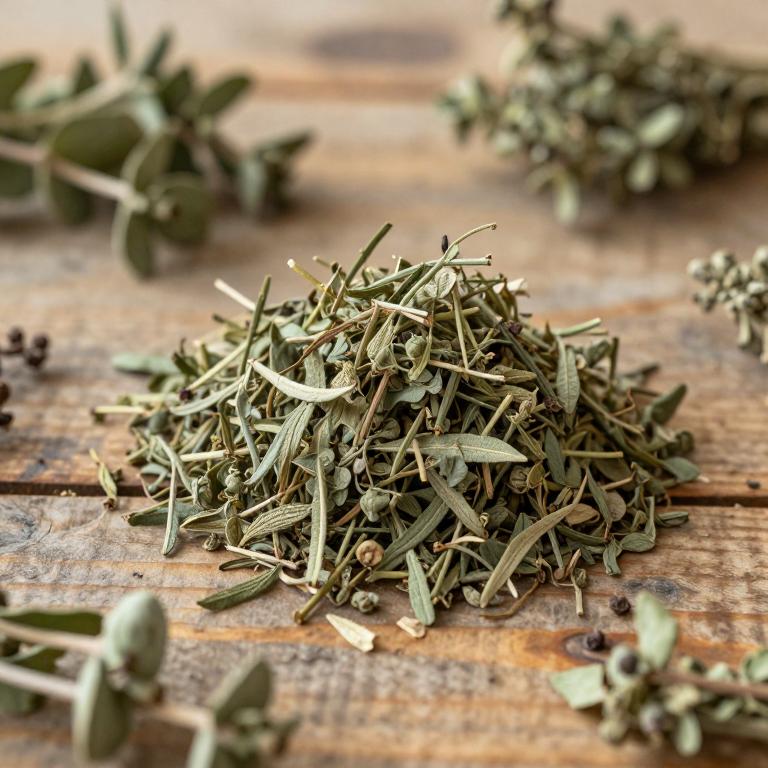
Names and Synonyms
Common Names
- New Zealand-spinach
- warrigal-cabbage
- wild spinach
- Kōkihi
- Native Spinach
- New Zealand Spinach
- Warrigal Greens
Scientific Names
Accepted name
Tetragonia tetragonoidesSynonyms
- Demidovia tetragonoides
- Tetragonia striata
- Tetragonia expansa var. cornuta
- Tetragonia inermis
- Tetragonia purpurea
- Tetragonia quadricornis
- Tetragonia japonica
- Tetragonia borealis
- Tetragonia cornuta
- Tetragonia halimifolia
Regional and Traditional Names
Spanish:
- espinaca de Nueva Zelandia
- Falsa espinaca
German:
- Neuseeländer Spinat
- Tetragonia tetragoniodes
- Tetragonia tetragonioides
- Neuseelandspinat
- Neuseelaender Spinat
French:
- Tetragonia tetragonioides
- tétragone
- tétragone cornue
- épinard d'été
- épinard de la Nouvelle Zélande
- Epinard de la Nouvelle-Zelande
- Tetragone
- Épinard de Nouvelle-Zélande
Sources: Wikidata, Catalogue of Life
Taxonomical Classification
This plant belongs to the kingdom Plantae and the phylum Streptophyta, falling under the class Equisetopsida and the subclass Magnoliidae. Within the order Caryophyllales, it is classified under the family Aizoaceae. Finally, its specific taxonomic placement is within the genus Tetragonia.
| Rank | Classification |
|---|---|
| Kingdom | Plantae |
| Phylum | Streptophyta |
| Class | Equisetopsida |
| Subclass | Magnoliidae |
| Order | Caryophyllales |
| Family | Aizoaceae |
| Genus | Tetragonia |
Sources: The World Checklist of Vascular Plants (WCVP)
Distribution
This plant exhibits a widespread presence across several regions of the European continent. In Northern Europe, it can be found growing in the natural landscapes of Denmark and Finland. Its distribution also extends to the territories of Great Britain and Sweden within the same northern reaches. Moving southward, the species is also documented throughout the Middle Europe region. Specifically, its geographical range includes the areas of Czechia and Slovakia.
| Region | Area |
|---|---|
| Northern Europe | Denmark |
| Northern Europe | Finland |
| Northern Europe | Great Britain |
| Northern Europe | Sweden |
| Middle Europe | Czechia-Slovakia |
| Middle Europe | Germany |
| Southwestern Europe | Baleares |
| Southwestern Europe | Portugal |
| Southwestern Europe | Sardegna |
| Southwestern Europe | Spain |
Sources: The World Checklist of Vascular Plants (WCVP)
Botanical Identification
Ecology
The ecology of Tetragonia tetragonoides is characterized by its specialized adaptation to coastal and saline environments, where it primarily thrives within halophytic vegetation. This plant is adapted to survive in high-salinity conditions that would be detrimental to most other species, allowing it to occupy distinct ecological niches such as salt marshes and coastal flats. Its altitudinal distribution is restricted to low-lying areas, occupying an elevational range that begins at sea level (0 m AMSL) and extends up to a maximum of 500 m AMSL.
- Elevational range max:
- 500 m AMSL
- Elevational range min:
- 0 m AMSL
- Habitat :
- halophytic vegetation
Genetics
The genetics of Tetraagonia tenera (syn. Tetraagonia tenera, often referred to in taxonomic contexts involving Tetraagonia tenera or related Tetraagonia species such as Tetraagonia tenera or Tetraagonia tenera subspecies) are characterized by a notable degree of polyploidy. The chromosomal makeup of this species demonstrates significant variability, with documented chromosome numbers of 16 and 32. This presence of both diploid and tetraploid levels suggests a complex evolutionary history involving genome doubling, which often contributes to increased vigor and adaptability within the genus. These varying ploidy levels play a critical role in the plant's genetic architecture and its ability to thrive in diverse ecological niches.
- Chromosome number :
- 16, 32
Life history
The life history of Tetraagonia tenera (commonly referred to as Tetraagonia tetragonoides) is characterized by an annual lifecycle, though it often exhibits varying growth patterns depending on environmental conditions. As a therophyte, the plant completes its biological cycle by producing seeds that ensure survival through unfavorable periods, typically maintaining a low profile during its developmental stages. It functions as an evergreen species, retaining its foliage throughout its period of activity rather than shedding it seasonally. This combination of a therophytic life form and an evergreen nature allows the plant to efficiently utilize available resources within its ecological niche throughout its active growing season.
- Deciduousness :
- evergreen
- Life form :
- therophyte
- Lifecycle :
- annual
Morphology
The morphology of Tetragonia tetragonoides is characterized by its growth form as a non-woody herb. This terrestrial plant, which functions as an independent organism rather than a parasite or epiphyte, exhibits a self-supporting growth habit. Its shoots follow an ascending orientation, reaching a minimum height of 0.01 m and a maximum height of 1.5 m, with a mean plant height of approximately 0.3 m.
- Aquatic :
- terrestrial
- Climber :
- self-supporting
- Epiphyte :
- terrestrial
- Growth form :
- herb
- Parasite :
- independent
- Plant height max:
- 1.5 m
- Plant height mean:
- 0.3 m
- Plant height min:
- 0.01 m
- Shoot orientation :
- ascending
- Woodiness :
- non-woody
Physiology
The physiology of Tetraagonia tenera (syn. Tetraagonia tetragonoides) is characterized by a C3 photosynthetic pathway, indicating a standard carbon fixation process typical of many temperate and subtropical species. The plant's foliage consists of ovate leaves that vary in dimension, with a minimum leaf length of 1.5 cm and a maximum length of 12 cm, while the width ranges from a minimum of 1 cm to a maximum of 7.5 cm. Morphologically, the plant is non-succulent and does not exhibit any carnivorous traits, relying instead on standard nutrient uptake from the soil. Furthermore, it lacks the biological capability to function as a nitrogen fixer, meaning it relies on available nitrogen within its substrate rather than symbiotic nitrogen-fixing bacteria.
- Carnivory :
- non-carnivorous
- Leaf form :
- ovate
- Leaf length max:
- 12 cm
- Leaf length min:
- 1.5 cm
- Leaf width max:
- 7.5 cm
- Leaf width min:
- 1 cm
- Nitrogen fixer :
- no
- Photosynthetic pathway :
- C3
- Succulence :
- no
Reproduction
The reproduction of Tetragonia tetragonoides is characterized by a bisexual sexual reproductive system, where self-fertilization is absent, necessitating external agents for successful fertilization. The plant produces small, green flowers that reach a maximum length of 0.5 cm. These flowers utilize a biotic pollination syndrome, specifically relying on insects to facilitate the transfer of pollen. The flowering period is concentrated around July, with both the start and end of the season occurring during this month. Following successful pollination, the plant develops a nut-type fruit that is indehiscent. These fruits are relatively small, ranging from a minimum width of 0.4 cm to a maximum of 0.7 cm, and a length between 0.5 cm and 7 cm, with an average width of 0.4 cm. Each fruit is highly prolific, containing between 101 and 1000 seeds. The seeds themselves vary in mass, with a mean weight of approximately 0.011 g, a minimum of 0.00068 g, and a maximum of 0.077 g. For dispersal, the species employs a hydrochorous syndrome, utilizing water to transport its seeds to new locations.
- Dehiscence :
- indehiscent
- Dispersal syndrome :
- hydrochorous
- Flower colour :
- green
- Flower length max:
- 0.5 cm
- Flowering time :
- Jul
- Fruit length max:
- 7 cm
- Fruit length min:
- 0.5 cm
- Fruit type :
- nut
- Fruit width max:
- 0.7 cm
- Fruit width mean:
- 0.4 cm
- Pollination syndrome :
- insect
- Pollination syndrome :
- biotic
- Reproduction sexual :
- bisexual
- Seed mass max:
- 0.077 g
- Seed mass mean:
- 0.0110523133333333 g
- Seed mass min:
- 0.00068 g
- Seeds_per_fruit :
- 101-1000
- Self fertilization :
- absent
Sources: Global Inventory of Floras and Traits (GIFT)
Chemicals
Tetragonia tetragonoides has 2 reported phytochemicals identified across 0 scientific publications and several other databases. The most consistently reported chemicals include 6-Methoxyquercetin, 6-methoxykaempferol.
| Chemical | Supporting sources | Consensus |
|---|---|---|
| 6-Methoxyquercetin | 1 supporting sources | ★☆☆☆☆ |
| 6-methoxykaempferol | 1 supporting sources | ★☆☆☆☆ |
6-Methoxyquercetin
- Bioorganic chemistry
6-methoxykaempferol
- Bioorganic chemistry
Preparations
Tetragonia tetragonoides has 3 reported preparations identified across 0 scientific publications and several other databases. The most consistently reported preparations include Dried aerial parts of Tetragonia tetragonoides, T. tetragonoides aerial parts extract, T. tetragonoides extract.
| Preparation | Supporting sources | Consensus |
|---|---|---|
| Dried aerial parts of tetragonia tetragonoides | 1 supporting sources | ★☆☆☆☆ |
| T. tetragonoides aerial parts extract | 1 supporting sources | ★☆☆☆☆ |
| T. tetragonoides extract | 1 supporting sources | ★☆☆☆☆ |
Dried aerial parts of tetragonia tetragonoides
- Bioorganic chemistry
T. tetragonoides aerial parts extract
- Bioorganic chemistry
T. tetragonoides extract
- Bioscience, biotechnology, and biochemistry