Mountain mist
Tetradenia riparia · Accepted scientific name
Scientific literature: Sparse (93 studies) · ★★☆☆☆
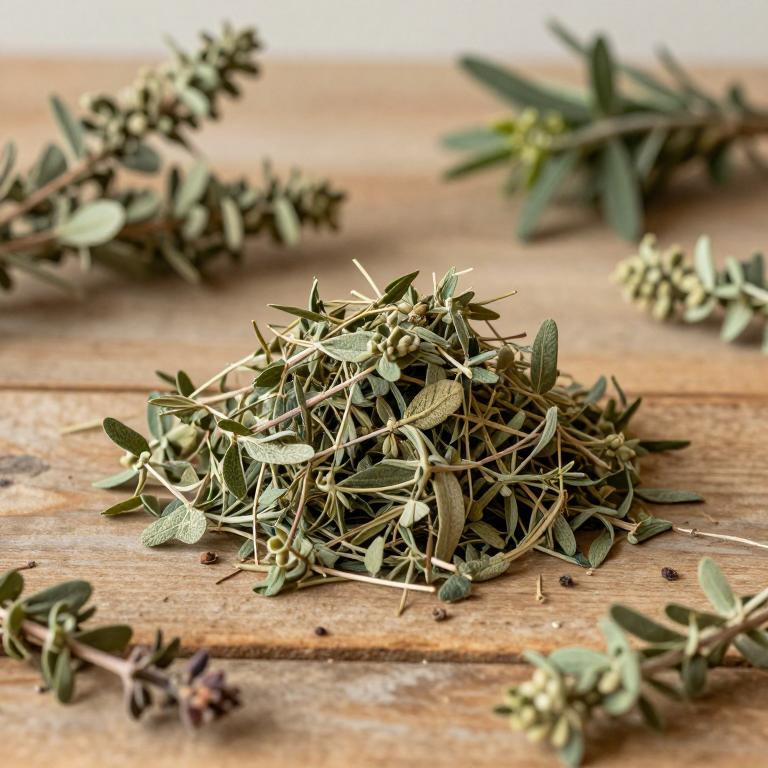
Mountain mist, scientifically known as Tetradenia riparia, is a resilient perennial herb native to moist, montane ecosystems. Renowned for its unique ecological role, this plant offers significant ethnobotanical value. Researchers are increasingly exploring its bioactive compounds, investigating potential medicinal properties that could contribute to modern pharmacological advancements and wellness.
Names and Synonyms
Common Names
- gingerbush
- Ginger Iboza
- Ginger Misty-Plumebush
- Ginger-bush
- Iboza
- Large Gingerbush
- Misty Plume Bush
- Misty-Plumebush
- River Gingerbush
Scientific Names
Accepted name
Tetradenia ripariaSynonyms
- Gumira ferruginea
- Iboza riparia
- Basilicum myriostachyum
- Premna ferruginea
- Plectranthus riparius
- Moschosma myriostachyum
- Moschosma riparium
- Basilicum riparium
Regional and Traditional Names
French:
- Faux patchouli
Sources: Wikidata, Catalogue of Life
Taxonomical Classification
This plant belongs to the kingdom Plantae and the phylum Streptophyta within the class Equisetopsida. It is further classified under the subclass Magnoliidae, the order Lamiales, and the family Lamiaceae. Ultimately, it is identified by the genus Tetradenia, specifically as the species Tetradenia riparia.
| Rank | Classification |
|---|---|
| Kingdom | Plantae |
| Phylum | Streptophyta |
| Class | Equisetopsida |
| Subclass | Magnoliidae |
| Order | Lamiales |
| Family | Lamiaceae |
| Genus | Tetradenia |
Sources: The World Checklist of Vascular Plants (WCVP)
Distribution
This plant exhibits a diverse geographical range across several regions of the African continent. In West-Central Tropical Africa, its presence is specifically noted in Rwanda. Moving toward South Tropical Africa, the species is widely distributed across multiple countries. It can be found growing in the landscapes of Angola and Malawi. Additionally, its habitat extends through Mozambique and Zimbabwe within the southern reaches of the continent.
| Region | Area |
|---|---|
| West-Central Tropical Africa | Rwanda |
| South Tropical Africa | Angola |
| South Tropical Africa | Malawi |
| South Tropical Africa | Mozambique |
| South Tropical Africa | Zimbabwe |
| Southern Africa | Botswana |
| Southern Africa | Namibia |
| Southern Africa | KwaZulu-Natal |
| Southern Africa | Eswatini |
| Southern Africa | Northern Provinces |
Sources: The World Checklist of Vascular Plants (WCVP)
Botanical Identification
Ecology
The ecology of Tetradenia riparia is characterized by its ability to thrive across a diverse vertical gradient of altitudinal zones. It is found within an elevational range that extends from a minimum of 30 m AMSL to a maximum of 1850 m AMSL. This wide distribution suggests an adaptability to varying climatic conditions and topographic features, allowing the species to inhabit a variety of ecological niches within its geographic scope.
- Elevational range max:
- 1850 m AMSL
- Elevational range min:
- 30 m AMSL
Life history
The life history of Tetradenia riparia is characterized by its classification as a perennial organism, allowing it to persist through multiple growing seasons rather than completing its cycle within a single year. In terms of its structural growth habit and survival strategy, the plant exhibits a complex life form profile, functioning as a phanerophyte due to its ability to maintain visible above-ground structures, while also displaying characteristics of a nanophanerote, indicating that its woody or persistent stems remain relatively low to the ground. This combination of life forms enables the species to effectively occupy its niche and endure varying environmental conditions over its extended lifespan.
- Life form :
- nanophanerophyte
- Life form :
- phanerophyte
- Lifecycle :
- perennial
Morphology
The morphology of Tetradenia riparia is characterized by a woody growth form, specifically classified as a shrub. As a self-supporting plant, it does not function as a climber, liana, or vine, and it grows as an independent organism rather than a parasite or an epiphyte. The species is terrestrial in its habitat and exhibits a plant height that ranges from a minimum of 1 meter to a maximum of 3 meters, with a mean height of approximately 3 meters.
- Aquatic :
- terrestrial
- Climber :
- self-supporting
- Epiphyte :
- terrestrial
- Growth form :
- shrub
- Parasite :
- independent
- Plant height mean:
- 3 m
- Plant height min:
- 1 m
- Woodiness :
- woody
Physiology
The physiology of Tetradenia riparia is characterized by its specialized adaptation to riparian environments, where it manages metabolic processes to thrive in seasonally saturated soils. Its physiological framework is centered on efficient nutrient uptake and water regulation, allowing it to maintain cellular homeostasis despite fluctuating water tables. Regarding its nitrogen metabolism, the plant does not possess the symbiotic mechanisms required for atmospheric nitrogen fixation; therefore, it is not a nitrogen fixer, as indicated by its inability to convert molecular nitrogen into ammonia through rhizobial associations. Instead, its physiological processes rely on the absorption of nitrates and ammonium directly from the soil substrate. The plant utilizes a robust photosynthetic pathway to drive its growth, supported by a root system designed to balance oxygen requirements with high moisture availability, ensuring metabolic stability in its specific ecological niche.
- Nitrogen fixer :
- no
Reproduction
The reproduction of Tetradenia riparia is characterized by the production of minute seeds that play a critical role in its dispersal and establishment within its habitat. These seeds are remarkably lightweight, with a recorded mean seed mass of 3.5e-05 g. The variation in seed size is quite narrow, ranging from a minimum mass of 3e-05 g to a maximum mass of 4e-05 g. This extremely low mass suggests that the seeds are likely adapted for wind or water dispersal, allowing the plant to colonize new riparian environments effectively.
- Seed mass max:
- 4e-05 g
- Seed mass mean:
- 3.5e-05 g
- Seed mass min:
- 3e-05 g
Sources: Global Inventory of Floras and Traits (GIFT)
Plant Parts
Tetradenia riparia has 3 reported plant parts identified across 9 scientific publications and several other databases that are studied for medicinal purposes. The most consistently reported plant part include leaf, stem, flower.
| Plant part | Supporting sources | Consensus |
|---|---|---|
| Leaf | 5 supporting sources | ★★★☆☆ |
| Stem | 3 supporting sources | ★★☆☆☆ |
| Flower | 1 supporting sources | ★☆☆☆☆ |
Leaf
- BMC complementary medicine and therapies
- Journal of ethnopharmacology
- Frontiers in pharmacology
- Planta medica
- Pharmaceuticals (Basel, Switzerland)
Stem
- Frontiers in pharmacology
- Planta medica
- Pharmaceuticals (Basel, Switzerland)
Flower
- Pharmaceuticals (Basel, Switzerland)
Chemicals
Tetradenia riparia has 28 reported phytochemicals identified across 9 scientific publications and several other databases. The most consistently reported chemicals include Flavonoids, Saponins, Coumarins, Fenchone, 14-Hydroxy-9-epi-(E)-caryophyllene.
| Chemical | Supporting sources | Consensus |
|---|---|---|
| Flavonoids | 5 supporting sources | ★★★☆☆ |
| Saponins | 3 supporting sources | ★★☆☆☆ |
| Coumarins | 2 supporting sources | ★☆☆☆☆ |
| Fenchone | 2 supporting sources | ★☆☆☆☆ |
| 14-Hydroxy-9-epi-(E)-caryophyllene | 1 supporting sources | ★☆☆☆☆ |
| 6,7-Dehydroroyleanone | 1 supporting sources | ★☆☆☆☆ |
| ACETYLENE | 1 supporting sources | ★☆☆☆☆ |
| BETA-CARYOPHYLLENE | 1 supporting sources | ★☆☆☆☆ |
| Cirsimaritin | 1 supporting sources | ★☆☆☆☆ |
| Flavonoid | 1 supporting sources | ★☆☆☆☆ |
Flavonoids
- BMC complementary medicine and therapies
- Journal of ethnopharmacology
- Scientific reports
- Chemistry & biodiversity
- Pharmaceuticals (Basel, Switzerland)
Saponins
- BMC complementary medicine and therapies
- Journal of ethnopharmacology
- Scientific reports
Coumarins
- BMC complementary medicine and therapies
- Pharmaceuticals (Basel, Switzerland)
Fenchone
- Frontiers in pharmacology
- Planta medica
14-Hydroxy-9-epi-(E)-caryophyllene
- Frontiers in pharmacology
6,7-Dehydroroyleanone
- Parasitology research
ACETYLENE
- Plant science : an international journal of experimental plant biology
BETA-CARYOPHYLLENE
- Planta medica
Cirsimaritin
- Scientific reports
Flavonoid
- Drug and chemical toxicology
Activities
Tetradenia riparia has 4 reported activities identified across 9 scientific publications and several other databases. The most consistently reported activities include Antioxidant, Antimicrobial, Analgesic, Antitumor.
| Activity | Supporting sources | Consensus |
|---|---|---|
| Antioxidant | 5 supporting sources | ★★★☆☆ |
| Antimicrobial | 2 supporting sources | ★☆☆☆☆ |
| Analgesic | 1 supporting sources | ★☆☆☆☆ |
| Antitumor | 1 supporting sources | ★☆☆☆☆ |
Antioxidant
- BMC complementary medicine and therapies
- Frontiers in pharmacology
- Scientific reports
- Pharmaceuticals (Basel, Switzerland)
- BMC complementary and alternative medicine
Antimicrobial
- Frontiers in pharmacology
- Scientific reports
Analgesic
- Frontiers in pharmacology
Antitumor
- Frontiers in pharmacology
Conditions
Tetradenia riparia has 21 reported investigations on conditions identified across 9 scientific publications and several other databases. The most consistently reported conditions include headache, malaria, Diarrhea, Leishmania, Mycobacterium smegmatis.
| Condition | Supporting sources | Consensus |
|---|---|---|
| Headache | 2 supporting sources | ★☆☆☆☆ |
| Malaria | 2 supporting sources | ★☆☆☆☆ |
| Diarrhea | 1 supporting sources | ★☆☆☆☆ |
| Leishmania | 1 supporting sources | ★☆☆☆☆ |
| Mycobacterium smegmatis | 1 supporting sources | ★☆☆☆☆ |
| Plasmodium falciparum | 1 supporting sources | ★☆☆☆☆ |
| Aches | 1 supporting sources | ★☆☆☆☆ |
| Cough | 1 supporting sources | ★☆☆☆☆ |
| Cutaneous leishmaniasis | 1 supporting sources | ★☆☆☆☆ |
| Dengue | 1 supporting sources | ★☆☆☆☆ |
Headache
- Journal of ethnopharmacology
- Frontiers in pharmacology
Malaria
- Journal of ethnopharmacology
- Frontiers in pharmacology
Diarrhea
- Antibiotics (Basel, Switzerland)
Leishmania
- Parasitology research
Mycobacterium smegmatis
- Microorganisms
Plasmodium falciparum
- Planta medica
Aches
- Journal of ethnopharmacology
Cough
- Frontiers in pharmacology
Cutaneous leishmaniasis
- Parasitology research
Dengue
- Frontiers in pharmacology
Preparations
Tetradenia riparia has 13 reported preparations identified across 9 scientific publications and several other databases. The most consistently reported preparations include essential oil, 80% ethanol, EtOAc extract, Extracts, Leaf EOs.
| Preparation | Supporting sources | Consensus |
|---|---|---|
| Essential oil | 2 supporting sources | ★☆☆☆☆ |
| 80% ethanol | 1 supporting sources | ★☆☆☆☆ |
| Etoac extract | 1 supporting sources | ★☆☆☆☆ |
| Extracts | 1 supporting sources | ★☆☆☆☆ |
| Leaf eos | 1 supporting sources | ★☆☆☆☆ |
| Compresses | 1 supporting sources | ★☆☆☆☆ |
| Essential oils | 1 supporting sources | ★☆☆☆☆ |
| Extracts | 1 supporting sources | ★☆☆☆☆ |
| Hydroalcoholic extract | 1 supporting sources | ★☆☆☆☆ |
| Infusion | 1 supporting sources | ★☆☆☆☆ |
Essential oil
- Planta medica
- Parasitology research
80% ethanol
- BMC complementary medicine and therapies
Etoac extract
- Journal of ethnopharmacology
Extracts
- Microorganisms
Leaf eos
- Pharmaceuticals (Basel, Switzerland)
Compresses
- Frontiers in pharmacology
Essential oils
- Pharmaceuticals (Basel, Switzerland)
Extracts
- Pharmaceuticals (Basel, Switzerland)
Hydroalcoholic extract
- Drug and chemical toxicology
Infusion
- Frontiers in pharmacology