Tetracera indica
Tetracera indica · Accepted scientific name
Scientific literature: Very Sparse (25 studies) · ★☆☆☆☆
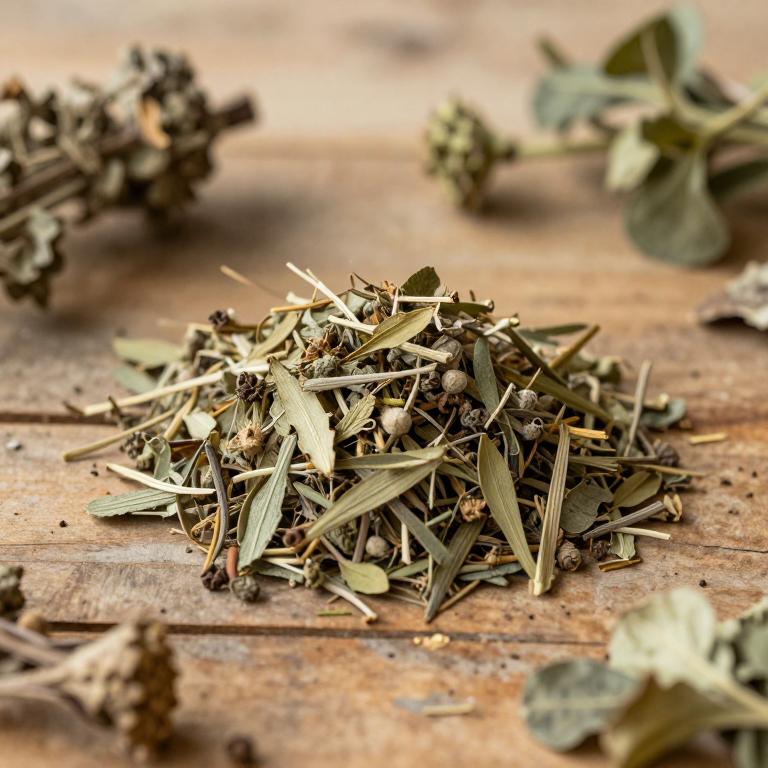
Tetracera indica, scientifically known as Tetracera indica, is a versatile perennial herb native to tropical Asia. Renowned in traditional medicine, particularly Ayurveda, it possesses significant therapeutic properties. This plant is widely utilized for its anti-inflammatory, antimicrobial, and antioxidant capabilities, offering natural remedies for various skin and digestive ailments.
- Family
- Not available
- Native range
- Asia-Tropical
- Parts used
- Not available
- Common names
- Not available
- Scientific synonyms
- Not available
Names and Synonyms
Scientific Names
Accepted name
Tetracera indicaDistribution
This plant is widely distributed across various regions of the Indian Subcontinent and Indo-China. Within the Indian Subcontinent, it can be specifically found in Assam and Bangladesh. Its presence extends into the Indo-China region as well. Specifically, it inhabits the territories of Cambodia and Laos. Additionally, the species is known to grow within Myanmar.
| Region | Area |
|---|---|
| Indian Subcontinent | Assam |
| Indian Subcontinent | Bangladesh |
| Indo-China | Cambodia |
| Indo-China | Laos |
| Indo-China | Myanmar |
| Indo-China | Thailand |
| Indo-China | Vietnam |
| Malesia | Jawa |
| Malesia | Lesser Sunda Is. |
| Malesia | Malaya |
Sources: The World Checklist of Vascular Plants (WCVP)
Botanical Identification
Life history
The life history of Tetraceras indica is characterized by its classification as a phanerophyte, specifically exhibiting traits consistent with both nanophanerophyte and phanerophyte life forms, depending on its developmental stage and environmental conditions. This perennial woody plant maintains its buds well above the soil surface, ensuring survival through seasonal fluctuations. In terms of its foliage characteristics, the species is identified as evergreen, retaining its leaves throughout the year rather than undergoing a deciduous period. This combination of a phanerophyte life form and evergreen deciduousness allows the plant to maintain continuous photosynthetic activity, supporting its robust growth patterns in its natural habitats.
- Deciduousness :
- evergreen
- Life form :
- phanerophyte
Morphology
The morphology of Tetraceras indica is characterized by its growth as a woody shrub that exhibits climbing tendencies. As an obligatory climber, it functions as a liana or vine, utilizing other structures for support to reach a significant plant height with a mean measurement of approximately 4 m. Although it maintains a shrub-like growth form, its structural development is distinctly woody. In terms of its ecological positioning, the plant is terrestrial rather than epiphytic, establishing its root system in the ground to support its climbing habit.
- Climber :
- liana
- Climber :
- obligatory
- Epiphyte :
- terrestrial
- Growth form :
- shrub
- Plant height mean:
- 4 m
- Woodiness :
- woody
Physiology
The physiology of Tetraceras indica is characterized by its specialized metabolic processes and its role within its ecological niche. A key physiological distinction of this species is its relationship with soil nutrients; specifically, it is not a nitrogen fixer, meaning it lacks the symbiotic relationship with nitrogen-fixing bacteria (such as Rhizobium) required to convert atmospheric nitrogen into ammonia. Consequently, its growth and physiological vigor are heavily dependent on the availability of nitrates and ammonium present in the soil. The plant exhibits robust photosynthetic efficiency and adaptive mechanisms to thrive in varied environmental conditions, often demonstrating high tolerance to stress. Its metabolic pathways are optimized for survival in disturbed or open habitats, where it manages nutrient uptake through an extensive root system designed to scavenge available minerals rather than relying on biological nitrogen fixation.
- Nitrogen fixer :
- no
Reproduction
The reproduction of Tetraceras indica is characterized by a biotic pollination syndrome, primarily mediated by insects such as bees. The plant produces dry fruits that contain seeds with highly consistent morphological dimensions; specifically, the seed volume is uniform, with a minimum, maximum, and mean volume all recorded at 110 mm³. Furthermore, the seeds exhibit a consistent mass, with the minimum, maximum, and mean seed mass each measured at 0.1 g.
- Fruit dryness :
- dry
- Pollination syndrome :
- insect
- Pollination syndrome :
- bee
- Pollination syndrome :
- biotic
- Seed mass mean:
- 0.1 g
- Seed volume max:
- 110 mm³
Sources: Global Inventory of Floras and Traits (GIFT)
Chemicals
Tetracera indica has 2 reported phytochemicals identified across 0 scientific publications and several other databases. The most consistently reported chemicals include Betulin, betulinic acid.
| Chemical | Supporting sources | Consensus |
|---|---|---|
| Betulin | 1 supporting sources | ★☆☆☆☆ |
| betulinic acid | 1 supporting sources | ★☆☆☆☆ |
Betulin
- Dr. Duke
betulinic acid
- Dr. Duke
Activities
Tetracera indica has 23 reported activities identified across 0 scientific publications and several other databases. The most consistently reported activities include Anthelmintic, AntiHIV, Antibacterial, Anticancer, Anticarcinomic.
| Activity | Supporting sources | Consensus |
|---|---|---|
| Anthelmintic | 1 supporting sources | ★☆☆☆☆ |
| AntiHIV | 1 supporting sources | ★☆☆☆☆ |
| Antibacterial | 1 supporting sources | ★☆☆☆☆ |
| Anticancer | 1 supporting sources | ★☆☆☆☆ |
| Anticarcinomic | 1 supporting sources | ★☆☆☆☆ |
| Antiedemic | 1 supporting sources | ★☆☆☆☆ |
| Antifeedant | 1 supporting sources | ★☆☆☆☆ |
| Antiflu | 1 supporting sources | ★☆☆☆☆ |
| Antiinflammatory | 1 supporting sources | ★☆☆☆☆ |
| Antileukemic | 1 supporting sources | ★☆☆☆☆ |
Anthelmintic
- Dr. Duke
AntiHIV
- Dr. Duke
Antibacterial
- Dr. Duke
Anticancer
- Dr. Duke
Anticarcinomic
- Dr. Duke
Antiedemic
- Dr. Duke
Antifeedant
- Dr. Duke
Antiflu
- Dr. Duke
Antiinflammatory
- Dr. Duke
Antileukemic
- Dr. Duke