Tessaria absinthioides
Tessaria absinthioides · Accepted scientific name
Scientific literature: Very Sparse (23 studies) · ★☆☆☆☆
Tessaria absinthioides, scientifically known as Tessaria absinthioides, is a medicinal shrub native to various African regions. Renowned in traditional medicine, it is frequently utilized for its potent bioactive compounds. This plant is primarily valued for its therapeutic properties, particularly in treating digestive ailments, skin infections, and inflammatory conditions.
- Family
- Asteraceae
- Native range
- Southern America
- Parts used
- Not available
- Common names
- Not available
- Scientific synonyms
- Baccharis Banksiifolia · Pluchea Absinthioides · 1 more
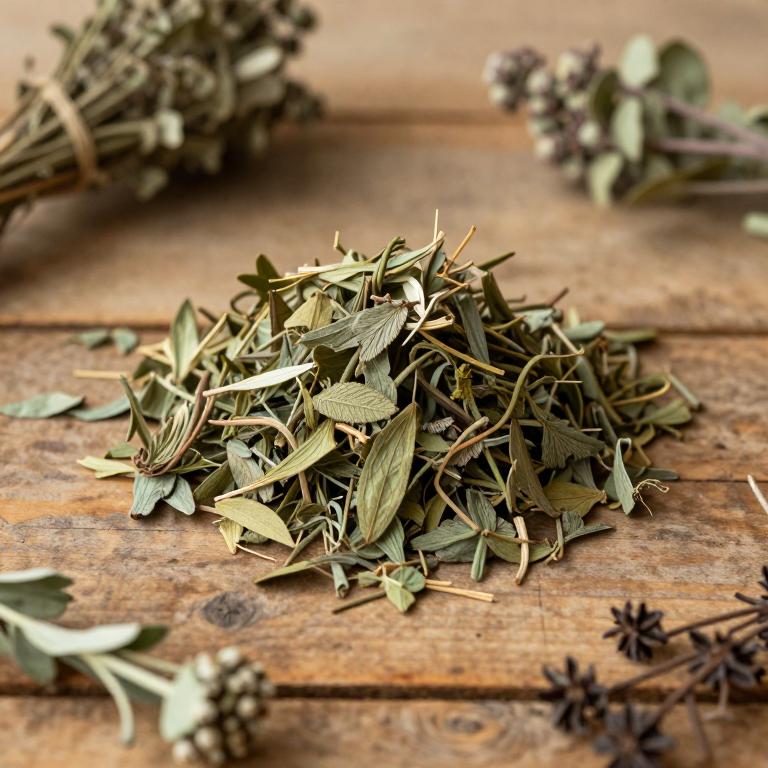
Names and Synonyms
Scientific Names
Accepted name
Tessaria absinthioidesSynonyms
- Baccharis banksiifolia
- Pluchea absinthioides
- Baccharis absinthioides
Regional and Traditional Names
Spanish:
- Pájaro bobo
Sources: Wikidata, Catalogue of Life
Taxonomical Classification
This plant, known scientifically as Tessaria absinthioides, belongs to the kingdom Plantae and the phylum Streptophyta. Within the class Equisetopsida and subclass Magnoliidae, it is classified under the order Asterales and the family Asteraceae. Finally, it is situated within the genus Tessaria.
| Rank | Classification |
|---|---|
| Kingdom | Plantae |
| Phylum | Streptophyta |
| Class | Equisetopsida |
| Subclass | Magnoliidae |
| Order | Asterales |
| Family | Asteraceae |
| Genus | Tessaria |
Sources: The World Checklist of Vascular Plants (WCVP)
Distribution
This plant exhibits a broad distribution across several regions of the South American continent. In Western South America, its presence is documented in both Bolivia and Peru. The species can also be found in Brazil, specifically within the southern part of the country. Moving toward the southern reaches of the continent, it inhabits the northeastern and southern regions of Argentina. Collectively, these locations highlight the plant's wide range across diverse South American landscapes.
| Region | Area |
|---|---|
| Western South America | Bolivia |
| Western South America | Peru |
| Brazil | Brazil South |
| Southern South America | Argentina Northeast |
| Southern South America | Argentina South |
| Southern South America | Argentina Northwest |
| Southern South America | Chile Central |
| Southern South America | Chile North |
| Southern South America | Paraguay |
| Southern South America | Uruguay |
Sources: The World Checklist of Vascular Plants (WCVP)
Botanical Identification
Ecology
The ecology of Tessaaria absinthioides is characterized by its ability to inhabit a vast vertical gradient within its native landscape, demonstrating significant adaptability to varying environmental conditions. This species thrives across a wide altitudinal spectrum, ranging from sea level up to an elevation of 3000 m AMSL. This expansive elevational range suggests that the plant can tolerate a diverse array of climatic variables, from the warmer, more humid conditions found at 0 m AMSL to the cooler, potentially more temperate or montane environments found at its upper limit of 3000 m AMSL. Such ecological plasticity allows the species to occupy multiple niche layers, facilitating its distribution across different topographical zones and varying levels of atmospheric pressure and temperature.
- Elevational range max:
- 3000 m AMSL
- Elevational range min:
- 0 m AMSL
Life history
The life history of Tessaeria absinthioides is characterized by a perennial lifecycle, allowing the plant to persist in its environment over multiple growing seasons. As a perennial species, it avoids the complete senescence seen in annuals, instead maintaining its structural integrity and biological functions through successive years. This longevity enables the plant to establish robust root systems and accumulate sufficient energy reserves to support repeated reproductive cycles, ensuring its continued presence and stability within its natural ecological niche.
- Lifecycle :
- perennial
Morphology
The morphology of Tessaeria absinthioides is characterized by its distinct growth form and structural adaptations. It is classified as a woody shrub, exhibiting a robust and woody constitution rather than being non-woody or variable. In terms of its habitat and ecological positioning, the plant is primarily terrestrial, lacking aquatic or semiaquatic tendencies, and it functions as an independent organism rather than acting as a parasite. Although it possesses certain structural characteristics, it is not an epiphyte, maintaining a strictly terrestrial existence rather than being a holoepiphyte, hemiepiphyte, or facultative epiphyte. Furthermore, while it exhibits a self-supporting growth habit, it does not function as an obligatory or facultative climber, liana, or vine, instead maintaining its upright, self-supporting shrub structure.
- Aquatic :
- terrestrial
- Climber :
- self-supporting
- Epiphyte :
- terrestrial
- Growth form :
- shrub
- Parasite :
- independent
- Woodiness :
- woody
Sources: Global Inventory of Floras and Traits (GIFT)
Chemicals
Tessaria absinthioides has 2 reported phytochemicals identified across 0 scientific publications and several other databases. The most consistently reported chemicals include Flavonoids, Sesquiterpenes.
| Chemical | Supporting sources | Consensus |
|---|---|---|
| Flavonoids | 1 supporting sources | ★☆☆☆☆ |
| Sesquiterpenes | 1 supporting sources | ★☆☆☆☆ |
Flavonoids
- Antioxidants (Basel, Switzerland)
Sesquiterpenes
- Antioxidants (Basel, Switzerland)
Activities
Tessaria absinthioides has 7 reported activities identified across 0 scientific publications and several other databases. The most consistently reported activities include Antioxidant, Antibacterial, Antimicrobial, Antimitogenic, Digestive.
| Activity | Supporting sources | Consensus |
|---|---|---|
| Antioxidant | 4 supporting sources | ★★☆☆☆ |
| Antibacterial | 1 supporting sources | ★☆☆☆☆ |
| Antimicrobial | 1 supporting sources | ★☆☆☆☆ |
| Antimitogenic | 1 supporting sources | ★☆☆☆☆ |
| Digestive | 1 supporting sources | ★☆☆☆☆ |
| Expectorant | 1 supporting sources | ★☆☆☆☆ |
| Hypocholesterolemic | 1 supporting sources | ★☆☆☆☆ |
Antioxidant
- Antioxidants (Basel, Switzerland)
- Plants (Basel, Switzerland)
- Journal of food science
- Frontiers in physiology
Antibacterial
- Antioxidants (Basel, Switzerland)
Antimicrobial
- Revista da Sociedade Brasileira de Medicina Tropical
Antimitogenic
- Frontiers in physiology
Digestive
- Antioxidants (Basel, Switzerland)
Expectorant
- Antioxidants (Basel, Switzerland)
Hypocholesterolemic
- Antioxidants (Basel, Switzerland)
Conditions
Tessaria absinthioides has 10 reported investigations on conditions identified across 0 scientific publications and several other databases. The most consistently reported conditions include Melanoma, Metastasis, atherogenesis, cardiovascular disease, expectorant.
| Condition | Supporting sources | Consensus |
|---|---|---|
| Melanoma | 1 supporting sources | ★☆☆☆☆ |
| Metastasis | 1 supporting sources | ★☆☆☆☆ |
| Atherogenesis | 1 supporting sources | ★☆☆☆☆ |
| Cardiovascular disease | 1 supporting sources | ★☆☆☆☆ |
| Expectorant | 1 supporting sources | ★☆☆☆☆ |
| Hepatitis | 1 supporting sources | ★☆☆☆☆ |
| Lipid peroxidation | 1 supporting sources | ★☆☆☆☆ |
| Pain | 1 supporting sources | ★☆☆☆☆ |
| Renal insufficiency | 1 supporting sources | ★☆☆☆☆ |
| Triglycerides | 1 supporting sources | ★☆☆☆☆ |
Melanoma
- Plants (Basel, Switzerland)
Metastasis
- Plants (Basel, Switzerland)
Atherogenesis
- Frontiers in physiology
Cardiovascular disease
- Frontiers in physiology
Expectorant
- Antioxidants (Basel, Switzerland)
Hepatitis
- Antioxidants (Basel, Switzerland)
Lipid peroxidation
- Frontiers in physiology
Pain
- Journal of ethnopharmacology
Renal insufficiency
- Antioxidants (Basel, Switzerland)
Triglycerides
- Frontiers in physiology
Preparations
Tessaria absinthioides has 3 reported preparations identified across 0 scientific publications and several other databases. The most consistently reported preparations include aqueous extract, ethanol 20% extracts, organic (OE) and aqueous extracts (AE).
| Preparation | Supporting sources | Consensus |
|---|---|---|
| Aqueous extract | 1 supporting sources | ★☆☆☆☆ |
| Ethanol 20% extracts | 1 supporting sources | ★☆☆☆☆ |
| Organic (oe) and aqueous extracts (ae) | 1 supporting sources | ★☆☆☆☆ |
Aqueous extract
- Frontiers in physiology
Ethanol 20% extracts
- Journal of food science
Organic (oe) and aqueous extracts (ae)
- Virology journal