Terminalia tree
Terminalia · Accepted scientific name
Scientific literature: Sparse (60 studies) · ★★☆☆☆
Terminalia tree, scientifically known as Terminalia, is a diverse genus of flowering plants highly valued in traditional medicine. Renowned for its potent bioactive compounds, various species offer significant therapeutic benefits, including anti-inflammatory, antimicrobial, and antioxidant properties. These versatile trees play a crucial role in holistic healing and herbal pharmacology.
- Family
- Combretaceae
- Native range
- Africa
- Parts used
- Fruit · Leaf
- Common names
- Cluster-Leafs · Tropical Almond
- Scientific synonyms
- Finetia · Buchenavia · 20 more
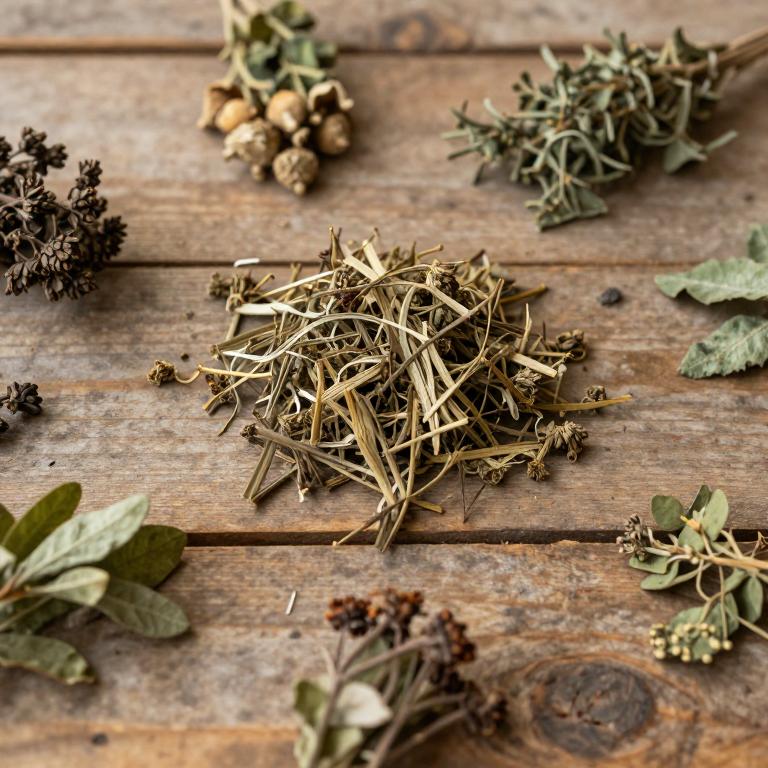
Names and Synonyms
Common Names
- Cluster-leafs
- tropical almond
Scientific Names
Accepted name
TerminaliaSynonyms
- Finetia
- Buchenavia
- Myrobalanifera
- Myrobalanus
- Vicentia
- Terminaliopsis
- Badamia
- Kniphofia
- Pamea
- Panel
- Ramatuela
- Adamaram
- Catappa
- Chuncoa
- Chicharronia
- Gimbernatia
- Tanibouca
- Anogeissus
- Fatraea
- Pteleopsis
- Bucida
- Pentaptera
Regional and Traditional Names
Spanish:
- Tanibouca
- Vicentia
- Myrobalanifera
- Chicharronia
- Catappa
- Pentaptera
- Ramatuela
- Chuncoa
- Myrobalanus
- Resinaria
- Fatrea
- Ramatuella
- Gimbernatea
- Mirobálanos o almendros tropicales
German:
- Myrobalanen
- Myrobalanen
Sources: Wikidata, Catalogue of Life
Taxonomical Classification
This plant belongs to the kingdom Plantae and the phylum Streptophyta, falling under the class Equisetopsida and subclass Magnoliidae. Within the order Myrtales, it is classified under the family Combretaceae. Finally, its taxonomic identification is completed at the genus level as Terminalia.
| Rank | Classification |
|---|---|
| Kingdom | Plantae |
| Phylum | Streptophyta |
| Class | Equisetopsida |
| Subclass | Magnoliidae |
| Order | Myrtales |
| Family | Combretaceae |
| Genus | Terminalia |
Sources: The World Checklist of Vascular Plants (WCVP)
Distribution
This plant exhibits a diverse geographical range spanning across different regions of Africa and its surrounding islands. In the Macaronesian region, it can be found specifically within Cape Verde. Moving to the mainland, it is widely distributed throughout West Tropical Africa. Its presence is documented in several nations, including Benin and Burkina. Additionally, the species extends its reach to include the countries of Gambia and Ghana.
| Region | Area |
|---|---|
| Macaronesia | Cape Verde |
| West Tropical Africa | Benin |
| West Tropical Africa | Burkina |
| West Tropical Africa | Gambia |
| West Tropical Africa | Ghana |
| West Tropical Africa | Guinea-Bissau |
| West Tropical Africa | Guinea |
| West Tropical Africa | Ivory Coast |
| West Tropical Africa | Liberia |
| West Tropical Africa | Mali |
Sources: The World Checklist of Vascular Plants (WCVP)
Plant Parts
Terminalia has 5 reported plant parts identified across 5 scientific publications and several other databases that are studied for medicinal purposes. The most consistently reported plant part include fruit, leaf, root, seed, stem.
| Plant part | Supporting sources | Consensus |
|---|---|---|
| Fruit | 1 supporting sources | ★☆☆☆☆ |
| Leaf | 1 supporting sources | ★☆☆☆☆ |
| Root | 1 supporting sources | ★☆☆☆☆ |
| Seed | 1 supporting sources | ★☆☆☆☆ |
| Stem | 1 supporting sources | ★☆☆☆☆ |
Fruit
- Journal of ethnopharmacology
Leaf
- Journal of ethnopharmacology
Root
- Journal of ethnopharmacology
Seed
- Journal of ethnopharmacology
Stem
- Journal of ethnopharmacology
Chemicals
Terminalia has 8 reported phytochemicals identified across 5 scientific publications and several other databases. The most consistently reported chemicals include Knipholone, Tannins, ESCHWEILENOL C, Flavonoids, Knipholone anthrone.
| Chemical | Supporting sources | Consensus |
|---|---|---|
| Knipholone | 2 supporting sources | ★☆☆☆☆ |
| Tannins | 2 supporting sources | ★☆☆☆☆ |
| ESCHWEILENOL C | 1 supporting sources | ★☆☆☆☆ |
| Flavonoids | 1 supporting sources | ★☆☆☆☆ |
| Knipholone anthrone | 1 supporting sources | ★☆☆☆☆ |
| Stilbenes | 1 supporting sources | ★☆☆☆☆ |
| Terpenes | 1 supporting sources | ★☆☆☆☆ |
| arjunglucoside I | 1 supporting sources | ★☆☆☆☆ |
Knipholone
- Natural product reports
- Pharmaceutical biology
Tannins
- Inflammopharmacology
- Antibiotics (Basel, Switzerland)
ESCHWEILENOL C
- Malaria journal
Flavonoids
- Antibiotics (Basel, Switzerland)
Knipholone anthrone
- Pharmaceutical biology
Stilbenes
- Antibiotics (Basel, Switzerland)
Terpenes
- Antibiotics (Basel, Switzerland)
arjunglucoside I
- Antibiotics (Basel, Switzerland)
Activities
Terminalia has 19 reported activities identified across 5 scientific publications and several other databases. The most consistently reported activities include Antioxidant, Antimalarial, Antifungal, Analgesic, Antibacterial.
| Activity | Supporting sources | Consensus |
|---|---|---|
| Antioxidant | 5 supporting sources | ★★★☆☆ |
| Antimalarial | 4 supporting sources | ★★☆☆☆ |
| Antifungal | 3 supporting sources | ★★☆☆☆ |
| Analgesic | 2 supporting sources | ★☆☆☆☆ |
| Antibacterial | 2 supporting sources | ★☆☆☆☆ |
| Antiinflammatory | 2 supporting sources | ★☆☆☆☆ |
| Antimicrobial | 2 supporting sources | ★☆☆☆☆ |
| Antiviral | 2 supporting sources | ★☆☆☆☆ |
| Anticancer | 1 supporting sources | ★☆☆☆☆ |
| Antiparasitic | 1 supporting sources | ★☆☆☆☆ |
Antioxidant
- Journal of ethnopharmacology
- Frontiers in pharmacology
- Inflammopharmacology
- Natural products and bioprospecting
- Pharmaceutical biology
Antimalarial
- Inflammopharmacology
- Natural product reports
- Natural products and bioprospecting
- Pharmaceutical biology
Antifungal
- Frontiers in pharmacology
- Inflammopharmacology
- Natural products and bioprospecting
Analgesic
- Inflammopharmacology
- Natural products and bioprospecting
Antibacterial
- Frontiers in pharmacology
- Inflammopharmacology
Antiinflammatory
- Frontiers in pharmacology
- Inflammopharmacology
Antimicrobial
- Journal of ethnopharmacology
- Natural products and bioprospecting
Antiviral
- Frontiers in pharmacology
- Inflammopharmacology
Anticancer
- Inflammopharmacology
Antiparasitic
- Journal of ethnopharmacology
Conditions
Terminalia has 11 reported investigations on conditions identified across 5 scientific publications and several other databases. The most consistently reported conditions include cancer, conjunctivitis, diarrhea, fever, headache.
| Condition | Supporting sources | Consensus |
|---|---|---|
| Cancer | 1 supporting sources | ★☆☆☆☆ |
| Conjunctivitis | 1 supporting sources | ★☆☆☆☆ |
| Diarrhea | 1 supporting sources | ★☆☆☆☆ |
| Fever | 1 supporting sources | ★☆☆☆☆ |
| Headache | 1 supporting sources | ★☆☆☆☆ |
| Heart disorder | 1 supporting sources | ★☆☆☆☆ |
| Leprosy | 1 supporting sources | ★☆☆☆☆ |
| Memory | 1 supporting sources | ★☆☆☆☆ |
| Pneumonia | 1 supporting sources | ★☆☆☆☆ |
| Sexually transmitted diseases | 1 supporting sources | ★☆☆☆☆ |
Cancer
- Frontiers in pharmacology
Conjunctivitis
- Frontiers in pharmacology
Diarrhea
- Frontiers in pharmacology
Fever
- Frontiers in pharmacology
Headache
- Frontiers in pharmacology
Heart disorder
- Frontiers in pharmacology
Leprosy
- Frontiers in pharmacology
Memory
- Frontiers in pharmacology
Pneumonia
- Frontiers in pharmacology
Sexually transmitted diseases
- Frontiers in pharmacology