Terminalia pendula var. phillyreifolia
Terminalia pendula var. phillyreifolia · Accepted scientific name
Scientific literature: Very Sparse (34 studies) · ★☆☆☆☆
scientifically known as Terminalia pendula var. phillyreifolia, is a significant medicinal plant valued for its diverse therapeutic properties. Belonging to the Combretaceae family, this variety is prized in traditional medicine for its bark and leaves, which are frequently utilized to treat various ailments, offering profound natural healing potential.
- Family
- Combretaceae
- Native range
- Asia-Tropical
- Parts used
- Leaf · Stem
- Common names
- Not available
- Scientific synonyms
- Anogeissus Acuminata Var. Phillyreifolia · Terminalia Phillyreifolia · 1 more
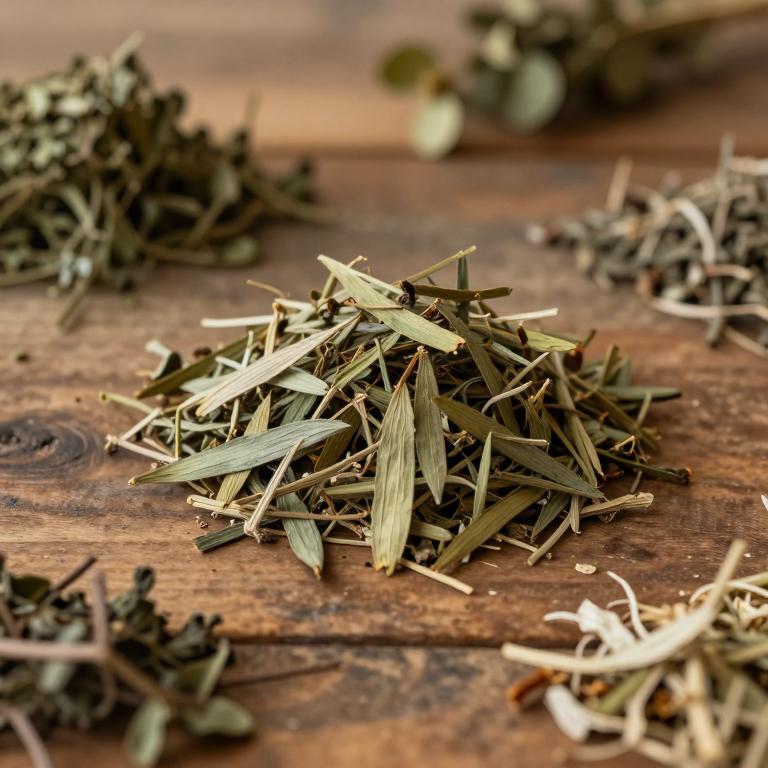
Names and Synonyms
Scientific Names
Accepted name
Terminalia pendula var. phillyreifoliaSynonyms
- Anogeissus acuminata var. phillyreifolia
- Terminalia phillyreifolia
- Anogeissus phillyreifolia
Taxonomical Classification
This plant belongs to the kingdom Plantae within the phylum Streptophyta and the class Equisetopsida. Classified under the subclass Magnoliidae and the order Myrtales, it is a member of the family Combretaceae. It is specifically identified under the genus Terminalia as the variety pendula var. phillyreifolia.
| Rank | Classification |
|---|---|
| Kingdom | Plantae |
| Phylum | Streptophyta |
| Class | Equisetopsida |
| Subclass | Magnoliidae |
| Order | Myrtales |
| Family | Combretaceae |
| Genus | Terminalia |
Sources: The World Checklist of Vascular Plants (WCVP)
Distribution
This plant, Terminalia pendula var. phillyreifolia, possesses a very specific and limited geographical range. Its presence is primarily noted within the broader Indo-China region. Specifically, the natural distribution of this particular variety is concentrated in Myanmar. This localized occurrence suggests that the species is adapted to the unique environmental conditions found in that area. Consequently, its habitat remains geographically restricted to this specific part of Southeast Asia.
| Region | Area |
|---|---|
| Indo-China | Myanmar |
Sources: The World Checklist of Vascular Plants (WCVP)
Plant Parts
Terminalia pendula var. phillyreifolia has 2 reported plant parts identified across 2 scientific publications and several other databases that are studied for medicinal purposes. The most consistently reported plant part include leaf, stem.
| Plant part | Supporting sources | Consensus |
|---|---|---|
| Leaf | 1 supporting sources | ★☆☆☆☆ |
| Stem | 1 supporting sources | ★☆☆☆☆ |
Leaf
- Natural product research
Stem
- Natural product research
Chemicals
Terminalia pendula var. phillyreifolia has 9 reported phytochemicals identified across 2 scientific publications and several other databases. The most consistently reported chemicals include Anthraquinones, Cardiac Glycosides, Flavonoids, Glycosides, Lignans.
| Chemical | Supporting sources | Consensus |
|---|---|---|
| Anthraquinones | 1 supporting sources | ★☆☆☆☆ |
| Cardiac Glycosides | 1 supporting sources | ★☆☆☆☆ |
| Flavonoids | 1 supporting sources | ★☆☆☆☆ |
| Glycosides | 1 supporting sources | ★☆☆☆☆ |
| Lignans | 1 supporting sources | ★☆☆☆☆ |
| Saponins | 1 supporting sources | ★☆☆☆☆ |
| Steroids | 1 supporting sources | ★☆☆☆☆ |
| Tannins | 1 supporting sources | ★☆☆☆☆ |
| Terpenoids | 1 supporting sources | ★☆☆☆☆ |
Anthraquinones
- Natural product research
Cardiac Glycosides
- Natural product research
Flavonoids
- Natural product research
Glycosides
- Natural product research
Lignans
- Natural product research
Saponins
- Natural product research
Steroids
- Natural product research
Tannins
- Natural product research
Terpenoids
- Natural product research
Activities
Terminalia pendula var. phillyreifolia has 7 reported activities identified across 2 scientific publications and several other databases. The most consistently reported activities include Antimicrobial, Antinociceptive, Antioxidant, Antiplasmodial, Antithrombotic.
| Activity | Supporting sources | Consensus |
|---|---|---|
| Antimicrobial | 1 supporting sources | ★☆☆☆☆ |
| Antinociceptive | 1 supporting sources | ★☆☆☆☆ |
| Antioxidant | 1 supporting sources | ★☆☆☆☆ |
| Antiplasmodial | 1 supporting sources | ★☆☆☆☆ |
| Antithrombotic | 1 supporting sources | ★☆☆☆☆ |
| Antiviral | 1 supporting sources | ★☆☆☆☆ |
| Cardioprotective | 1 supporting sources | ★☆☆☆☆ |
Antimicrobial
- Natural product research
Antinociceptive
- Natural product research
Antioxidant
- Natural product research
Antiplasmodial
- Natural product research
Antithrombotic
- Natural product research
Antiviral
- Natural product research
Cardioprotective
- Natural product research