White Chebulic Myrobalan
Terminalia pallida · Accepted scientific name
Scientific literature: Very Extensive (207 studies) · ★★★★★
White Chebulic Myrobalan, scientifically known as Terminalia pallida, is a significant medicinal tree native to South and Southeast Asia. Widely used in Ayurvedic medicine, it possesses potent antioxidant, anti-inflammatory, and antimicrobial properties. Its fruits and bark are traditionally utilized to treat digestive ailments, skin infections, and various systemic inflammations.
- Family
- Combretaceae
- Native range
- Asia-Tropical
- Parts used
- Fruit
- Common names
- White Chebulic Myrobalan · White Gallnut
- Scientific synonyms
- Terminalia Brandisii
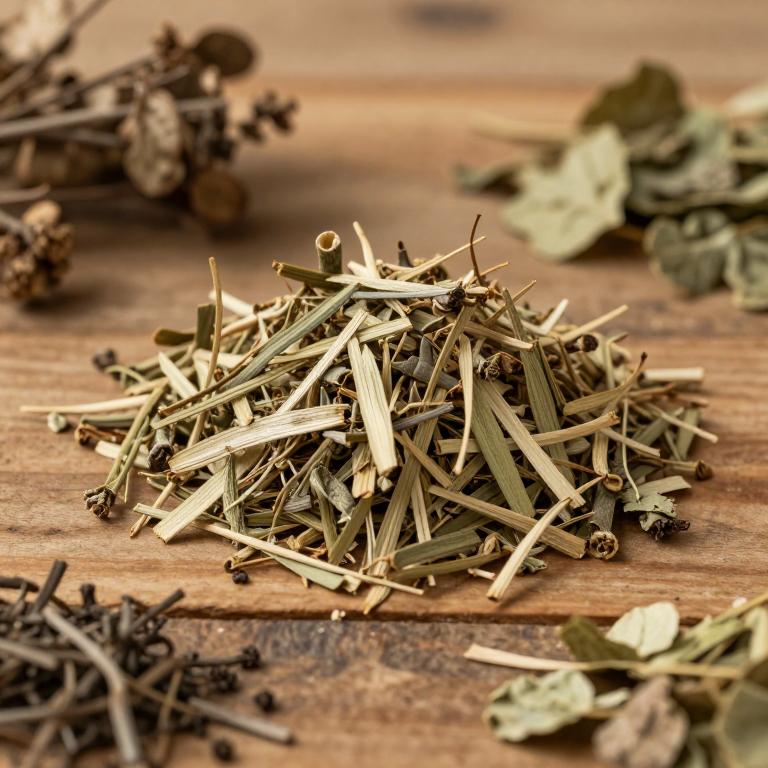
Names and Synonyms
Common Names
- White Chebulic Myrobalan
- white gallnut
Scientific Names
Accepted name
Terminalia pallidaSynonyms
- Terminalia brandisii
Sources: Wikidata, Catalogue of Life
Taxonomical Classification
This plant belongs to the kingdom Plantae and the phylum Streptophyta, falling under the class Equisetopsida and subclass Magnoliidae. Within the order Myrtales, it is classified under the family Combretaceae. Ultimately, it is identified by the genus Terminalia as the species Terminalia pallida.
| Rank | Classification |
|---|---|
| Kingdom | Plantae |
| Phylum | Streptophyta |
| Class | Equisetopsida |
| Subclass | Magnoliidae |
| Order | Myrtales |
| Family | Combretaceae |
| Genus | Terminalia |
Sources: The World Checklist of Vascular Plants (WCVP)
Distribution
This plant is specifically recognized for its occurrence within the Indian Subcontinent. Its primary geographical presence is concentrated within the borders of India. Within this vast region, it occupies specific ecological niches suitable for its growth. Detailed botanical studies focus on its native habitat across the diverse landscapes of the country. Therefore, its known distribution is strictly limited to the Indian territory.
| Region | Area |
|---|---|
| Indian Subcontinent | India |
Sources: The World Checklist of Vascular Plants (WCVP)
Botanical Identification
Morphology
The morphology of Terminalia pallida is characterized by its distinct growth form as a tree, exhibiting a robust and well-developed structure. It possesses a woody nature, featuring a solid, lignified stem and branches that provide the necessary mechanical support for its stature.
- Growth form :
- tree
- Woodiness :
- woody
Sources: Global Inventory of Floras and Traits (GIFT)
Plant Parts
Terminalia pallida has 1 reported plant parts identified across 1 scientific publications and several other databases that are studied for medicinal purposes. The most consistently reported plant part include fruit.
| Plant part | Supporting sources | Consensus |
|---|---|---|
| Fruit | 1 supporting sources | ★☆☆☆☆ |
Fruit
- Journal of ethnopharmacology
Chemicals
Terminalia pallida has 13 reported phytochemicals identified across 1 scientific publications and several other databases. The most consistently reported chemicals include BETA-SITOSTEROL, Crataegolic acid, Gallic acid, Isocetic acid, MYRISTIC ACID.
| Chemical | Supporting sources | Consensus |
|---|---|---|
| BETA-SITOSTEROL | 1 supporting sources | ★☆☆☆☆ |
| Crataegolic acid | 1 supporting sources | ★☆☆☆☆ |
| Gallic acid | 1 supporting sources | ★☆☆☆☆ |
| Isocetic acid | 1 supporting sources | ★☆☆☆☆ |
| MYRISTIC ACID | 1 supporting sources | ★☆☆☆☆ |
| Maslinic acid | 1 supporting sources | ★☆☆☆☆ |
| OLEANOLIC ACID | 1 supporting sources | ★☆☆☆☆ |
| ellagic acid | 1 supporting sources | ★☆☆☆☆ |
| lauric acid | 1 supporting sources | ★☆☆☆☆ |
| linoleic acid | 1 supporting sources | ★☆☆☆☆ |
BETA-SITOSTEROL
- Dr. Duke
Crataegolic acid
- Dr. Duke
Gallic acid
- Dr. Duke
Isocetic acid
- Dr. Duke
MYRISTIC ACID
- Dr. Duke
Maslinic acid
- Dr. Duke
OLEANOLIC ACID
- Dr. Duke
ellagic acid
- Dr. Duke
lauric acid
- Dr. Duke
linoleic acid
- Dr. Duke
Activities
Terminalia pallida has 189 reported activities identified across 1 scientific publications and several other databases. The most consistently reported activities include Antioxidant, 5-Alpha-Reductase-Inhibitor, ACE-Inhibitor, Abortifacient, Aldose-Reductase-Inhibitor.
| Activity | Supporting sources | Consensus |
|---|---|---|
| Antioxidant | 2 supporting sources | ★☆☆☆☆ |
| 5-Alpha-Reductase-Inhibitor | 1 supporting sources | ★☆☆☆☆ |
| ACE-Inhibitor | 1 supporting sources | ★☆☆☆☆ |
| Abortifacient | 1 supporting sources | ★☆☆☆☆ |
| Aldose-Reductase-Inhibitor | 1 supporting sources | ★☆☆☆☆ |
| Allergenic | 1 supporting sources | ★☆☆☆☆ |
| Alpha-Reductase-Inhibitor | 1 supporting sources | ★☆☆☆☆ |
| Analgesic | 1 supporting sources | ★☆☆☆☆ |
| Androgenic | 1 supporting sources | ★☆☆☆☆ |
| Anemiagenic | 1 supporting sources | ★☆☆☆☆ |
Antioxidant
- Dr. Duke
- Journal of ethnopharmacology
5-Alpha-Reductase-Inhibitor
- Dr. Duke
ACE-Inhibitor
- Dr. Duke
Abortifacient
- Dr. Duke
Aldose-Reductase-Inhibitor
- Dr. Duke
Allergenic
- Dr. Duke
Alpha-Reductase-Inhibitor
- Dr. Duke
Analgesic
- Dr. Duke
Androgenic
- Dr. Duke
Anemiagenic
- Dr. Duke
Conditions
Terminalia pallida has 1 reported investigations on conditions identified across 1 scientific publications and several other databases. The most consistently reported conditions include myocardial infarction.
| Condition | Supporting sources | Consensus |
|---|---|---|
| Myocardial infarction | 1 supporting sources | ★☆☆☆☆ |
Myocardial infarction
- Journal of ethnopharmacology