Black afara
Terminalia ivorensis · Accepted scientific name
Scientific literature: Very Extensive (230 studies) · ★★★★★
Black afara, scientifically known as Terminalia ivorensis, is a significant medicinal tree native to West African rainforests. Renowned for its versatile therapeutic properties, various parts of the plant are utilized in traditional medicine to treat ailments such as skin infections, digestive issues, and inflammatory conditions, offering valuable ethnobotanical insights.
- Family
- Combretaceae
- Native range
- Africa
- Parts used
- Leaf · Stem
- Common names
- Black Afara · Blackbark · 3 more
- Scientific synonyms
- Not available
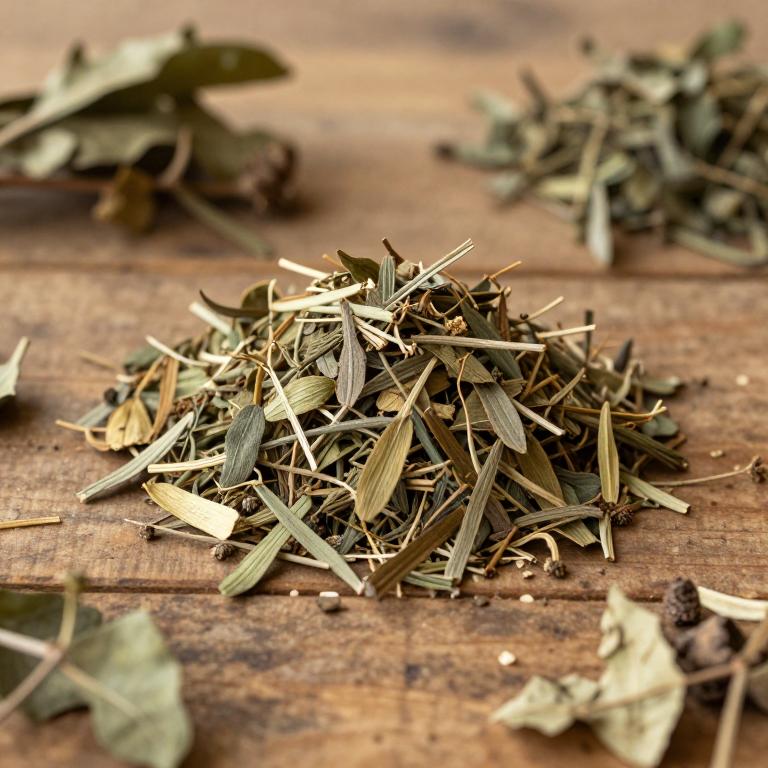
Names and Synonyms
Common Names
- Black Afara
- blackbark
- brimstonewood
- satinwood
- shinglewood
Scientific Names
Accepted name
Terminalia ivorensisRegional and Traditional Names
Spanish:
- Almendro de Costa de Marfil
French:
- Framiré
Sources: Wikidata, Catalogue of Life
Taxonomical Classification
This plant belongs to the kingdom Plantae and is classified under the phylum Streptophyta and class Equisetopsida. Within the subclass Magnoliidae, it falls under the order Myrtales and is a member of the family Combretaceae. Finally, its taxonomic identity is defined by the genus Terminalia.
| Rank | Classification |
|---|---|
| Kingdom | Plantae |
| Phylum | Streptophyta |
| Class | Equisetopsida |
| Subclass | Magnoliidae |
| Order | Myrtales |
| Family | Combretaceae |
| Genus | Terminalia |
Sources: The World Checklist of Vascular Plants (WCVP)
Distribution
This plant is primarily distributed across the diverse landscapes of West Tropical Africa. Within this broad region, it can be found growing in the country of Benin. Its presence is also documented throughout Burkina Faso. Furthermore, the species extends its reach into the nation of Gambia. Finally, its geographical range includes the territories of both Ghana and Guinea.
| Region | Area |
|---|---|
| West Tropical Africa | Benin |
| West Tropical Africa | Burkina |
| West Tropical Africa | Gambia |
| West Tropical Africa | Ghana |
| West Tropical Africa | Guinea |
| West Tropical Africa | Ivory Coast |
| West Tropical Africa | Liberia |
| West Tropical Africa | Nigeria |
| West Tropical Africa | Sierra Leone |
| West-Central Tropical Africa | Cameroon |
Sources: The World Checklist of Vascular Plants (WCVP)
Botanical Identification
Ecology
The ecology of Terminalia ivorensis is characterized by its specific niche within montane or highland ecosystems, where it thrives within a distinct altitudinal band. This species is primarily distributed across an elevational range that begins at a minimum of 1020 m AMSL and extends up to a maximum of 1500 m AMSL. Occupying these mid-to-high altitude zones, the plant is adapted to the specific microclimatic conditions found in these elevations, which often involve distinct temperature gradients and moisture regimes compared to lowland tropical forests. Its presence within this 480-meter vertical span suggests a specialized dependency on the environmental parameters typical of these highland habitats, influencing its growth patterns and its role within the local biodiversity.
- Elevational range max:
- 1500 m AMSL
- Elevational range min:
- 1020 m AMSL
Life history
The life history of Terminalia ivorenensis is characterized by its existence as a perennial species, ensuring its long-term presence within its ecological niche. As a phanerophyte, the plant maintains its photosynthetic organs on elevated structures, specifically as a phanerophyte that grows in a tree-like habit with buds located well above the ground. Its physiological cycle includes a deciduous phase, during which it sheds its foliage, a strategic adaptation likely tied to seasonal moisture availability or light competition.
- Deciduousness :
- deciduous
- Life form :
- phanerophyte
- Lifecycle :
- perennial
Morphology
The morphology of Terminalia ivorensis is characterized by its stature as a large, woody tree, exhibiting a robust growth form. It is a self-supporting plant that reaches an average height of approximately 30 m, though it can attain a maximum height of up to 45.72 m. As a terrestrial species, it does not exhibit aquatic or semiaquatic tendencies, nor does it function as an epiphyte; instead, it grows independently as a non-parasitic organism. Its structural development is strictly that of a self-supporting tree, lacking any vine, liana, or climbing habits.
- Aquatic :
- terrestrial
- Climber :
- self-supporting
- Epiphyte :
- terrestrial
- Growth form :
- tree
- Parasite :
- independent
- Plant height max:
- 45.72055596 m
- Plant height mean:
- 30 m
- Woodiness :
- woody
Physiology
The physiology of Terminalia ivorensis is characterized by a C3 photosynthetic pathway, which dictates its carbon fixation processes and metabolic efficiency within its natural habitat. As a non-nitrogen-fixing species, the plant does not possess the biological mechanisms to convert atmospheric nitrogen into usable forms through symbiotic relationships, meaning it relies entirely on the uptake of nitrogenous compounds available in the soil to support its growth and nutritional requirements.
- Nitrogen fixer :
- no
- Photosynthetic pathway :
- C3
Reproduction
The reproduction of Terminalia ivorensis is characterized by biotic pollination mechanisms, primarily driven by insects, with specific evidence pointing to butterflies as key pollinators. The species does not exhibit self-fertilization, indicating a reliance on cross-pollination to maintain genetic diversity. Once fertilization is successful, the plant utilizes an anemochorous dispersal syndrome, meaning its seeds are dispersed by the wind. The resulting seeds are relatively small, with a mean mass of approximately 0.13316 g, though individual seed weights vary within a range of 0.0909 g to a maximum of 0.16474 g.
- Dispersal syndrome :
- anemochorous
- Pollination syndrome :
- insect
- Pollination syndrome :
- butterfly
- Pollination syndrome :
- biotic
- Seed mass max:
- 0.16474 g
- Seed mass mean:
- 0.13316 g
- Seed mass min:
- 0.0909 g
- Self fertilization :
- absent
Sources: Global Inventory of Floras and Traits (GIFT)
Plant Parts
Terminalia ivorensis has 2 reported plant parts identified across 3 scientific publications and several other databases that are studied for medicinal purposes. The most consistently reported plant part include leaf, stem.
| Plant part | Supporting sources | Consensus |
|---|---|---|
| Leaf | 2 supporting sources | ★☆☆☆☆ |
| Stem | 1 supporting sources | ★☆☆☆☆ |
Leaf
- Phytotherapy research : PTR
- Parasitology research
Stem
- Phytotherapy research : PTR
Chemicals
Terminalia ivorensis has 11 reported phytochemicals identified across 3 scientific publications and several other databases. The most consistently reported chemicals include ellagic acid, Coumarins, Flavonoids, GLYCYRRHETINIC ACID, Leucodelphidin.
| Chemical | Supporting sources | Consensus |
|---|---|---|
| ellagic acid | 2 supporting sources | ★☆☆☆☆ |
| Coumarins | 1 supporting sources | ★☆☆☆☆ |
| Flavonoids | 1 supporting sources | ★☆☆☆☆ |
| GLYCYRRHETINIC ACID | 1 supporting sources | ★☆☆☆☆ |
| Leucodelphidin | 1 supporting sources | ★☆☆☆☆ |
| Saponins | 1 supporting sources | ★☆☆☆☆ |
| Sericic acid | 1 supporting sources | ★☆☆☆☆ |
| Tannins | 1 supporting sources | ★☆☆☆☆ |
| Terminolic acid | 1 supporting sources | ★☆☆☆☆ |
| polyphenols | 1 supporting sources | ★☆☆☆☆ |
ellagic acid
- Dr. Duke
- Journal of ethnopharmacology
Coumarins
- African health sciences
Flavonoids
- African health sciences
GLYCYRRHETINIC ACID
- Dr. Duke
Leucodelphidin
- Journal of ethnopharmacology
Saponins
- African health sciences
Sericic acid
- Dr. Duke
Tannins
- African health sciences
Terminolic acid
- Dr. Duke
polyphenols
- African health sciences
Activities
Terminalia ivorensis has 193 reported activities identified across 3 scientific publications and several other databases. The most consistently reported activities include Analgesic, 11B-HSD-Inhibitor, 5-Lipoxygenase-Inhibitor, ACE-Inhibitor, ATPase-Inhibitor.
| Activity | Supporting sources | Consensus |
|---|---|---|
| Analgesic | 3 supporting sources | ★★☆☆☆ |
| 11B-HSD-Inhibitor | 1 supporting sources | ★☆☆☆☆ |
| 5-Lipoxygenase-Inhibitor | 1 supporting sources | ★☆☆☆☆ |
| ACE-Inhibitor | 1 supporting sources | ★☆☆☆☆ |
| ATPase-Inhibitor | 1 supporting sources | ★☆☆☆☆ |
| Abortifacient | 1 supporting sources | ★☆☆☆☆ |
| Aldehyde-Oxidase-Inhibitor | 1 supporting sources | ★☆☆☆☆ |
| Aldose-Reductase-Inhibitor | 1 supporting sources | ★☆☆☆☆ |
| Allelochemic | 1 supporting sources | ★☆☆☆☆ |
| Allergenic | 1 supporting sources | ★☆☆☆☆ |
Analgesic
- Dr. Duke
- BMC complementary and alternative medicine
- Drug research
11B-HSD-Inhibitor
- Dr. Duke
5-Lipoxygenase-Inhibitor
- Dr. Duke
ACE-Inhibitor
- Dr. Duke
ATPase-Inhibitor
- Dr. Duke
Abortifacient
- Dr. Duke
Aldehyde-Oxidase-Inhibitor
- Dr. Duke
Aldose-Reductase-Inhibitor
- Dr. Duke
Allelochemic
- Dr. Duke
Allergenic
- Dr. Duke
Conditions
Terminalia ivorensis has 11 reported investigations on conditions identified across 3 scientific publications and several other databases. The most consistently reported conditions include malaria, Plasmodium falciparum, analgesic, antioxidant effect, antipyretic.
| Condition | Supporting sources | Consensus |
|---|---|---|
| Malaria | 4 supporting sources | ★★☆☆☆ |
| Plasmodium falciparum | 1 supporting sources | ★☆☆☆☆ |
| Analgesic | 1 supporting sources | ★☆☆☆☆ |
| Antioxidant effect | 1 supporting sources | ★☆☆☆☆ |
| Antipyretic | 1 supporting sources | ★☆☆☆☆ |
| Gastroenteritis | 1 supporting sources | ★☆☆☆☆ |
| Pain | 1 supporting sources | ★☆☆☆☆ |
| Psychosis | 1 supporting sources | ★☆☆☆☆ |
| Psychotic disorder | 1 supporting sources | ★☆☆☆☆ |
| Trypanosoma brucei brucei | 1 supporting sources | ★☆☆☆☆ |
Malaria
- Phytotherapy research : PTR
- Malaria journal
- Journal of ethnopharmacology
- Parasitology research
Plasmodium falciparum
- Malaria journal
Analgesic
- BMC complementary and alternative medicine
Antioxidant effect
- Journal of evidence-based integrative medicine
Antipyretic
- BMC complementary and alternative medicine
Gastroenteritis
- Drug research
Pain
- Drug research
Psychosis
- Drug research
Psychotic disorder
- Drug research
Trypanosoma brucei brucei
- African journal of traditional, complementary, and alternative medicines : AJTCAM
Preparations
Terminalia ivorensis has 11 reported preparations identified across 3 scientific publications and several other databases. The most consistently reported preparations include extracts, 70% ethanolic 70% extracts of trunk barks, Bon-santé cleanser®, Extracts, aqueous extracts.
| Preparation | Supporting sources | Consensus |
|---|---|---|
| Extracts | 2 supporting sources | ★☆☆☆☆ |
| 70% ethanolic 70% extracts of trunk barks | 1 supporting sources | ★☆☆☆☆ |
| Bon-santé cleanser® | 1 supporting sources | ★☆☆☆☆ |
| Extracts | 1 supporting sources | ★☆☆☆☆ |
| Aqueous extracts | 1 supporting sources | ★☆☆☆☆ |
| Aqueous extracts of trunk barks | 1 supporting sources | ★☆☆☆☆ |
| Aqueous residue extracts of trunk barks | 1 supporting sources | ★☆☆☆☆ |
| Crude extracts | 1 supporting sources | ★☆☆☆☆ |
| Fractions | 1 supporting sources | ★☆☆☆☆ |
| Leaf extracts | 1 supporting sources | ★☆☆☆☆ |
Extracts
- Journal of evidence-based integrative medicine
- Journal of ethnopharmacology
70% ethanolic 70% extracts of trunk barks
- African health sciences
Bon-santé cleanser®
- BMC complementary and alternative medicine
Extracts
- Malaria journal
Aqueous extracts
- Parasitology research
Aqueous extracts of trunk barks
- African health sciences
Aqueous residue extracts of trunk barks
- African health sciences
Crude extracts
- Virology journal
Fractions
- Malaria journal
Leaf extracts
- Phytotherapy research : PTR