Terminalia fagifolia
Terminalia fagifolia · Accepted scientific name
Scientific literature: Very Sparse (18 studies) · ★☆☆☆☆
Terminalia fagifolia, scientifically known as Terminalia fagifolia, is a versatile medicinal plant highly valued in traditional healing practices. Renowned for its diverse pharmacological properties, it is frequently utilized to treat various ailments, including inflammation and skin disorders. This botanical species offers significant potential for modern therapeutic drug development.
- Family
- Combretaceae
- Native range
- Southern America
- Parts used
- Not available
- Common names
- Not available
- Scientific synonyms
- Myrobalanus Fagifolia · Terminalia Lanceolata · 2 more
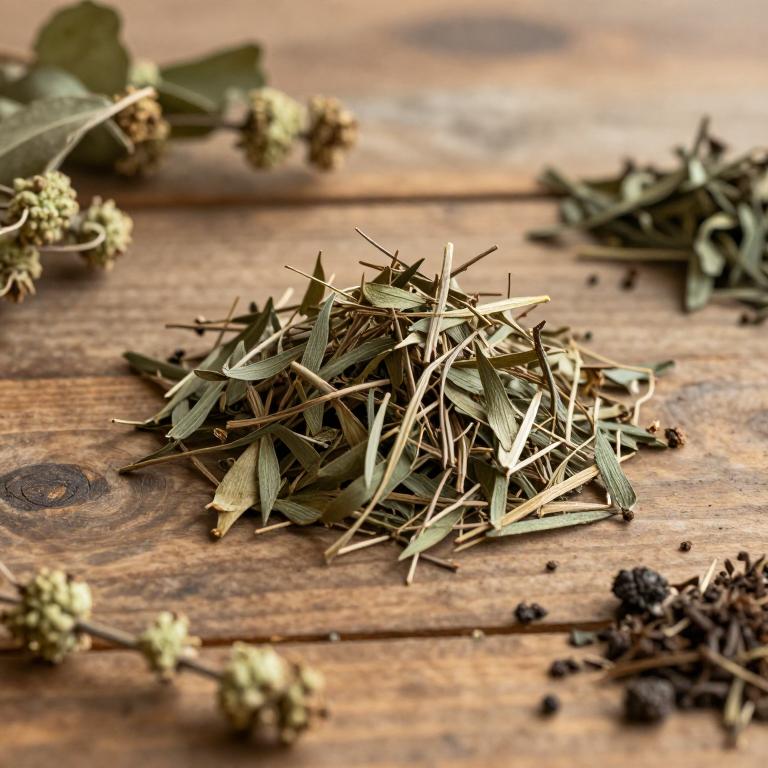
Names and Synonyms
Scientific Names
Accepted name
Terminalia fagifoliaSynonyms
- Myrobalanus fagifolia
- Terminalia lanceolata
- Terminalia fagifolia var. parvifolia
- Terminalia fagifolia var. angustifolia
Sources: Wikidata, Catalogue of Life
Taxonomical Classification
This plant belongs to the kingdom Plantae and is classified under the phylum Streptophyta and class Equisetopsida. Within the subclass Magnoliidae, it is positioned in the order Myrtales and the family Combretaceae. Finally, it is identified by its genus, Terminalia.
| Rank | Classification |
|---|---|
| Kingdom | Plantae |
| Phylum | Streptophyta |
| Class | Equisetopsida |
| Subclass | Magnoliidae |
| Order | Myrtales |
| Family | Combretaceae |
| Genus | Terminalia |
Sources: The World Checklist of Vascular Plants (WCVP)
Distribution
This plant exhibits a broad geographical presence across several distinct regions of South America. Within the continent, it can be found growing in the nation of Bolivia. In Brazil, its distribution is quite extensive, covering the West-Central territory. Additionally, the species is documented throughout the Northeast region of Brazil. Finally, it also inhabits the Southeast portion of the Brazilian landscape.
| Region | Area |
|---|---|
| Western South America | Bolivia |
| Brazil | Brazil West-Central |
| Brazil | Brazil Northeast |
| Brazil | Brazil Southeast |
Sources: The World Checklist of Vascular Plants (WCVP)
Botanical Identification
Ecology
The ecology of Terminalia fagifolia is characterized by its remarkable adaptability across several distinct Brazilian biomes, allowing it to occupy a diverse range of environmental niches. It is commonly found within the Caatinga (stricto sensu), where it must withstand semi-arid conditions, as well as in the Cerrado (lato sensu), navigating seasonal water fluctuations and specific soil compositions. Furthermore, the species thrives in more humid and sheltered environments, including Floresta Ciliar or Galeria (riparian forests), where it benefits from proximity to watercourses, and the Floresta Estacional Decidual (seasonal deciduous forest), where its phenology is closely tied to seasonal shifts in rainfall and leaf shedding patterns.
- Habitat :
- Caatinga (stricto sensu), Cerrado (lato sensu), Floresta Ciliar ou Galeria, Floresta Estacional Decidual
Life history
The life history of Terminalia fagifolia is characterized by its status as a perennial species, meaning it persists through many growing seasons and maintains a long-term presence in its natural habitat. As a perennial woody plant, it does not complete its life cycle within a single year or two but instead undergoes continuous developmental stages, including extended vegetative growth and periodic reproductive cycles. Its lifecycle is defined by the establishment of a robust root system and a durable woody structure that allows it to withstand seasonal environmental fluctuations over many years. Throughout its lifespan, the plant focuses on biomass accumulation and the periodic production of reproductive structures, ensuring its long-term survival and ability to contribute to the local ecosystem through successive generations.
- Lifecycle :
- perennial
Morphology
The morphology of Terminalia fagifolia is characterized by its growth form as a woody tree, reaching a mean height of approximately 7.5 m, with a maximum height recorded up to 7 m. This species is strictly terrestrial in its habitat, functioning as an independent organism rather than an epiphyte or a parasite. Structurally, it is a self-supporting plant, lacking any climbing or vining habits such as lianas or vines, and it maintains a robust, woody constitution throughout its development.
- Aquatic :
- terrestrial
- Climber :
- self-supporting
- Epiphyte :
- terrestrial
- Growth form :
- tree
- Parasite :
- independent
- Plant height max:
- 7 m
- Plant height mean:
- 7.5 m
- Woodiness :
- woody
Physiology
The physiology of Terminalia fagifolia is characterized by its specific metabolic and nutritional processes, most notably its reliance on the C3 photosynthetic pathway for carbon fixation. This pathway involves the direct fixation of atmospheric carbon dioxide through the enzyme Rubisco during the Calvin cycle, which is typical for many woody tropical species. Furthermore, the plant does not possess the specialized biological mechanisms required for atmospheric nitrogen fixation, meaning it lacks the symbiotic relationships or enzymatic capabilities to convert nitrogen gas into usable forms and instead relies on the uptake of nitrogenous compounds from the soil.
- Nitrogen fixer :
- no
- Photosynthetic pathway :
- C3
Sources: Global Inventory of Floras and Traits (GIFT)
Chemicals
Terminalia fagifolia has 5 reported phytochemicals identified across 0 scientific publications and several other databases. The most consistently reported chemicals include AQF, ESCHWEILENOL C, SAPONIN, WSF, haf.
| Chemical | Supporting sources | Consensus |
|---|---|---|
| AQF | 1 supporting sources | ★☆☆☆☆ |
| ESCHWEILENOL C | 1 supporting sources | ★☆☆☆☆ |
| SAPONIN | 1 supporting sources | ★☆☆☆☆ |
| WSF | 1 supporting sources | ★☆☆☆☆ |
| haf | 1 supporting sources | ★☆☆☆☆ |
AQF
- Annals of clinical microbiology and antimicrobials
ESCHWEILENOL C
- Journal of ethnopharmacology
SAPONIN
- Natural product research
WSF
- Annals of clinical microbiology and antimicrobials
haf
- Annals of clinical microbiology and antimicrobials
Activities
Terminalia fagifolia has 6 reported activities identified across 0 scientific publications and several other databases. The most consistently reported activities include Antibacterial, Antifungal, Antioxidant, Antiulcerogenic, Cytotoxic.
| Activity | Supporting sources | Consensus |
|---|---|---|
| Antibacterial | 1 supporting sources | ★☆☆☆☆ |
| Antifungal | 1 supporting sources | ★☆☆☆☆ |
| Antioxidant | 1 supporting sources | ★☆☆☆☆ |
| Antiulcerogenic | 1 supporting sources | ★☆☆☆☆ |
| Cytotoxic | 1 supporting sources | ★☆☆☆☆ |
| Gastroprotective | 1 supporting sources | ★☆☆☆☆ |
Antibacterial
- Annals of clinical microbiology and antimicrobials
Antifungal
- Journal of ethnopharmacology
Antioxidant
- BioMed research international
Antiulcerogenic
- BioMed research international
Cytotoxic
- Annals of clinical microbiology and antimicrobials
Gastroprotective
- BioMed research international
Conditions
Terminalia fagifolia has 7 reported investigations on conditions identified across 0 scientific publications and several other databases. The most consistently reported conditions include Candida albicans, diarrhea, gastrointestinal disorders, myotoxicity, paralysis.
| Condition | Supporting sources | Consensus |
|---|---|---|
| Candida albicans | 1 supporting sources | ★☆☆☆☆ |
| Diarrhea | 1 supporting sources | ★☆☆☆☆ |
| Gastrointestinal disorders | 1 supporting sources | ★☆☆☆☆ |
| Myotoxicity | 1 supporting sources | ★☆☆☆☆ |
| Paralysis | 1 supporting sources | ★☆☆☆☆ |
| Peritonitis | 1 supporting sources | ★☆☆☆☆ |
| Yeasts | 1 supporting sources | ★☆☆☆☆ |
Candida albicans
- Journal of ethnopharmacology
Diarrhea
- BioMed research international
Gastrointestinal disorders
- Biology open
Myotoxicity
- Natural product research
Paralysis
- Natural product research
Peritonitis
- Journal of ethnopharmacology
Yeasts
- Journal of ethnopharmacology
Preparations
Terminalia fagifolia has 1 reported preparations identified across 0 scientific publications and several other databases. The most consistently reported preparations include hydroalcoholic extract.
| Preparation | Supporting sources | Consensus |
|---|---|---|
| Hydroalcoholic extract | 1 supporting sources | ★☆☆☆☆ |
Hydroalcoholic extract
- Natural product research