Tephrosia virginiana
Tephrosia virginiana · Accepted scientific name
Scientific literature: Very Sparse (20 studies) · ★☆☆☆☆
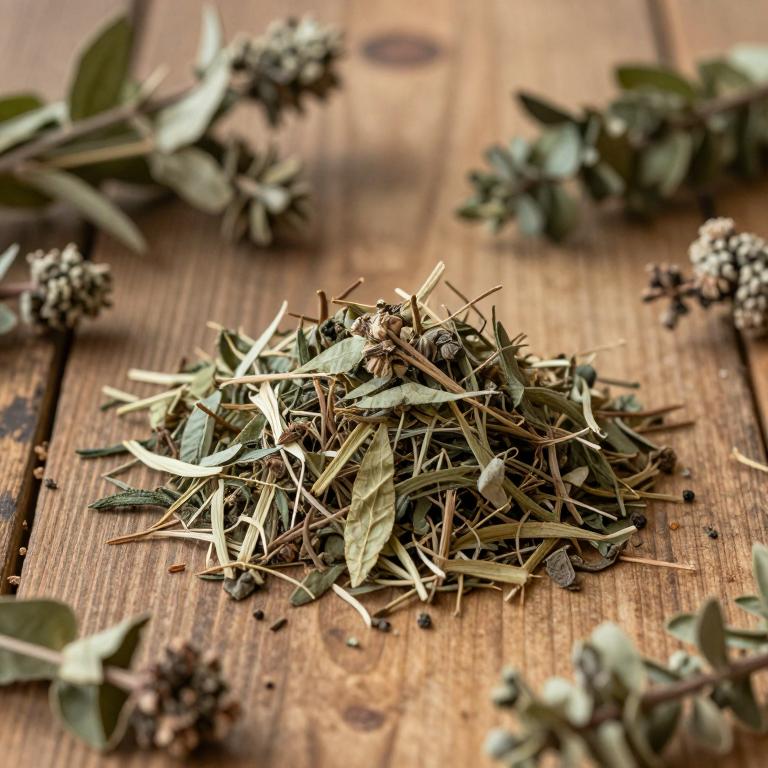
, scientifically known as Tephrosia virginiana, is a resilient perennial herb native to the Americas. Often found in sandy soils, this plant is valued in traditional medicine for its diverse therapeutic properties. It is frequently utilized to treat various ailments, showcasing the profound botanical richness found within natural ecosystems.
- Family
- Not available
- Native range
- Northern America
- Parts used
- Not available
- Common names
- Not available
- Scientific synonyms
- Not available
Names and Synonyms
Scientific Names
Accepted name
Tephrosia virginianaDistribution
This plant, known as Tephrosia virginiana, exhibits a specific geographical distribution within the North-Central United States. Its presence can be documented across several key states in this particular region. Specifically, it is found growing in the landscapes of Illinois and Iowa. Furthermore, the species extends its range into the states of Kansas and Minnesota. Finally, the documented distribution includes Missouri, completing its regional footprint in the North-Central U.S.A.
| Region | Area |
|---|---|
| North-Central U.S.A. | Illinois |
| North-Central U.S.A. | Iowa |
| North-Central U.S.A. | Kansas |
| North-Central U.S.A. | Minnesota |
| North-Central U.S.A. | Missouri |
| North-Central U.S.A. | Oklahoma |
| North-Central U.S.A. | Wisconsin |
| Northeastern U.S.A. | Connecticut |
| Northeastern U.S.A. | Indiana |
| Northeastern U.S.A. | Maine |
Sources: The World Checklist of Vascular Plants (WCVP)
Botanical Identification
Life history
The life history of Tephrosia virginiana is characterized by its status as a perennial species, meaning it persists through multiple growing seasons rather than completing its life cycle in a single year. As a long-lived plant, it establishes a robust presence in its ecosystem, often utilizing a woody base or significant root systems to survive periods of dormancy. Its reproductive strategy allows it to contribute to population stability over several years, though its growth patterns may exhibit variability depending on environmental conditions and resource availability. This perennial nature enables the plant to re-emerge seasonally, providing consistent floral resources and maintaining its ecological niche within its native habitats.
- Lifecycle :
- perennial
Morphology
The morphology of Tephrosia virginiana is characterized by its distinct growth form and structural habits. It is primarily classified as a forb, though it exhibits a growth form consistent with a herb. In terms of its physical structure, the plant displays variable woodiness, meaning its stems may transition from herbaceous to more lignified textures depending on age and environmental conditions. Regarding its climbing capacity, the species is categorized as a self-supporting plant, as it does not rely on external structures for upward progression through obligatory or facultative climbing mechanisms.
- Climber :
- self-supporting
- Growth form :
- herb
- Growth form :
- forb
- Woodiness :
- variable
Physiology
The physiology of Tephrosia varginiana is characterized by a fundamental metabolic framework centered around a C3 photosynthetic pathway. As a C3 plant, its carbon fixation process relies on the direct carboxylation of ribulose-1,5-bisphosphate (RuBP) by the enzyme RuBisCO, leading to the initial formation of a three-carbon compound, 3-phosphoglycerate. This metabolic strategy dictates the plant's gas exchange patterns and water-use efficiency, as it lacks the specialized Kranz anatomy or temporal separation of carbon fixation found in C4 or CAM species. Consequently, the plant's physiological performance, including its rate of biomass accumulation and photosynthetic efficiency, is highly sensitive to environmental variables such as temperature and light intensity, particularly regarding the potential for photorespiration when stomatal conductance is limited under high-temperature or water-stressed conditions.
- Photosynthetic pathway :
- C3
Reproduction
The reproduction of Tephrosia virginiana is primarily driven by its seasonal flowering cycle, which dictates its reproductive availability within its ecosystem. The flowering period typically commences in May and extends through the warmer months, concluding around August. This specific window of anthesis ensures that the plant's reproductive efforts are synchronized with environmental conditions favorable for pollination and subsequent seed development.
- Flowering time :
- May
- Flowering time :
- Aug
Sources: Global Inventory of Floras and Traits (GIFT)
Chemicals
Tephrosia virginiana has 4 reported phytochemicals identified across 0 scientific publications and several other databases. The most consistently reported chemicals include Deguelin, Dehydrorotenone, Tephrosin, rotenone.
| Chemical | Supporting sources | Consensus |
|---|---|---|
| Deguelin | 1 supporting sources | ★☆☆☆☆ |
| Dehydrorotenone | 1 supporting sources | ★☆☆☆☆ |
| Tephrosin | 1 supporting sources | ★☆☆☆☆ |
| rotenone | 1 supporting sources | ★☆☆☆☆ |
Deguelin
- Dr. Duke
Dehydrorotenone
- Dr. Duke
Tephrosin
- Dr. Duke
rotenone
- Dr. Duke
Activities
Tephrosia virginiana has 16 reported activities identified across 0 scientific publications and several other databases. The most consistently reported activities include Acaricide, Antifeedant, Antitumor, Bruchicide, Bruchidoside.
| Activity | Supporting sources | Consensus |
|---|---|---|
| Acaricide | 1 supporting sources | ★☆☆☆☆ |
| Antifeedant | 1 supporting sources | ★☆☆☆☆ |
| Antitumor | 1 supporting sources | ★☆☆☆☆ |
| Bruchicide | 1 supporting sources | ★☆☆☆☆ |
| Bruchidoside | 1 supporting sources | ★☆☆☆☆ |
| Convulsant | 1 supporting sources | ★☆☆☆☆ |
| Cytotoxic | 1 supporting sources | ★☆☆☆☆ |
| Ectoparasiticide | 1 supporting sources | ★☆☆☆☆ |
| Insecticide | 1 supporting sources | ★☆☆☆☆ |
| Irritant | 1 supporting sources | ★☆☆☆☆ |
Acaricide
- Dr. Duke
Antifeedant
- Dr. Duke
Antitumor
- Dr. Duke
Bruchicide
- Dr. Duke
Bruchidoside
- Dr. Duke
Convulsant
- Dr. Duke
Cytotoxic
- Dr. Duke
Ectoparasiticide
- Dr. Duke
Insecticide
- Dr. Duke
Irritant
- Dr. Duke