hoarypea
Tephrosia sinapou · Accepted scientific name
Scientific literature: Very Sparse (2 studies) · ★☆☆☆☆
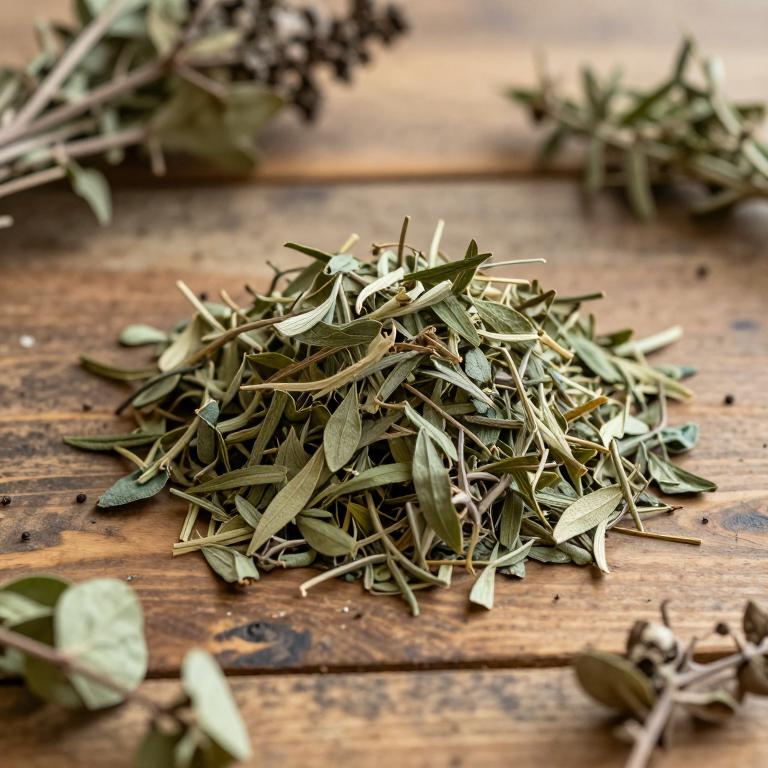
Hoarypea, scientifically known as Tephrosia sinaou, is a versatile medicinal herb valued in traditional healing practices. Often found in tropical regions, this plant is prized for its bioactive properties, frequently used to treat skin ailments, inflammation, and digestive issues, offering a natural remedy rooted in ancient botanical wisdom.
- Family
- Fabaceae
- Native range
- Africa
- Parts used
- Stem
- Common names
- Hoarypea
- Scientific synonyms
- Tephrosia Schiedeana · Tephrosia Emarginata · 5 more
Names and Synonyms
Common Names
- hoarypea
Scientific Names
Accepted name
Tephrosia sinapouSynonyms
- Tephrosia schiedeana
- Tephrosia emarginata
- Tephrosia toxicaria
- Galega sinapou
- Galega toxicaria
- Cracca schiedeana
- Cracca toxicaria
Regional and Traditional Names
Spanish:
- Gallitos
Sources: Wikidata, Catalogue of Life
Taxonomical Classification
This plant belongs to the kingdom Plantae and is classified under the phylum Streptophyta within the class Equisetopsida. Further taxonomic descent places it in the subclass Magnoliidae and the order Fabales. Finally, it is a member of the family Fabaceae and is identified by the genus Tephrosia.
| Rank | Classification |
|---|---|
| Kingdom | Plantae |
| Phylum | Streptophyta |
| Class | Equisetopsida |
| Subclass | Magnoliidae |
| Order | Fabales |
| Family | Fabaceae |
| Genus | Tephrosia |
Sources: The World Checklist of Vascular Plants (WCVP)
Distribution
This plant exhibits a diverse geographical distribution spanning multiple continents and climate zones. In West-Central Tropical Africa, it can be found within the Democratic Republic of the Congo. Its presence extends to East Tropical Africa, specifically in the nation of Tanzania. Moving across the globe to the Northwestern Pacific, the species inhabits the Caroline Islands. Finally, it is located in the Americas, ranging from El Salvador in Central America to the southwest of Mexico.
| Region | Area |
|---|---|
| West-Central Tropical Africa | DR Congo |
| East Tropical Africa | Tanzania |
| Northwestern Pacific | Caroline Is. |
| Mexico | Mexico Southwest |
| Central America | El Salvador |
| Central America | Honduras |
| Central America | Nicaragua |
| Caribbean | Dominican Republic |
| Caribbean | Haiti |
| Caribbean | Trinidad-Tobago |
Sources: The World Checklist of Vascular Plants (WCVP)
Botanical Identification
Ecology
The ecology of Tephrosia sinapou is characterized by its ability to thrive across a diverse range of altitudinal gradients, spanning from sea level up to a maximum elevation of 1800 m AMSL. This species demonstrates significant ecological plasticity, inhabiting a variety of distinct environments including anthropogenic areas, riparian forests or gallery forests, terra firme forests, and ombrophilous (rainforest) forests. Such a broad distribution across different forest types and human-altered landscapes indicates its capacity to adapt to varying levels of canopy cover, moisture availability, and soil compositions typical of these tropical ecosystems.
- Elevational range max:
- 1800 m AMSL
- Elevational range min:
- 0 m AMSL
- Habitat :
- Área Antrópica, Floresta Ciliar ou Galeria, Floresta de Terra Firme, Floresta Ombrófila (= Floresta Pluvial)
Morphology
The morphology of Tephrosia sinaica (noting the correction to the taxonomic name) is characterized by a woody growth form, specifically categorized as a shrub. It functions as an independent organism, lacking any parasitic tendencies, and is strictly terrestrial in its habitat, rather than being aquatic or semiaquatic. As a self-supporting plant, it does not exhibit climbing behaviors such as liana or vine growth, nor does it function as an epiphyte in any capacity, remaining firmly rooted in the ground. The plant's structural development is defined by its woody nature, which supports its shrubby habit and distinguishes it from herbaceous or graminoid species.
- Aquatic :
- terrestrial
- Climber :
- self-supporting
- Epiphyte :
- terrestrial
- Growth form :
- shrub
- Parasite :
- independent
- Woodiness :
- woody
Sources: Global Inventory of Floras and Traits (GIFT)
Plant Parts
Tephrosia sinapou has 1 reported plant parts identified across 1 scientific publications and several other databases that are studied for medicinal purposes. The most consistently reported plant part include stem.
| Plant part | Supporting sources | Consensus |
|---|---|---|
| Stem | 1 supporting sources | ★☆☆☆☆ |
Stem
- Journal of natural products
Chemicals
Tephrosia sinapou has 1 reported phytochemicals identified across 1 scientific publications and several other databases. The most consistently reported chemicals include Flavonoids.
| Chemical | Supporting sources | Consensus |
|---|---|---|
| Flavonoids | 1 supporting sources | ★☆☆☆☆ |
Flavonoids
- Pharmaceutical biology
Preparations
Tephrosia sinapou has 3 reported preparations identified across 1 scientific publications and several other databases. The most consistently reported preparations include ethyl acetate extract, ethyl acetate-soluble extract, extract.
| Preparation | Supporting sources | Consensus |
|---|---|---|
| Ethyl acetate extract | 1 supporting sources | ★☆☆☆☆ |
| Ethyl acetate-soluble extract | 1 supporting sources | ★☆☆☆☆ |
| Extract | 1 supporting sources | ★☆☆☆☆ |
Ethyl acetate extract
- Pharmaceutical biology
Ethyl acetate-soluble extract
- Journal of natural products
Extract
- Pharmaceutical biology