White Hoary Pea
Tephrosia candida · Accepted scientific name
Scientific literature: Moderate (133 studies) · ★★★☆☆
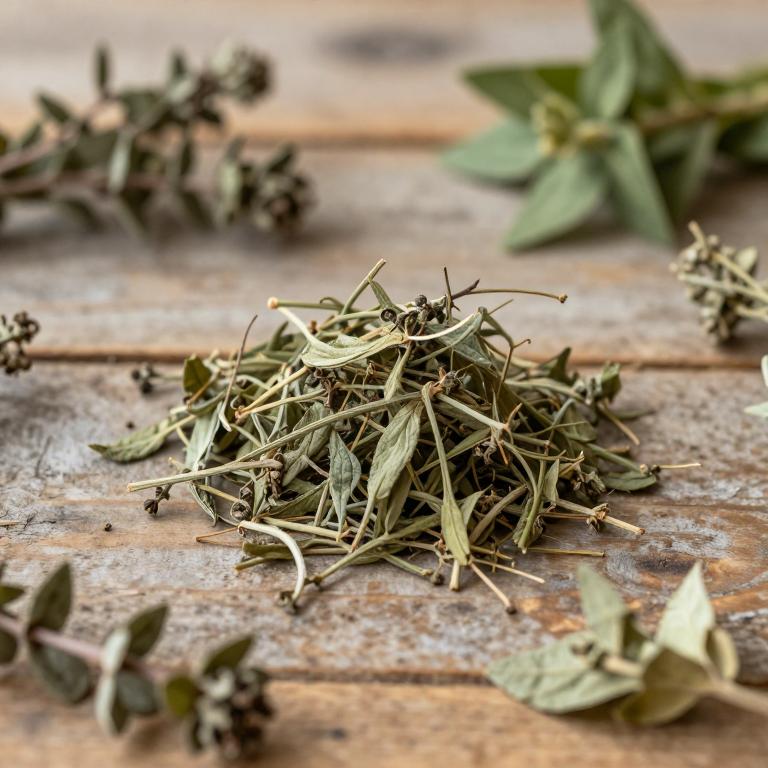
White Hoaary Pea, scientifically known as Tephrosia candida, is a versatile medicinal legume valued in traditional healing. Characterized by its delicate white flowers, this plant offers significant therapeutic potential. It is frequently utilized for its anti-inflammatory and antimicrobial properties, providing natural remedies for various skin ailments and systemic conditions.
Names and Synonyms
Common Names
- white hoary-pea
- white tephrosia
- white hoarypea
Scientific Names
Accepted name
Tephrosia candidaSynonyms
- Robinia candida
- Xiphocarpus candidus
- Cracca candida
- Lonchocarpus fruticosus
- Kiesera sericea
- Kiesera candida
- Xiphocarpus martinicensis
- Cracca candida var. heterophylla
- Cracca candida var. obtusifolia
Regional and Traditional Names
French:
- indigo sauvage
Sources: Wikidata, Catalogue of Life
Taxonomical Classification
This plant belongs to the kingdom Plantae and is classified under the phylum Streptophyta within the class Equisetopsida. As a member of the subclass Magnoliidae and the order Fabales, it is situated in the family Fabaceae. Specifically, it is identified by the genus Tephrosia, with the species being Tephrosia candida.
| Rank | Classification |
|---|---|
| Kingdom | Plantae |
| Phylum | Streptophyta |
| Class | Equisetopsida |
| Subclass | Magnoliidae |
| Order | Fabales |
| Family | Fabaceae |
| Genus | Tephrosia |
Sources: The World Checklist of Vascular Plants (WCVP)
Distribution
This plant exhibits a diverse distribution across several key regions in the African continent. Within West Tropical Africa, it can be found growing in both Ghana and Sierra Leone. Its range extends into West-Central Tropical Africa, where it is present in Cameroon and the Gulf of Guinea Islands. Additionally, the species is documented within the Democratic Republic of the Congo. These locations highlight its presence across both West and West-Central tropical zones.
| Region | Area |
|---|---|
| West Tropical Africa | Ghana |
| West Tropical Africa | Sierra Leone |
| West-Central Tropical Africa | Cameroon |
| West-Central Tropical Africa | Gulf of Guinea Is. |
| West-Central Tropical Africa | DR Congo |
| East Tropical Africa | Kenya |
| East Tropical Africa | Tanzania |
| East Tropical Africa | Uganda |
| South Tropical Africa | Malawi |
| South Tropical Africa | Mozambique |
Sources: The World Checklist of Vascular Plants (WCVP)
Botanical Identification
Ecology
The ecology of Tephrosia candida is characterized by its occurrence within diverse environmental settings, ranging from anthropized areas (Área Antrópica) to the more complex ecosystems of Ombrophilous Forests (Floresta Ombrófila), also known as Rain Forests. This species is specifically adapted to higher altitude environments, maintaining a specialized elevational range that begins at 1,000 m AMSL and extends up to a maximum of 1,200 m AMSL. Within this niche, the plant maintains a mean elevation of approximately 1,050 m AMSL, suggesting a preference for the cool, moist conditions typically associated with these mid-to-high altitude forest and disturbed land habitats.
- Elevational range max:
- 1200 m AMSL
- Elevational range mean:
- 1050 m AMSL
- Elevational range min:
- 1000 m AMSL
- Habitat :
- Área Antrópica, Floresta Ombrófila (= Floresta Pluvial)
Life history
The life history of Tephrosia candida is characterized by a perennial lifecycle, allowing the plant to persist across multiple growing seasons. It exhibits a complex growth strategy categorized under multiple life forms, functioning as both a phanerophyte and a nanophanerophyte, which indicates its ability to maintain visible shoot systems at varying heights depending on environmental conditions. Additionally, the plant follows a deciduous growth pattern, shedding its foliage periodically as part of its seasonal physiological cycle.
- Deciduousness :
- deciduous
- Life form :
- nanophanerophyte
- Life form :
- phanerophyte
- Lifecycle :
- perennial
Morphology
The morphology of Tephrosia candida is characterized by a woody growth form, primarily manifesting as a shrub. It functions as a self-supporting plant, exhibiting neither climbing nor parasitic tendencies, as it grows independently of other vegetation. As a terrestrial species, it is not aquatic or epiphytic. In terms of stature, the plant reaches a mean height of approximately 3 meters, with a maximum potential height of up to 3.5 meters.
- Aquatic :
- terrestrial
- Climber :
- self-supporting
- Epiphyte :
- terrestrial
- Growth form :
- shrub
- Parasite :
- independent
- Plant height max:
- 3.5 m
- Plant height mean:
- 3 m
- Woodiness :
- woody
Physiology
The physiology of Tephrosia candida is characterized by a C3 photosynthetic pathway, which governs its carbon fixation processes and metabolic efficiency under standard environmental conditions. A defining physiological feature of this species is its capability as a nitrogen fixer; it maintains a symbiotic relationship with diazotrophic bacteria, typically located within root nodules, to convert atmospheric nitrogen into biologically available forms. This nitrogen-fixing ability enhances its nutrient acquisition strategies and supports its growth in nitrogen-limited soils.
- Nitrogen fixer :
- yes
- Photosynthetic pathway :
- C3
Reproduction
The reproduction of Tephrosia candida is characterized by a biotic pollination syndrome, relying primarily on insect vectors to facilitate the transfer of pollen between flowers. This biological mechanism ensures genetic exchange through animal interaction rather than abiotic factors like wind or water. The resulting seeds exhibit specific morphological variations in mass; the average seed mass is approximately 0.020466667 g, with individual seeds ranging from a minimum of 0.0157 g to a maximum of 0.0253 g. This variation in seed size suggests a degree of plasticity in reproductive output, which may influence seedling establishment and dispersal success within its habitat.
- Pollination syndrome :
- insect
- Pollination syndrome :
- biotic
- Seed mass max:
- 0.0253 g
- Seed mass mean:
- 0.020466667 g
- Seed mass min:
- 0.0157 g
Sources: Global Inventory of Floras and Traits (GIFT)
Chemicals
Tephrosia candida has 20 reported phytochemicals identified across 0 scientific publications and several other databases. The most consistently reported chemicals include BORON, CANDIDIN, CAO, COPPER, Candidachalcone.
| Chemical | Supporting sources | Consensus |
|---|---|---|
| BORON | 1 supporting sources | ★☆☆☆☆ |
| CANDIDIN | 1 supporting sources | ★☆☆☆☆ |
| CAO | 1 supporting sources | ★☆☆☆☆ |
| COPPER | 1 supporting sources | ★☆☆☆☆ |
| Candidachalcone | 1 supporting sources | ★☆☆☆☆ |
| Dehydrorotenone | 1 supporting sources | ★☆☆☆☆ |
| IRON | 1 supporting sources | ★☆☆☆☆ |
| K2O | 1 supporting sources | ★☆☆☆☆ |
| MANGANESE | 1 supporting sources | ★☆☆☆☆ |
| MGO | 1 supporting sources | ★☆☆☆☆ |
BORON
- Dr. Duke
CANDIDIN
- Dr. Duke
CAO
- Dr. Duke
COPPER
- Dr. Duke
Candidachalcone
- Journal of natural products
Dehydrorotenone
- Dr. Duke
IRON
- Dr. Duke
K2O
- Dr. Duke
MANGANESE
- Dr. Duke
MGO
- Dr. Duke
Activities
Tephrosia candida has 112 reported activities identified across 0 scientific publications and several other databases. The most consistently reported activities include ACE-Inhibitor, Acaricide, Analgesic, Androgenic, AntiBPH.
| Activity | Supporting sources | Consensus |
|---|---|---|
| ACE-Inhibitor | 1 supporting sources | ★☆☆☆☆ |
| Acaricide | 1 supporting sources | ★☆☆☆☆ |
| Analgesic | 1 supporting sources | ★☆☆☆☆ |
| Androgenic | 1 supporting sources | ★☆☆☆☆ |
| AntiBPH | 1 supporting sources | ★☆☆☆☆ |
| AntiCrohn's | 1 supporting sources | ★☆☆☆☆ |
| AntiHIV | 1 supporting sources | ★☆☆☆☆ |
| AntiPMS | 1 supporting sources | ★☆☆☆☆ |
| Antiacne | 1 supporting sources | ★☆☆☆☆ |
| Antiacrodermatitic | 1 supporting sources | ★☆☆☆☆ |
ACE-Inhibitor
- Dr. Duke
Acaricide
- Dr. Duke
Analgesic
- Dr. Duke
Androgenic
- Dr. Duke
AntiBPH
- Dr. Duke
AntiCrohn's
- Dr. Duke
AntiHIV
- Dr. Duke
AntiPMS
- Dr. Duke
Antiacne
- Dr. Duke
Antiacrodermatitic
- Dr. Duke
Preparations
Tephrosia candida has 1 reported preparations identified across 0 scientific publications and several other databases. The most consistently reported preparations include methylene chloride-methanol (1:1) extract of the air-dried aerial parts.
| Preparation | Supporting sources | Consensus |
|---|---|---|
| Methylene chloride-methanol (1:1) extract of the air-dried aerial parts | 1 supporting sources | ★☆☆☆☆ |
Methylene chloride-methanol (1:1) extract of the air-dried aerial parts
- Journal of natural products