Tephrosia bracteolata
Tephrosia bracteolata · Accepted scientific name
Scientific literature: Very Sparse (4 studies) · ★☆☆☆☆
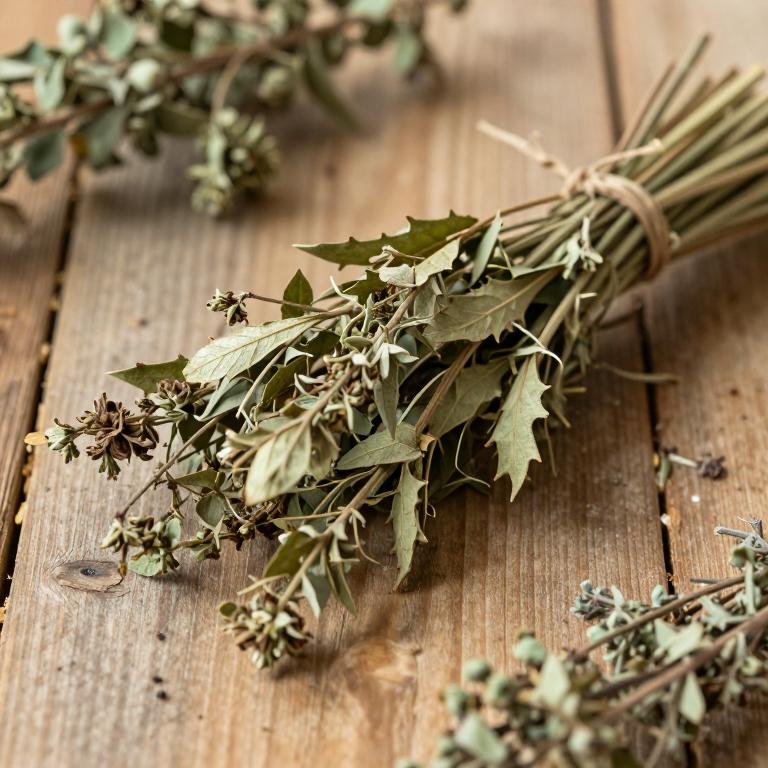
Tephrosia bracteolata, scientifically known as Tephrosia bracteolata, is a versatile medicinal plant valued in traditional healing practices. Often found in tropical regions, this species is recognized for its potent bioactive compounds. It is frequently utilized to treat various ailments, offering significant therapeutic potential for modern pharmacological research and development.
- Family
- Fabaceae
- Native range
- Africa
- Parts used
- Leaf
- Common names
- Not available
- Scientific synonyms
- Cracca Bracteolata
Names and Synonyms
Scientific Names
Accepted name
Tephrosia bracteolataSynonyms
- Cracca bracteolata
Sources: Wikidata
Taxonomical Classification
This plant belongs to the kingdom Plantae and is classified within the phylum Streptophyta and class Equisetopsida. As a member of the subclass Magnoliidae and order Fabales, it falls under the family Fabaceae. It is specifically categorized under the genus Tephrosia.
| Rank | Classification |
|---|---|
| Kingdom | Plantae |
| Phylum | Streptophyta |
| Class | Equisetopsida |
| Subclass | Magnoliidae |
| Order | Fabales |
| Family | Fabaceae |
| Genus | Tephrosia |
Sources: The World Checklist of Vascular Plants (WCVP)
Distribution
This plant exhibits a broad geographical distribution spanning both Atlantic islands and the African mainland. Within the Macaronesia region, it can be specifically located in Cape Verde. Its presence extends significantly into West Tropical Africa, where it inhabits multiple countries. Specifically, the species is documented in Benin, Burkina, and Ghana. Furthermore, its range continues through the coastal region of Guinea-Bissau.
| Region | Area |
|---|---|
| Macaronesia | Cape Verde |
| West Tropical Africa | Benin |
| West Tropical Africa | Burkina |
| West Tropical Africa | Ghana |
| West Tropical Africa | Guinea-Bissau |
| West Tropical Africa | Guinea |
| West Tropical Africa | Ivory Coast |
| West Tropical Africa | Mali |
| West Tropical Africa | Mauritania |
| West Tropical Africa | Nigeria |
Sources: The World Checklist of Vascular Plants (WCVP)
Botanical Identification
Life history
The life history of Tephrosia bracteolata is characterized by an annual lifecycle, meaning the plant completes its entire developmental sequence from germination to seed production within a single growing season. In terms of its structural growth strategy, it is classified as a therophyte, a life form where the plant survives unfavorable periods as ephemeral seeds, rapidly producing a complete shoot system only when environmental conditions are optimal. This strategy allows it to thrive in transient or disturbed habitats by focusing its energy on quick maturation and prolific seed dispersal before the onset of seasonal stress.
- Life form :
- therophyte
- Lifecycle :
- annual
Morphology
The morphology of Tephrosia bracteolata is characterized by its growth as a non-woody, self-supporting plant that exhibits a dual growth form, functioning as both a herb and a shrub. It is a terrestrial species, lacking aquatic or epiphytic tendencies, and operates as an independent organism rather than a parasite. In terms of stature, the plant reaches a height ranging from a minimum of approximately 0.61 meters to a maximum of approximately 2.44 meters.
- Aquatic :
- terrestrial
- Climber :
- self-supporting
- Epiphyte :
- terrestrial
- Growth form :
- herb
- Growth form :
- shrub
- Parasite :
- independent
- Plant height max:
- 2.438429651 m
- Plant height min:
- 0.609607413 m
- Woodiness :
- non-woody
Physiology
The physiology of Tephrosia bracteolata is fundamentally characterized by its C3 photosynthetic pathway, a mechanism in which carbon fixation occurs via the enzyme Rubisco within the mesophyll cells during the Calvin cycle. This metabolic process dictates the plant's resource acquisition strategies, influencing its water-use efficiency and carbon assimilation rates in response to environmental variables such as light intensity and temperature. By utilizing the C3 pathway, the plant undergoes standard photorespiration processes, which play a significant role in its overall energy budget and metabolic regulation. This physiological framework underpins its growth patterns and its ability to manage gas exchange through stomatal conductance, directly impacting its adaptive capacity within its native ecological niche.
- Photosynthetic pathway :
- C3
Reproduction
Reproduction in Tephrosia bracteolata is characterized by the production of seeds that exhibit specific morphological and mass-related properties essential to its dispersal and establishment. Analysis of the seed characteristics reveals a relatively lightweight profile, with a calculated mean seed mass of 0.0069825 g. The individual seeds within a population demonstrate a degree of variability in size and density, ranging from a minimum seed mass of 0.00528 g to a maximum seed mass of 0.00841 g. This variation in mass suggests a specialized reproductive strategy aimed at optimizing germination success within its specific ecological niche.
- Seed mass max:
- 0.00841 g
- Seed mass mean:
- 0.0069825 g
- Seed mass min:
- 0.00528 g
Sources: Global Inventory of Floras and Traits (GIFT)
Plant Parts
Tephrosia bracteolata has 1 reported plant parts identified across 1 scientific publications and several other databases that are studied for medicinal purposes. The most consistently reported plant part include leaf.
| Plant part | Supporting sources | Consensus |
|---|---|---|
| Leaf | 1 supporting sources | ★☆☆☆☆ |
Leaf
- Heliyon
Activities
Tephrosia bracteolata has 3 reported activities identified across 1 scientific publications and several other databases. The most consistently reported activities include Antidiabetic, Antimicrobial, Antioxidant.
| Activity | Supporting sources | Consensus |
|---|---|---|
| Antidiabetic | 1 supporting sources | ★☆☆☆☆ |
| Antimicrobial | 1 supporting sources | ★☆☆☆☆ |
| Antioxidant | 1 supporting sources | ★☆☆☆☆ |
Antidiabetic
- Heliyon
Antimicrobial
- Heliyon
Antioxidant
- Heliyon