Teijsmanniodendron hollrungii
Teijsmanniodendron hollrungii · Accepted scientific name
Scientific literature: Very Sparse (2 studies) · ★☆☆☆☆
, scientifically known as Teijsmanniodendron hollrungii, is a significant medicinal plant native to Southeast Asian rainforests. Valued in traditional ethnobotanical practices, it possesses unique bioactive properties. Research into its chemical constituents suggests potential therapeutic applications, making it a subject of interest for developing natural pharmacological treatments and remedies.
- Family
- Lamiaceae
- Native range
- Asia-Tropical
- Parts used
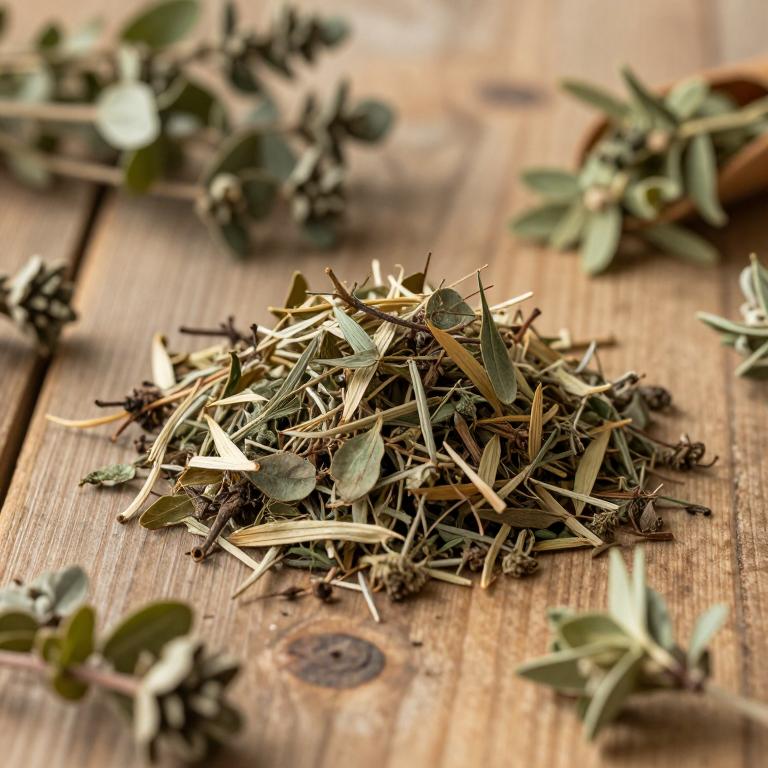
- Leaf
- Common names
- Not available
- Scientific synonyms
- Vitex Hollrungii · Vitex Clarkeana · 1 more
Names and Synonyms
Scientific Names
Accepted name
Teijsmanniodendron hollrungiiSynonyms
- Vitex hollrungii
- Vitex clarkeana
- Teijsmanniodendron monophyllum
Sources: Wikidata
Taxonomical Classification
This plant belongs to the kingdom Plantae and is classified under the phylum Streptophyta within the class Equisetopsida. It is further categorized under the subclass Magnoliidae, the order Lamiales, and the family Lamiaceae. Finally, it is identified by the genus Teijsmanniodendron.
| Rank | Classification |
|---|---|
| Kingdom | Plantae |
| Phylum | Streptophyta |
| Class | Equisetopsida |
| Subclass | Magnoliidae |
| Order | Lamiales |
| Family | Lamiaceae |
| Genus | Teijsmanniodendron |
Sources: The World Checklist of Vascular Plants (WCVP)
Distribution
This plant is primarily distributed throughout the diverse regions of Malesia. Within this expansive area, it can be found growing in the tropical landscapes of Borneo. Its range also extends across the peninsula of Malaya and into the island of Sulawesi. Furthermore, the species is present in the Maluku archipelago. Finally, its geographical reach includes the islands of the Philippines.
| Region | Area |
|---|---|
| Malesia | Borneo |
| Malesia | Malaya |
| Malesia | Maluku |
| Malesia | Philippines |
| Malesia | Sulawesi |
| Papuasia | Bismarck Archipelago |
| Papuasia | New Guinea |
| Papuasia | Solomon Is. |
Sources: The World Checklist of Vascular Plants (WCVP)
Botanical Identification
Life history
The life history of Teijsmanniodendron hollrungii is characterized by its classification as a phanerophyte, a life form defined by the presence of its perennating buds located well above the ground on aerial shoots. Within this category, it specifically manifests as both a phanerophyte and a nanophanerophyte, indicating a growth strategy where the plant maintains its vital regenerative structures on woody stems that extend above the soil surface, though sometimes remaining relatively low or shrub-like in specific ecological niches. As a perennial woody species, its life cycle is geared toward long-term survival in tropical forest environments, utilizing its elevated bud positions to withstand seasonal environmental shifts and to facilitate continuous structural development.
- Life form :
- phanerophyte
Morphology
The morphology of Teijsmanniodendron hollrungii is characterized by a woody growth form, specifically functioning as a tree. As an independent organism, it does not exhibit parasitic behavior and maintains a terrestrial existence, rather than being aquatic, semiaquatic, or epiphytic. While some members of its broader botanical context may exhibit climbing tendencies, this species is categorized by a self-supporting structure, whether classified as a liana, vine, or a self-supporting climber, though its primary structural classification remains that of a woody tree.
- Aquatic :
- terrestrial
- Climber :
- self-supporting
- Epiphyte :
- terrestrial
- Growth form :
- tree
- Parasite :
- independent
- Woodiness :
- woody
Physiology
The physiology of Teijsmanniodendron hollrungii is characterized by its specific metabolic adaptations to its tropical forest environment, most notably through its photosynthetic pathway. This species utilizes the C3 photosynthetic pathway, a mechanism where the first stable product of carbon fixation is a three-carbon molecule. This pathway involves the direct fixation of atmospheric carbon dioxide by the enzyme RuBisCO during the Calvin cycle, which is typical for many woody tropical plants inhabiting shaded or humid forest understories. This physiological mode dictates the plant's water-use efficiency and gas exchange patterns, influencing how it manages transpiration and carbon assimilation in response to the light intensity and humidity levels of its native habitat.
- Photosynthetic pathway :
- C3
Sources: Global Inventory of Floras and Traits (GIFT)
Plant Parts
Teijsmanniodendron hollrungii has 1 reported plant parts identified across 1 scientific publications and several other databases that are studied for medicinal purposes. The most consistently reported plant part include leaf.
| Plant part | Supporting sources | Consensus |
|---|---|---|
| Leaf | 1 supporting sources | ★☆☆☆☆ |
Leaf
- BMC complementary and alternative medicine
Chemicals
Teijsmanniodendron hollrungii has 1 reported phytochemicals identified across 1 scientific publications and several other databases. The most consistently reported chemicals include Flavonoids.
| Chemical | Supporting sources | Consensus |
|---|---|---|
| Flavonoids | 1 supporting sources | ★☆☆☆☆ |
Flavonoids
- BMC complementary and alternative medicine
Preparations
Teijsmanniodendron hollrungii has 3 reported preparations identified across 1 scientific publications and several other databases. The most consistently reported preparations include crude extracts, dried leaves, methanol extract.
| Preparation | Supporting sources | Consensus |
|---|---|---|
| Crude extracts | 1 supporting sources | ★☆☆☆☆ |
| Dried leaves | 1 supporting sources | ★☆☆☆☆ |
| Methanol extract | 1 supporting sources | ★☆☆☆☆ |
Crude extracts
- BMC complementary and alternative medicine
Dried leaves
- BMC complementary and alternative medicine
Methanol extract
- BMC complementary and alternative medicine