Rohida
Tecomella undulata · Accepted scientific name
Scientific literature: Very Sparse (16 studies) · ★☆☆☆☆
Rohida, scientifically known as Tecomella undulata, is a deciduous tree native to the arid regions of India. Highly valued in traditional medicine, its bark and roots possess significant therapeutic properties. It is frequently utilized to treat skin diseases, inflammation, and digestive ailments, serving as a vital botanical resource.
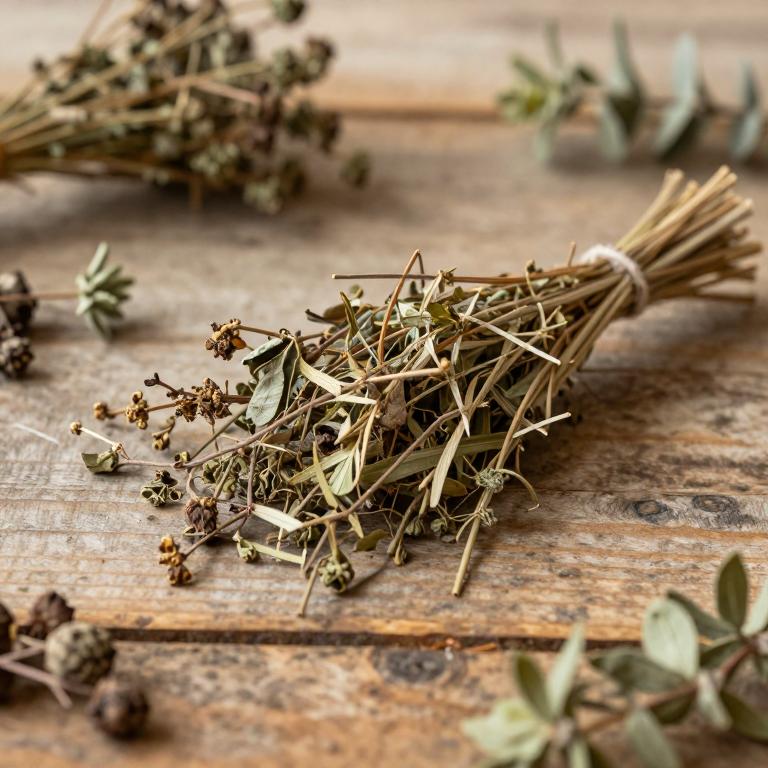
Names and Synonyms
Common Names
- Desert Teak
- Marwar teak
- Orange Tecoma
- Rohida tree
- honeytree
- rohida-tree
Scientific Names
Accepted name
Tecomella undulataSynonyms
- Tecoma glauca
- Gelseminum undulatum
- Tecoma undulata
- Bignonia glauca
- Bignonia tropaeolum
- Bignonia undulata
Regional and Traditional Names
Spanish:
- Tecomella
Sources: Wikidata, Catalogue of Life
Taxonomical Classification
This plant belongs to the kingdom Plantae and is classified under the phylum Streptophyta and the class Equisetopsida. Within the subclass Magnoliidae, it is organized under the order Lamiales and the family Bignoniaceae. Finally, its specific taxonomic identity is defined by the genus Tecomella.
| Rank | Classification |
|---|---|
| Kingdom | Plantae |
| Phylum | Streptophyta |
| Class | Equisetopsida |
| Subclass | Magnoliidae |
| Order | Lamiales |
| Family | Bignoniaceae |
| Genus | Tecomella |
Sources: The World Checklist of Vascular Plants (WCVP)
Distribution
This plant exhibits a broad geographical distribution spanning several distinct regions of Asia. In Western Asia, it can be found growing within the territories of Afghanistan and Iran. Its presence extends into the Arabian Peninsula, specifically located in Oman. Furthermore, the species is well-distributed across the Indian Subcontinent. This includes significant populations located in both India and Pakistan.
| Region | Area |
|---|---|
| Western Asia | Afghanistan |
| Western Asia | Iran |
| Arabian Peninsula | Oman |
| Indian Subcontinent | India |
| Indian Subcontinent | Pakistan |
Sources: The World Checklist of Vascular Plants (WCVP)
Botanical Identification
Ecology
The ecology of Tecomella undulata is characterized by its specialized adaptation to arid and semi-arid environments, primarily thriving within the dry deciduous forests and desert scrublands of the Indian subcontinent. This species is highly drought-tolerant, often colonizing rocky terrains, sandy soils, and well-drained slopes where water availability is minimal. It plays a crucial role in its ecosystem by stabilizing soil and providing microhabitats for various desert fauna. In terms of its vertical distribution, the species inhabits a specific altitudinal niche, with an elevational range that centers around a mean of 1400 m AMSL. This positioning within the landscape allows it to navigate the thermal and moisture gradients typical of mid-elevation dry zones, ensuring its survival in habitats defined by high solar radiation and seasonal precipitation patterns.
- Elevational range mean:
- 1400 m AMSL
Life history
The life history of Tecomella undulata is characterized by its status as a long-lived woody perennial, categorized primarily as a phanerophyte. Within the complex spectrum of plant life forms, it exhibits traits consistent with both phanerophyte and nanophanerophyte classifications, reflecting its ability to maintain its photosynthetic organs on elevated woody branches above the soil surface. As a phanerophyte, the species focuses its energy on developing a robust, perennial structural framework that allows it to persist in arid and semi-arid environments through seasonal fluctuations. This life strategy enables the plant to endure periods of dormancy and resource scarcity, utilizing its perennial nature to establish a dominant presence in its ecological niche. Through its developmental stages, the plant transitions from a seedling to a mature, woody individual, sustaining its life cycle via its perennial canopy and deep-reaching root systems typical of its phanerophyte life form.
- Life form :
- phanerophyte
Morphology
The morphology of Tecomella undulata is characterized by a growth form classified as a tree, exhibiting a robust and woody structure. It functions as an independent organism, showing no parasitic behavior, and maintains a terrestrial existence rather than an epiphytic one. While its structural development is primarily that of a large, woody tree, its habit is categorized as self-supporting, meaning it does not rely on other structures or plants for physical elevation.
- Climber :
- self-supporting
- Epiphyte :
- terrestrial
- Growth form :
- tree
- Parasite :
- independent
- Woodiness :
- woody
Physiology
The physiology of Tecomella undulata is characterized by a specialized metabolic framework adapted to survive in arid and semi-arid environments. Its primary mode of carbon assimilation follows the C3 photosynthetic pathway, which involves the direct fixation of atmospheric carbon dioxide by the enzyme RuBisCO within the mesophyll cells. Despite the inherent water-use inefficiencies associated with C3 metabolism in hot climates, the plant employs various physiological strategies to manage transpiration and maintain metabolic homeostasis. This includes robust mechanisms for osmotic adjustment and the regulation of stomatal conductance to mitigate water stress. Furthermore, its physiological resilience is supported by a complex secondary metabolism, where the production of specific bioactive compounds serves both protective and adaptive functions against environmental stressors.
- Photosynthetic pathway :
- C3
Sources: Global Inventory of Floras and Traits (GIFT)
Chemicals
Tecomella undulata has 4 reported phytochemicals identified across 0 scientific publications and several other databases. The most consistently reported chemicals include 2-METHYLQUINIZARIN, Tecomaquinone I, lapachol, quercetin.
| Chemical | Supporting sources | Consensus |
|---|---|---|
| 2-METHYLQUINIZARIN | 1 supporting sources | ★☆☆☆☆ |
| Tecomaquinone I | 1 supporting sources | ★☆☆☆☆ |
| lapachol | 1 supporting sources | ★☆☆☆☆ |
| quercetin | 1 supporting sources | ★☆☆☆☆ |
2-METHYLQUINIZARIN
- Natural product research
Tecomaquinone I
- Natural product research
lapachol
- Natural product research
quercetin
- Journal of ethnopharmacology
Activities
Tecomella undulata has 1 reported activities identified across 0 scientific publications and several other databases. The most consistently reported activities include Analgesic.
| Activity | Supporting sources | Consensus |
|---|---|---|
| Analgesic | 1 supporting sources | ★☆☆☆☆ |
Analgesic
- Journal of ethnopharmacology
Conditions
Tecomella undulata has 8 reported investigations on conditions identified across 0 scientific publications and several other databases. The most consistently reported conditions include analgesic, cancer, chronic myeloid leukemia, gonorrhea, gout.
| Condition | Supporting sources | Consensus |
|---|---|---|
| Analgesic | 1 supporting sources | ★☆☆☆☆ |
| Cancer | 1 supporting sources | ★☆☆☆☆ |
| Chronic myeloid leukemia | 1 supporting sources | ★☆☆☆☆ |
| Gonorrhea | 1 supporting sources | ★☆☆☆☆ |
| Gout | 1 supporting sources | ★☆☆☆☆ |
| Syphilis | 1 supporting sources | ★☆☆☆☆ |
| Tumors | 1 supporting sources | ★☆☆☆☆ |
| Wound | 1 supporting sources | ★☆☆☆☆ |
Analgesic
- Journal of ethnopharmacology
Cancer
- Journal of ethnopharmacology
Chronic myeloid leukemia
- Journal of ethnopharmacology
Gonorrhea
- Journal of ethnopharmacology
Gout
- Journal of ethnopharmacology
Syphilis
- Journal of ethnopharmacology
Tumors
- Journal of ethnopharmacology
Wound
- Journal of ethnopharmacology
Preparations
Tecomella undulata has 3 reported preparations identified across 0 scientific publications and several other databases. The most consistently reported preparations include chloroform extract of Tecomella undulata bark (CTUB), methanolic extracts, petroleum ether extract.
| Preparation | Supporting sources | Consensus |
|---|---|---|
| Chloroform extract of tecomella undulata bark (ctub) | 1 supporting sources | ★☆☆☆☆ |
| Methanolic extracts | 1 supporting sources | ★☆☆☆☆ |
| Petroleum ether extract | 1 supporting sources | ★☆☆☆☆ |
Chloroform extract of tecomella undulata bark (ctub)
- Journal of ethnopharmacology
Methanolic extracts
- Journal of ethnopharmacology
Petroleum ether extract
- Natural product research