the yew genus
Taxus · Accepted scientific name
Scientific literature: Sparse (86 studies) · ★★☆☆☆
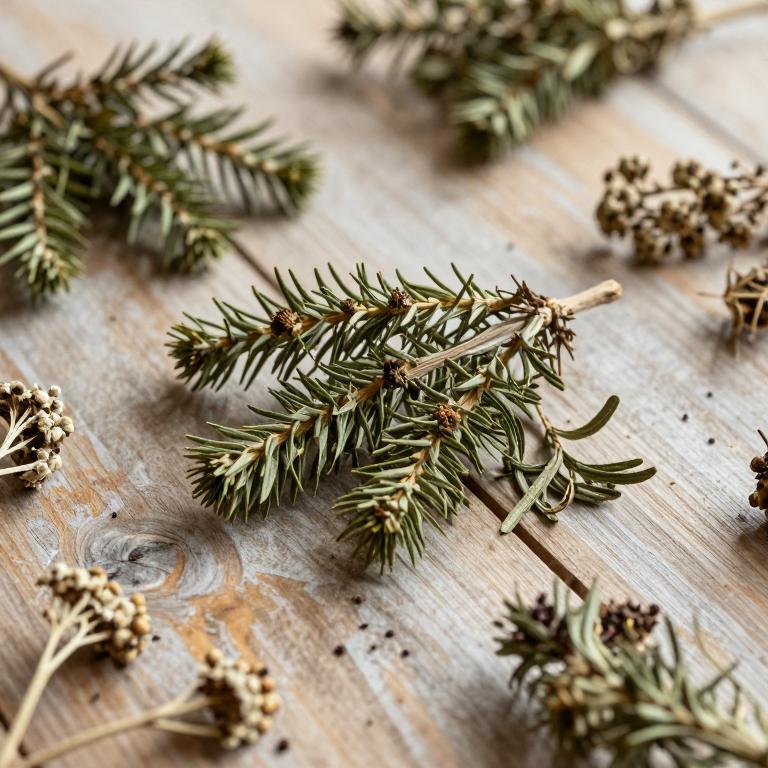
The yew genus, scientifically known as Taxus, is a group of slow-growing evergreen conifers renowned for their longevity and striking appearance. While historically revered in folklore, these plants are pharmacologically significant; they contain potent alkaloids, most notably paclitaxel, which serves as a critical foundation for modern cancer therapies.
- Family
- Taxaceae
- Native range
- Europe
- Parts used
- Leaf · Root
- Common names
- Yew · Yews
- Scientific synonyms
- Verataxus
Names and Synonyms
Common Names
- yew
- yews
Scientific Names
Accepted name
TaxusSynonyms
- Verataxus
Regional and Traditional Names
Spanish:
- Tejo
- Tejos
- Tejo
German:
- Eiben
- Eibenholz
- Eibe
- Eibe
- Eiben
French:
- if
- If
- ifs
- Ifs
- If
Sources: Wikidata, Catalogue of Life
Taxonomical Classification
This plant belongs to the kingdom Plantae and the phylum Streptophyta, specifically within the class Equisetopsida and subclass Pinidae. It is further classified under the order Pinales and the family Taxaceae. Ultimately, the medicinal plant is identified by the genus Taxus.
| Rank | Classification |
|---|---|
| Kingdom | Plantae |
| Phylum | Streptophyta |
| Class | Equisetopsida |
| Subclass | Pinidae |
| Order | Pinales |
| Family | Taxaceae |
| Genus | Taxus |
Sources: The World Checklist of Vascular Plants (WCVP)
Distribution
This plant exhibits a specific geographical distribution throughout several regions of Northern Europe. Within this part of the continent, it can be found growing in the country of Denmark. Its presence extends further north into the landscapes of Finland and Norway. Additionally, the species is documented across the islands of Great Britain and Ireland. Together, these locations define the primary northern reaches of its habitat.
| Region | Area |
|---|---|
| Northern Europe | Denmark |
| Northern Europe | Finland |
| Northern Europe | Great Britain |
| Northern Europe | Ireland |
| Northern Europe | Norway |
| Northern Europe | Sweden |
| Middle Europe | Austria |
| Middle Europe | Belgium |
| Middle Europe | Czechia-Slovakia |
| Middle Europe | Germany |
Sources: The World Checklist of Vascular Plants (WCVP)
Plant Parts
Taxus has 3 reported plant parts identified across 7 scientific publications and several other databases that are studied for medicinal purposes. The most consistently reported plant part include leaf, root, stem.
| Plant part | Supporting sources | Consensus |
|---|---|---|
| Leaf | 5 supporting sources | ★★★☆☆ |
| Root | 1 supporting sources | ★☆☆☆☆ |
| Stem | 1 supporting sources | ★☆☆☆☆ |
Leaf
- Current medicinal chemistry
- Plants (Basel, Switzerland)
- Mycorrhiza
- Frontiers in chemistry
- Plant communications
Root
- Plants (Basel, Switzerland)
Stem
- The Plant journal : for cell and molecular biology
Chemicals
Taxus has 23 reported phytochemicals identified across 7 scientific publications and several other databases. The most consistently reported chemicals include paclitaxel, TAXOL, Geranylgeranyl diphosphate, Taxa-4(5),11(12)-diene, Taxanes.
| Chemical | Supporting sources | Consensus |
|---|---|---|
| paclitaxel | 10 supporting sources | ★★★★★ |
| TAXOL | 9 supporting sources | ★★★★☆ |
| Geranylgeranyl diphosphate | 2 supporting sources | ★☆☆☆☆ |
| Taxa-4(5),11(12)-diene | 2 supporting sources | ★☆☆☆☆ |
| Taxanes | 2 supporting sources | ★☆☆☆☆ |
| Taxoids | 2 supporting sources | ★☆☆☆☆ |
| 10-Deacetylbaccatin III | 1 supporting sources | ★☆☆☆☆ |
| 10-Deacetylpaclitaxel | 1 supporting sources | ★☆☆☆☆ |
| 4-(4-Hydroxyphenyl)-2-butanone | 1 supporting sources | ★☆☆☆☆ |
| 7-Oxositosterol | 1 supporting sources | ★☆☆☆☆ |
paclitaxel
- Current medicinal chemistry
- Journal of natural medicines
- Plants (Basel, Switzerland)
- Mycorrhiza
- Current drug targets
View 5 additional sources
- Tree physiology
- BMC plant biology
- Yao xue xue bao = Acta pharmaceutica Sinica
- Rapid communications in mass spectrometry : RCM
- Plant physiology and biochemistry : PPB
TAXOL
- Archives of biochemistry and biophysics
- Journal de pharmacie de Belgique
- Planta medica
- Frontiers in plant science
- Turkish journal of chemistry
View 4 additional sources
- Biomedicine & pharmacotherapy = Biomedecine & pharmacotherapie
- Current pharmaceutical biotechnology
- Chemistry & biology
- Journal of natural products
Geranylgeranyl diphosphate
- Archives of biochemistry and biophysics
- Chemistry & biology
Taxa-4(5),11(12)-diene
- Archives of biochemistry and biophysics
- Chemistry & biology
Taxanes
- Plants (Basel, Switzerland)
- Current drug targets
Taxoids
- BMC plant biology
- Rapid communications in mass spectrometry : RCM
10-Deacetylbaccatin III
- Current medicinal chemistry
10-Deacetylpaclitaxel
- Rapid communications in mass spectrometry : RCM
4-(4-Hydroxyphenyl)-2-butanone
- Zhong yao cai = Zhongyaocai = Journal of Chinese medicinal materials
7-Oxositosterol
- Journal of Asian natural products research
Activities
Taxus has 2 reported activities identified across 7 scientific publications and several other databases. The most consistently reported activities include Anticancer, Antineoplastic.
| Activity | Supporting sources | Consensus |
|---|---|---|
| Anticancer | 3 supporting sources | ★★☆☆☆ |
| Antineoplastic | 1 supporting sources | ★☆☆☆☆ |
Anticancer
- Current medicinal chemistry
- BMC plant biology
- Tree physiology
Antineoplastic
- Current pharmaceutical biotechnology
Conditions
Taxus has 8 reported investigations on conditions identified across 7 scientific publications and several other databases. The most consistently reported conditions include cancer, cancers, breast cancer, chemotherapy, inflammation.
| Condition | Supporting sources | Consensus |
|---|---|---|
| Cancer | 4 supporting sources | ★★☆☆☆ |
| Cancers | 2 supporting sources | ★☆☆☆☆ |
| Breast cancer | 1 supporting sources | ★☆☆☆☆ |
| Chemotherapy | 1 supporting sources | ★☆☆☆☆ |
| Inflammation | 1 supporting sources | ★☆☆☆☆ |
| Lung cancer | 1 supporting sources | ★☆☆☆☆ |
| Ovarian cancer | 1 supporting sources | ★☆☆☆☆ |
| Tumor | 1 supporting sources | ★☆☆☆☆ |
Cancer
- Plants (Basel, Switzerland)
- Molecules (Basel, Switzerland)
- Current diabetes reviews
- BMC plant biology
Cancers
- Genes
- Biomedicine & pharmacotherapy = Biomedecine & pharmacotherapie
Breast cancer
- Current pharmaceutical biotechnology
Chemotherapy
- Mycorrhiza
Inflammation
- Current diabetes reviews
Lung cancer
- Current pharmaceutical biotechnology
Ovarian cancer
- Current pharmaceutical biotechnology
Tumor
- Journal of the American Chemical Society
Preparations
Taxus has 6 reported preparations identified across 7 scientific publications and several other databases. The most consistently reported preparations include Taxus stem barks, bark of Taxus, callus cultures, cell cultures, cell lines.
| Preparation | Supporting sources | Consensus |
|---|---|---|
| Taxus stem barks | 1 supporting sources | ★☆☆☆☆ |
| Bark of taxus | 1 supporting sources | ★☆☆☆☆ |
| Callus cultures | 1 supporting sources | ★☆☆☆☆ |
| Cell cultures | 1 supporting sources | ★☆☆☆☆ |
| Cell lines | 1 supporting sources | ★☆☆☆☆ |
| Cell suspension cultures | 1 supporting sources | ★☆☆☆☆ |
Taxus stem barks
- The Plant journal : for cell and molecular biology
Bark of taxus
- Current pharmaceutical biotechnology
Callus cultures
- Yao xue xue bao = Acta pharmaceutica Sinica
Cell cultures
- Nature biotechnology
Cell lines
- Current drug targets
Cell suspension cultures
- Nature biotechnology