Taxus media
Taxus × media · Accepted scientific name
Scientific literature: Very Sparse (24 studies) · ★☆☆☆☆
Taxus media, scientifically known as Taxus × media, is a resilient hybrid evergreen shrub celebrated for its ornamental beauty and historical significance. Renowned for its dense, dark green foliage, this plant is frequently used in formal landscaping and topiary, offering a sophisticated texture to gardens while providing year-round greenery.
- Family
- Taxaceae
- Native range
- Not available
- Parts used
- Root
- Common names
- Anglo-Japanese Yew · Hybrid Yew
- Scientific synonyms
- Taxus × Media F. Hicksii · Taxus × Media F. Hatfieldii · 1 more
Names and Synonyms
Common Names
- Anglo-Japanese yew
- hybrid yew
Scientific Names
Accepted name
Taxus × mediaSynonyms
- Taxus × media f. hicksii
- Taxus × media f. hatfieldii
- Taxus umbraculifera var. hicksii
Regional and Traditional Names
Spanish:
- Taxus ×media
- Taxus media
German:
- Taxus ×media
- Taxus media
French:
- Taxus ×media
- Taxus media
Sources: Wikidata, Catalogue of Life
Taxonomical Classification
This plant belongs to the kingdom Plantae and the phylum Streptophyta, falling under the class Equisetopsida and subclass Pinidae. Within the order Pinales, it is classified in the family Taxaceae and the genus Taxus. As a hybrid, Taxus × media represents a specific taxonomic intersection within this lineage.
| Rank | Classification |
|---|---|
| Kingdom | Plantae |
| Phylum | Streptophyta |
| Class | Equisetopsida |
| Subclass | Pinidae |
| Order | Pinales |
| Family | Taxaceae |
| Genus | Taxus |
Sources: The World Checklist of Vascular Plants (WCVP)
Botanical Identification
Morphology
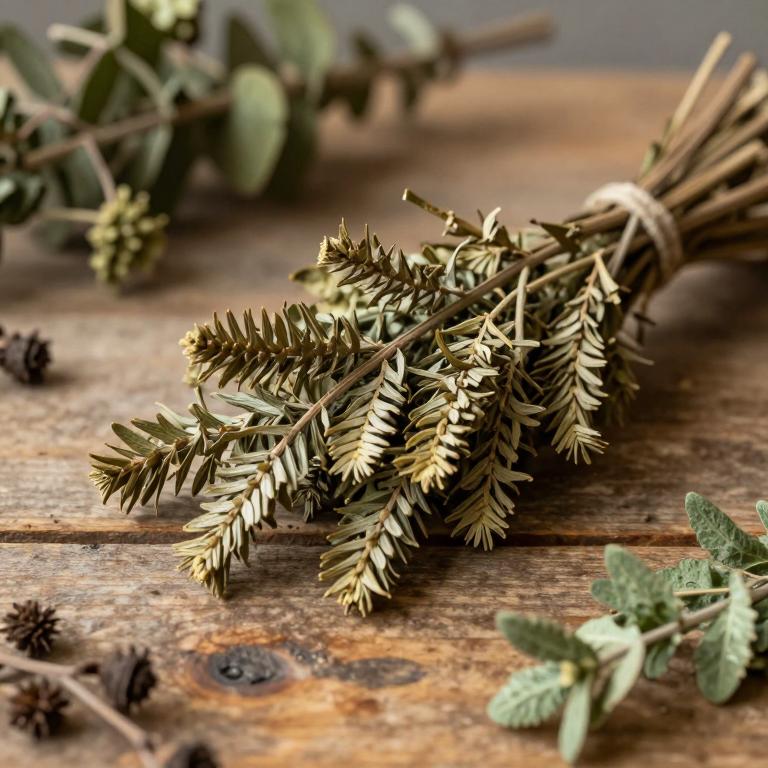
The morphology of Taxus × media is characterized by a robust, woody growth habit, reflecting its nature as a perennial hybrid. The plant exhibits a sturdy, woody stem structure that provides significant mechanical support for its spreading or upright canopy. Its foliage consists of dense, dark green, linear needles that are arranged spirally around the branches, though they often appear two-ranked due to the flattening of the shoot. The leaves are typically leathery in texture, tapering to a sharp point at the apex. As a woody taxon, the plant develops a complex branching system and a substantial root architecture capable of anchoring its mass in various soil types. The reproductive structures are typically characterized by small, inconspicuous female cones that eventually develop into fleshy, cup-shaped arils surrounding the seeds.
- Woodiness :
- woody
Reproduction
Reproduction in Taxus × media is characterized by specific seed metrics that define its reproductive output. Based on the observed data, the seed mass exhibits high consistency, with recorded values showing a mean, maximum, and minimum of 0.0641 g in one set of observations, and a secondary mean, maximum, and minimum of 0.06849 g in another. This lack of variance between the minimum, maximum, and mean values suggests a highly uniform seed production process within the studied parameters. These precise mass measurements, ranging from 0.0641 g to 0.06849 g, are critical indicators of the plant's energetic investment in its progeny and play a vital role in its dispersal and germination potential.
- Seed mass mean:
- 0.0641 g
- Seed mass mean:
- 0.06849 g
Sources: Global Inventory of Floras and Traits (GIFT)
Plant Parts
Taxus × media has 1 reported plant parts identified across 2 scientific publications and several other databases that are studied for medicinal purposes. The most consistently reported plant part include root.
| Plant part | Supporting sources | Consensus |
|---|---|---|
| Root | 2 supporting sources | ★☆☆☆☆ |
Root
- Plant cell reports
- Cells
Chemicals
Taxus × media has 12 reported phytochemicals identified across 2 scientific publications and several other databases. The most consistently reported chemicals include paclitaxel, Baccatin III, Flavonoid, MIX, Methyl jasmonate.
| Chemical | Supporting sources | Consensus |
|---|---|---|
| paclitaxel | 4 supporting sources | ★★☆☆☆ |
| Baccatin III | 1 supporting sources | ★☆☆☆☆ |
| Flavonoid | 1 supporting sources | ★☆☆☆☆ |
| MIX | 1 supporting sources | ★☆☆☆☆ |
| Methyl jasmonate | 1 supporting sources | ★☆☆☆☆ |
| STIGMASTEROL | 1 supporting sources | ★☆☆☆☆ |
| Sitosterol | 1 supporting sources | ★☆☆☆☆ |
| Steroids | 1 supporting sources | ★☆☆☆☆ |
| TAXOL | 1 supporting sources | ★☆☆☆☆ |
| Taxane | 1 supporting sources | ★☆☆☆☆ |
paclitaxel
- Plant & cell physiology
- Plant cell reports
- International journal of molecular sciences
- Cells
Baccatin III
- Plant cell reports
Flavonoid
- Plant & cell physiology
MIX
- Cells
Methyl jasmonate
- Plants (Basel, Switzerland)
STIGMASTEROL
- Plants (Basel, Switzerland)
Sitosterol
- Plants (Basel, Switzerland)
Steroids
- Plants (Basel, Switzerland)
TAXOL
- Biocell : official journal of the Sociedades Latinoamericanas de Microscopia Electronica ... et. al
Taxane
- Plant cell reports
Activities
Taxus × media has 2 reported activities identified across 2 scientific publications and several other databases. The most consistently reported activities include Antibacterial, Antioxidant.
| Activity | Supporting sources | Consensus |
|---|---|---|
| Antibacterial | 1 supporting sources | ★☆☆☆☆ |
| Antioxidant | 1 supporting sources | ★☆☆☆☆ |
Antibacterial
- International journal of molecular sciences
Antioxidant
- International journal of molecular sciences
Conditions
Taxus × media has 1 reported investigations on conditions identified across 2 scientific publications and several other databases. The most consistently reported conditions include tumors.
| Condition | Supporting sources | Consensus |
|---|---|---|
| Tumors | 1 supporting sources | ★☆☆☆☆ |
Tumors
- International journal of molecular sciences
Preparations
Taxus × media has 3 reported preparations identified across 2 scientific publications and several other databases. The most consistently reported preparations include Callus culture, Suspension cultures, hairy root lines.
| Preparation | Supporting sources | Consensus |
|---|---|---|
| Callus culture | 1 supporting sources | ★☆☆☆☆ |
| Suspension cultures | 1 supporting sources | ★☆☆☆☆ |
| Hairy root lines | 1 supporting sources | ★☆☆☆☆ |
Callus culture
- Biocell : official journal of the Sociedades Latinoamericanas de Microscopia Electronica ... et. al
Suspension cultures
- Biocell : official journal of the Sociedades Latinoamericanas de Microscopia Electronica ... et. al
Hairy root lines
- Plants (Basel, Switzerland)