Taxus mairei ex
Taxus mairei · Accepted scientific name
Scientific literature: Moderate (122 studies) · ★★★☆☆
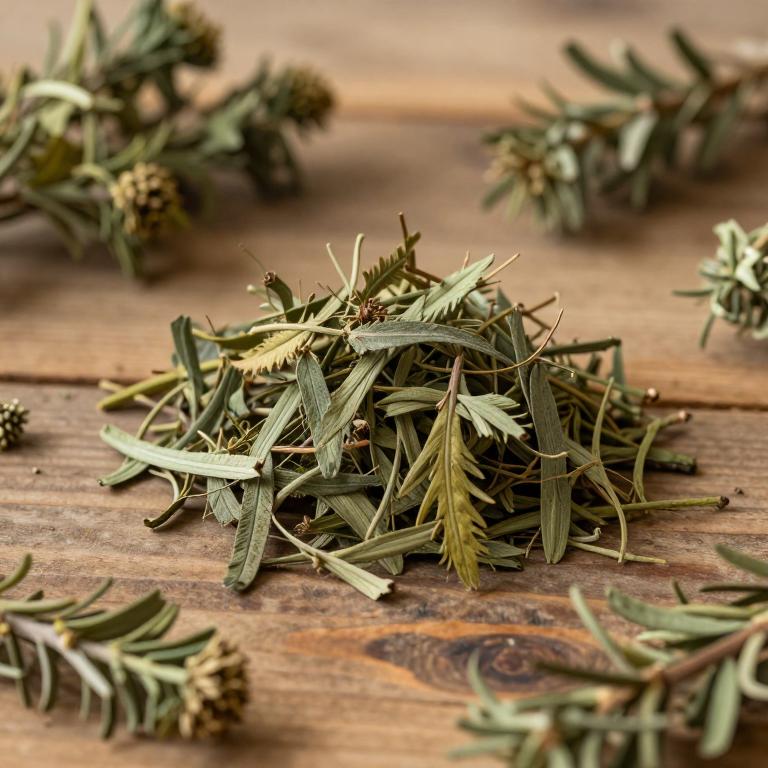
Taxus mairei ex, scientifically known as Taxus mairei, is a significant evergreen conifer native to East Asia. Highly valued in pharmacology, this medicinal plant is a primary source of taxanes, complex compounds used extensively in cancer chemotherapy. Its alkaloids play a crucial role in modern oncology and botanical research.
- Family
- Taxaceae
- Native range
- Asia-Temperate
- Parts used
- Leaf · Seed
- Common names
- Maire'S Yew
- Scientific synonyms
- Taxus Wallichiana Var. Mairei · Taxus Mairei Var. Speciosa · 5 more
Names and Synonyms
Common Names
- Maire's Yew
Scientific Names
Accepted name
Taxus maireiSynonyms
- Taxus wallichiana var. mairei
- Taxus mairei var. speciosa
- Tsuga mairei
- Taxus speciosa
- Taxus chinensis var. mairei
- Taxus kingstonii
- Taxus sumatrana subsp. mairei
Sources: Wikidata, Catalogue of Life
Taxonomical Classification
This plant belongs to the kingdom Plantae and the phylum Streptophyta. Within the class Equisetopsida and subclass Pinidae, it is classified under the order Pinales and the family Taxaceae. Finally, it is identified by its genus, Taxus.
| Rank | Classification |
|---|---|
| Kingdom | Plantae |
| Phylum | Streptophyta |
| Class | Equisetopsida |
| Subclass | Pinidae |
| Order | Pinales |
| Family | Taxaceae |
| Genus | Taxus |
Sources: The World Checklist of Vascular Plants (WCVP)
Distribution
This plant exhibits a broad distribution across several key regions of East Asia. In mainland China, its presence is noted throughout the South-Central and North-Central territories. It can also be found growing in the Southeast regions of China. Furthermore, the species is located on the island of Hainan. Finally, its geographical range extends to the island of Taiwan within Eastern Asia.
| Region | Area |
|---|---|
| China | China South-Central |
| China | Hainan |
| China | China North-Central |
| China | China Southeast |
| Eastern Asia | Taiwan |
| Indian Subcontinent | Assam |
| Indian Subcontinent | Nepal |
| Indo-China | Vietnam |
Sources: The World Checklist of Vascular Plants (WCVP)
Botanical Identification
Life history
The life history of Taxus mairei is characterized by its classification as a phanerophyte, specifically exhibiting traits consistent with both phanerophyte and nanophanerophyte life forms. As a perennial woody species, it maintains its photosynthetic organs on elevated branches above the soil surface, ensuring survival through various seasonal transitions. Its development follows a slow growth pattern typical of the genus, where it establishes a robust structural presence over many years. The plant's life cycle involves long-term persistence in its natural habitat, utilizing its woody architecture to withstand environmental fluctuations while maintaining its buds in protected, elevated positions.
- Life form :
- phanerophyte
Morphology
The morphology of Taxus mairei is characterized by its robust and perennial growth habit, functioning as a woody species. It is a terrestrial plant that grows independently in its natural habitat, neither acting as a parasite nor an epiphyte. Although it possesses a sturdy structure, it does not exhibit climbing tendencies, maintaining a self-supporting growth form without the need for external structures for ascent.
- Climber :
- self-supporting
- Epiphyte :
- terrestrial
- Parasite :
- independent
- Woodiness :
- woody
Sources: Global Inventory of Floras and Traits (GIFT)
Plant Parts
Taxus mairei has 4 reported plant parts identified across 15 scientific publications and several other databases that are studied for medicinal purposes. The most consistently reported plant part include leaf, seed, stem, root.
| Plant part | Supporting sources | Consensus |
|---|---|---|
| Leaf | 6 supporting sources | ★★★☆☆ |
| Seed | 6 supporting sources | ★★★☆☆ |
| Stem | 2 supporting sources | ★☆☆☆☆ |
| Root | 1 supporting sources | ★☆☆☆☆ |
Leaf
- Physiologia plantarum
- Biomedicine & pharmacotherapy = Biomedecine & pharmacotherapie
- Zhong yao cai = Zhongyaocai = Journal of Chinese medicinal materials
- Journal of ethnopharmacology
- Zhongguo Zhong yao za zhi = Zhongguo zhongyao zazhi = China journal of Chinese materia medica
View 1 additional sources
- Plant communications
Seed
- Journal of Asian natural products research
- Planta medica
- Phytochemistry
- Chemical & pharmaceutical bulletin
- Zhongguo Zhong yao za zhi = Zhongguo zhongyao zazhi = China journal of Chinese materia medica
View 1 additional sources
- Journal of natural products
Stem
- The Plant journal : for cell and molecular biology
- Journal of natural products
Root
- Journal of natural products
Chemicals
Taxus mairei has 66 reported phytochemicals identified across 15 scientific publications and several other databases. The most consistently reported chemicals include TAXOL, paclitaxel, 10-Deacetyl baccatin III, 2-Deacetoxytaxinine J, Flavonoid.
| Chemical | Supporting sources | Consensus |
|---|---|---|
| TAXOL | 6 supporting sources | ★★★☆☆ |
| paclitaxel | 5 supporting sources | ★★★☆☆ |
| 10-Deacetyl baccatin III | 2 supporting sources | ★☆☆☆☆ |
| 2-Deacetoxytaxinine J | 2 supporting sources | ★☆☆☆☆ |
| Flavonoid | 2 supporting sources | ★☆☆☆☆ |
| Taxezopidine G | 2 supporting sources | ★☆☆☆☆ |
| Taxinine A | 2 supporting sources | ★☆☆☆☆ |
| Taxoid | 2 supporting sources | ★☆☆☆☆ |
| 1-Deoxybaccatin VI | 1 supporting sources | ★☆☆☆☆ |
| 1-Deoxypaclitaxel | 1 supporting sources | ★☆☆☆☆ |
TAXOL
- The Plant journal : for cell and molecular biology
- Current microbiology
- Nutricion hospitalaria
- Zhong yao cai = Zhongyaocai = Journal of Chinese medicinal materials
- FEMS microbiology letters
View 1 additional sources
- Plant communications
paclitaxel
- Plant & cell physiology
- Plant molecular biology
- Nature plants
- Tree physiology
- BMC plant biology
10-Deacetyl baccatin III
- Zhong yao cai = Zhongyaocai = Journal of Chinese medicinal materials
- Frontiers in chemistry
2-Deacetoxytaxinine J
- Journal of the American Chemical Society
- Zhongguo Zhong yao za zhi = Zhongguo zhongyao zazhi = China journal of Chinese materia medica
Flavonoid
- Plant & cell physiology
- Plant communications
Taxezopidine G
- Planta medica
- Zhongguo Zhong yao za zhi = Zhongguo zhongyao zazhi = China journal of Chinese materia medica
Taxinine A
- Chemical & pharmaceutical bulletin
- Zhongguo Zhong yao za zhi = Zhongguo zhongyao zazhi = China journal of Chinese materia medica
Taxoid
- The Plant journal : for cell and molecular biology
- Plant & cell physiology
1-Deoxybaccatin VI
- Bioorganic & medicinal chemistry letters
1-Deoxypaclitaxel
- Journal of natural products
Activities
Taxus mairei has 2 reported activities identified across 15 scientific publications and several other databases. The most consistently reported activities include Anticancer, Antineoplastic.
| Activity | Supporting sources | Consensus |
|---|---|---|
| Anticancer | 2 supporting sources | ★☆☆☆☆ |
| Antineoplastic | 1 supporting sources | ★☆☆☆☆ |
Anticancer
- Nature plants
- FEMS microbiology letters
Antineoplastic
- Plant communications
Conditions
Taxus mairei has 2 reported investigations on conditions identified across 15 scientific publications and several other databases. The most consistently reported conditions include cancer, tumor cell lines.
| Condition | Supporting sources | Consensus |
|---|---|---|
| Cancer | 2 supporting sources | ★☆☆☆☆ |
| Tumor cell lines | 1 supporting sources | ★☆☆☆☆ |
Cancer
- Journal of ethnopharmacology
- FEMS microbiology letters
Tumor cell lines
- Journal of natural products
Preparations
Taxus mairei has 16 reported preparations identified across 15 scientific publications and several other databases. The most consistently reported preparations include seeds, methanol extract, 10-deacetyl baccatin III extract, Aqueous extract, VCLT.
| Preparation | Supporting sources | Consensus |
|---|---|---|
| Seeds | 3 supporting sources | ★★☆☆☆ |
| Methanol extract | 2 supporting sources | ★☆☆☆☆ |
| 10-deacetyl baccatin iii extract | 1 supporting sources | ★☆☆☆☆ |
| Aqueous extract | 1 supporting sources | ★☆☆☆☆ |
| Vclt | 1 supporting sources | ★☆☆☆☆ |
| Aqueous extract of tc (aetc) | 1 supporting sources | ★☆☆☆☆ |
| Bark | 1 supporting sources | ★☆☆☆☆ |
| Ethanol extracts of the whole plant | 1 supporting sources | ★☆☆☆☆ |
| Extracts of the roots of formosan taxus mairei (lemee & levl.) s. y. hu | 1 supporting sources | ★☆☆☆☆ |
| Extracts of the roots of taxus mairei | 1 supporting sources | ★☆☆☆☆ |
Seeds
- Planta medica
- Chemical & pharmaceutical bulletin
- Zhongguo Zhong yao za zhi = Zhongguo zhongyao zazhi = China journal of Chinese materia medica
Methanol extract
- Journal of Asian natural products research
- Journal of natural products
10-deacetyl baccatin iii extract
- Zhong yao cai = Zhongyaocai = Journal of Chinese medicinal materials
Aqueous extract
- Biomedicine & pharmacotherapy = Biomedecine & pharmacotherapie
Vclt
- Journal of ethnopharmacology
Aqueous extract of tc (aetc)
- Biomedicine & pharmacotherapy = Biomedecine & pharmacotherapie
Bark
- Zhong yao cai = Zhongyaocai = Journal of Chinese medicinal materials
Ethanol extracts of the whole plant
- Yao xue xue bao = Acta pharmaceutica Sinica
Extracts of the roots of formosan taxus mairei (lemee & levl.) s. y. hu
- Journal of natural products
Extracts of the roots of taxus mairei
- Journal of natural products