Japanese yew
Taxus cuspidata · Accepted scientific name
Scientific literature: Moderate (102 studies) · ★★★☆☆
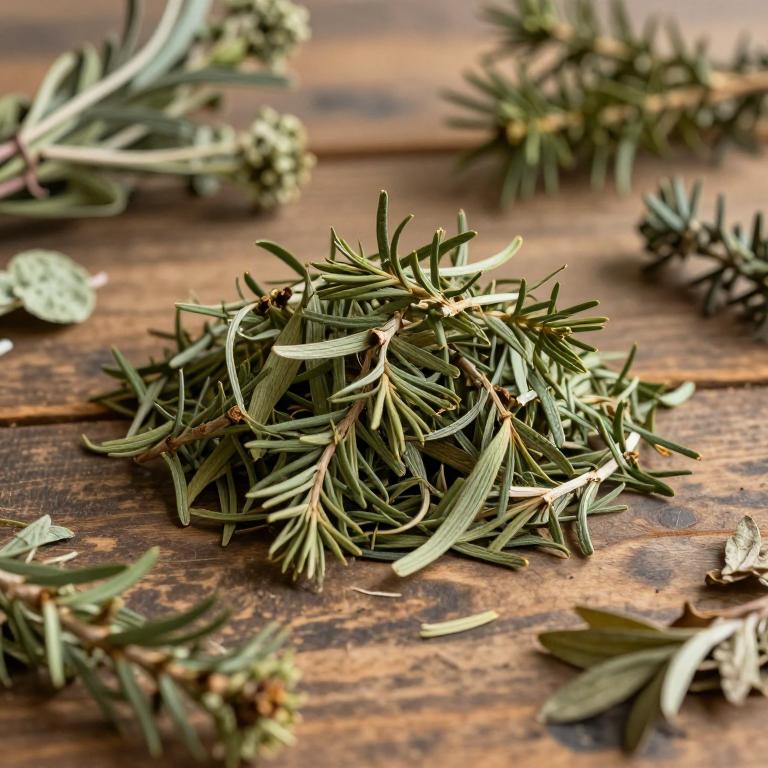
Japanese yew, scientifically known as Taxus cuspidata, is an evergreen conifer native to East Asia. Renowned for its striking foliage and ornamental value, this slow-growing species is highly valued in landscaping. While aesthetically beautiful, it contains potent alkaloids, requiring careful handling due to its significant medicinal and toxic properties.
- Family
- Taxaceae
- Native range
- Europe
- Parts used
- Leaf · Seed
- Common names
- Japanese Yew
- Scientific synonyms
- Taxus Baccata Var. Cuspidata · Taxus Baccata Subsp. Cuspidata
Names and Synonyms
Common Names
- Japanese Yew
Scientific Names
Accepted name
Taxus cuspidataSynonyms
- Taxus baccata var. cuspidata
- Taxus baccata subsp. cuspidata
Regional and Traditional Names
Spanish:
- tejo japonés
German:
- Japanische Eibe
- Japanische Eibe
French:
- If du Japon
- If du Japon
Sources: Wikidata, Catalogue of Life
Taxonomical Classification
This plant belongs to the kingdom Plantae and the phylum Streptophyta. Within the class Equisetopsida and subclass Pinidae, it is categorized under the order Pinales and the family Taxaceae. It is further classified under the genus Taxus, specifically identified as the species Taxus cuspidata.
| Rank | Classification |
|---|---|
| Kingdom | Plantae |
| Phylum | Streptophyta |
| Class | Equisetopsida |
| Subclass | Pinidae |
| Order | Pinales |
| Family | Taxaceae |
| Genus | Taxus |
Sources: The World Checklist of Vascular Plants (WCVP)
Distribution
This plant exhibits a wide geographical range across several distinct regions of Northeast Asia. In Eastern Europe, its presence can be found specifically within the Baltic States. The species is also well-established in the Russian Far East, spanning the Kuril Islands, Sakhalin, and the Primorye region. Furthermore, its distribution extends into the Manchuria region of China. Together, these locations define the primary natural habitats for Taxus cuspidata.
| Region | Area |
|---|---|
| Eastern Europe | Baltic States |
| Russian Far East | Kuril Is. |
| Russian Far East | Primorye |
| Russian Far East | Sakhalin |
| China | Manchuria |
| China | China North-Central |
| Eastern Asia | Japan |
| Eastern Asia | Korea |
| Northeastern U.S.A. | New York |
| Northeastern U.S.A. | Vermont |
Sources: The World Checklist of Vascular Plants (WCVP)
Botanical Identification
Ecology
The ecology of Taxus cuspidata is fundamentally defined by its preference for stable, shaded environments within forest and mountain ecosystems. Typically found inhabiting temperate montane forests, this species thrives in areas characterized by well-drained, moist, and slightly acidic soils, often occurring in the understory where it can benefit from the buffered microclimates provided by a dense canopy. Its distribution is closely tied to mountainous terrains where high humidity and moderate temperatures are maintained, allowing it to occupy niches ranging from deep valley floors to mid-elevation slopes. As a slow-growing evergreen, it demonstrates a high degree of shade tolerance, enabling it to persist in the low-light conditions typical of mature forest floors. The plant's presence is often indicative of late-successional forest stages, where its ability to endure competition and integrate into complex woodland structures contributes to the overall biodiversity of its mountainous habitat.
- Habitat :
- forest, mountains
Life history
The life history of Taxus cuspidata is characterized by its status as a perennial species, meaning it survives for many years throughout its biological existence. In terms of its structural growth and ecological strategy, the plant is classified as a phanerophyte, as it maintains its reproductive shoots well above the ground level. Additionally, it can be described as a nanophanerophyte, reflecting a growth form where the woody stems are relatively short but still elevated above the soil surface.
- Life form :
- nanophanerophyte
- Life form :
- phanerophyte
- Lifecycle :
- perennial
Morphology
The morphology of Taxus cuspidata is characterized by its growth form as a woody tree, which functions as a self-supporting structure rather than a climber or vine. As a terrestrial species, it does not exhibit aquatic or epiphytic tendencies and grows as an independent organism without parasitic requirements. In terms of physical stature, the plant reaches a maximum height of approximately 12 m, with a mean plant height of around 15 m.
- Aquatic :
- terrestrial
- Climber :
- self-supporting
- Epiphyte :
- terrestrial
- Growth form :
- tree
- Parasite :
- independent
- Plant height max:
- 12 m
- Plant height mean:
- 15 m
- Woodiness :
- woody
Physiology
The physiology of Taxus cuspata is characterized by specific metabolic and structural adaptations that support its growth in temperate environments. As a plant utilizing the C3 photosynthetic pathway, it fixes carbon dioxide primarily through the Calvin cycle, which is efficient under moderate light and temperature conditions but requires careful regulation of stomatal conductance to balance gas exchange with transpiration. Structurally, the plant exhibits a stem specific density (SSD) with a mean value of 550 mg/cm³, reflecting a moderate level of wood density that provides the necessary mechanical support and vascular integrity for its growth habit. These physiological traits collectively dictate the plant's resource allocation strategies and its ability to maintain metabolic stability within its ecological niche.
- Photosynthetic pathway :
- C3
- Stem specific density (SSD) mean:
- 550 mg/cm³
Reproduction
The reproduction of Taxus cuspata is characterized by a specific phenological cycle and specialized seed dispersal mechanisms. The flowering period typically begins in June and concludes in July. Following fertilization, the plant produces fleshy fruits, which facilitates a zoochorous dispersal syndrome, relying on animals to distribute the seeds. The seeds themselves exhibit specific morphological dimensions, with a mean seed mass of approximately 0.0543683335 g, ranging from a minimum of 0.03471 g to a maximum of 0.0625 g. In terms of volume, the seeds vary significantly, with a minimum volume of 16 mm³, a maximum volume of 51 mm³, and a mean seed volume of 33.5 mm³.
- Dispersal syndrome :
- zoochorous
- Flowering time :
- Jun
- Flowering time :
- Jul
- Fruit dryness :
- fleshy
- Seed mass max:
- 0.0625 g
- Seed mass mean:
- 0.0543683335 g
- Seed mass min:
- 0.03471 g
- Seed volume max:
- 51 mm³
- Seed volume mean:
- 33.5 mm³
- Seed volume min:
- 16 mm³
Sources: Global Inventory of Floras and Traits (GIFT)
Plant Parts
Taxus cuspidata has 2 reported plant parts identified across 3 scientific publications and several other databases that are studied for medicinal purposes. The most consistently reported plant part include leaf, seed.
| Plant part | Supporting sources | Consensus |
|---|---|---|
| Leaf | 2 supporting sources | ★☆☆☆☆ |
| Seed | 1 supporting sources | ★☆☆☆☆ |
Leaf
- Planta medica
- ACS omega
Seed
- Journal of natural products
Chemicals
Taxus cuspidata has 45 reported phytochemicals identified across 3 scientific publications and several other databases. The most consistently reported chemicals include TAXOL, paclitaxel, Baccatin III, Taxanes, BETA-SITOSTEROL.
| Chemical | Supporting sources | Consensus |
|---|---|---|
| TAXOL | 10 supporting sources | ★★★★★ |
| paclitaxel | 4 supporting sources | ★★☆☆☆ |
| Baccatin III | 3 supporting sources | ★★☆☆☆ |
| Taxanes | 3 supporting sources | ★★☆☆☆ |
| BETA-SITOSTEROL | 2 supporting sources | ★☆☆☆☆ |
| Baccatin VI | 2 supporting sources | ★☆☆☆☆ |
| Cephalomannine | 2 supporting sources | ★☆☆☆☆ |
| Taxinine | 2 supporting sources | ★☆☆☆☆ |
| Taxoids | 2 supporting sources | ★☆☆☆☆ |
| Taxusin | 2 supporting sources | ★☆☆☆☆ |
TAXOL
- Planta medica
- Yao xue xue bao = Acta pharmaceutica Sinica
- Journal of biochemistry and molecular biology
- Proceedings of the National Academy of Sciences of the United States of America
- Archives of biochemistry and biophysics
View 5 additional sources
- Biotechnology progress
- Sheng wu gong cheng xue bao = Chinese journal of biotechnology
- BMC plant biology
- The Journal of organic chemistry
- Journal of natural products
paclitaxel
- Acta astronautica
- Journal of separation science
- Journal of natural products
- The Journal of organic chemistry
Baccatin III
- Acta astronautica
- Proceedings of the National Academy of Sciences of the United States of America
- Journal of separation science
Taxanes
- Acta astronautica
- Planta medica
- ACS omega
BETA-SITOSTEROL
- Zhongguo Zhong yao za zhi = Zhongguo zhongyao zazhi = China journal of Chinese materia medica
- Zhong yao cai = Zhongyaocai = Journal of Chinese medicinal materials
Baccatin VI
- Biotechnology and bioengineering
- Journal of natural products
Cephalomannine
- Journal of separation science
- Journal of natural products
Taxinine
- Dr. Duke
- Zhongguo Zhong yao za zhi = Zhongguo zhongyao zazhi = China journal of Chinese materia medica
Taxoids
- Biotechnology and bioengineering
- Journal of natural products
Taxusin
- Zhongguo Zhong yao za zhi = Zhongguo zhongyao zazhi = China journal of Chinese materia medica
- Journal of natural products
Activities
Taxus cuspidata has 2 reported activities identified across 3 scientific publications and several other databases. The most consistently reported activities include Anticancer, MDR-Inhibitor.
| Activity | Supporting sources | Consensus |
|---|---|---|
| Anticancer | 1 supporting sources | ★☆☆☆☆ |
| MDR-Inhibitor | 1 supporting sources | ★☆☆☆☆ |
Anticancer
- BMC plant biology
MDR-Inhibitor
- Dr. Duke
Conditions
Taxus cuspidata has 2 reported investigations on conditions identified across 3 scientific publications and several other databases. The most consistently reported conditions include multidrug resistance, tumors.
| Condition | Supporting sources | Consensus |
|---|---|---|
| Multidrug resistance | 1 supporting sources | ★☆☆☆☆ |
| Tumors | 1 supporting sources | ★☆☆☆☆ |
Multidrug resistance
- Molecular pharmacology
Tumors
- Molecular pharmacology
Preparations
Taxus cuspidata has 27 reported preparations identified across 3 scientific publications and several other databases. The most consistently reported preparations include needles, Cell suspension cultures, suspension cultures, MeOH extract, bark.
| Preparation | Supporting sources | Consensus |
|---|---|---|
| Needles | 4 supporting sources | ★★☆☆☆ |
| Cell suspension cultures | 2 supporting sources | ★☆☆☆☆ |
| Suspension cultures | 2 supporting sources | ★☆☆☆☆ |
| Meoh extract | 1 supporting sources | ★☆☆☆☆ |
| Bark | 1 supporting sources | ★☆☆☆☆ |
| Bark extracts | 1 supporting sources | ★☆☆☆☆ |
| Butanol fraction | 1 supporting sources | ★☆☆☆☆ |
| Callus culture | 1 supporting sources | ★☆☆☆☆ |
| Callus culture incubated under light irradiation | 1 supporting sources | ★☆☆☆☆ |
| Callus culture on the medium with 10 mmol/l beta-cyclodextrin and 1.0 mg/l naa | 1 supporting sources | ★☆☆☆☆ |
Needles
- Planta medica
- Natural product research
- Zhong yao cai = Zhongyaocai = Journal of Chinese medicinal materials
- Bioscience, biotechnology, and biochemistry
Cell suspension cultures
- Biotechnology and bioengineering
- Acta astronautica
Suspension cultures
- Biotechnology progress
- Sheng wu gong cheng xue bao = Chinese journal of biotechnology
Meoh extract
- Chemistry & biodiversity
Bark
- Planta medica
Bark extracts
- Molecules (Basel, Switzerland)
Butanol fraction
- Journal of food science
Callus culture
- Journal of natural products
Callus culture incubated under light irradiation
- Journal of natural products
Callus culture on the medium with 10 mmol/l beta-cyclodextrin and 1.0 mg/l naa
- Journal of natural products