Chinese Yew
Taxus chinensis · Accepted scientific name
Scientific literature: Moderate (106 studies) · ★★★☆☆
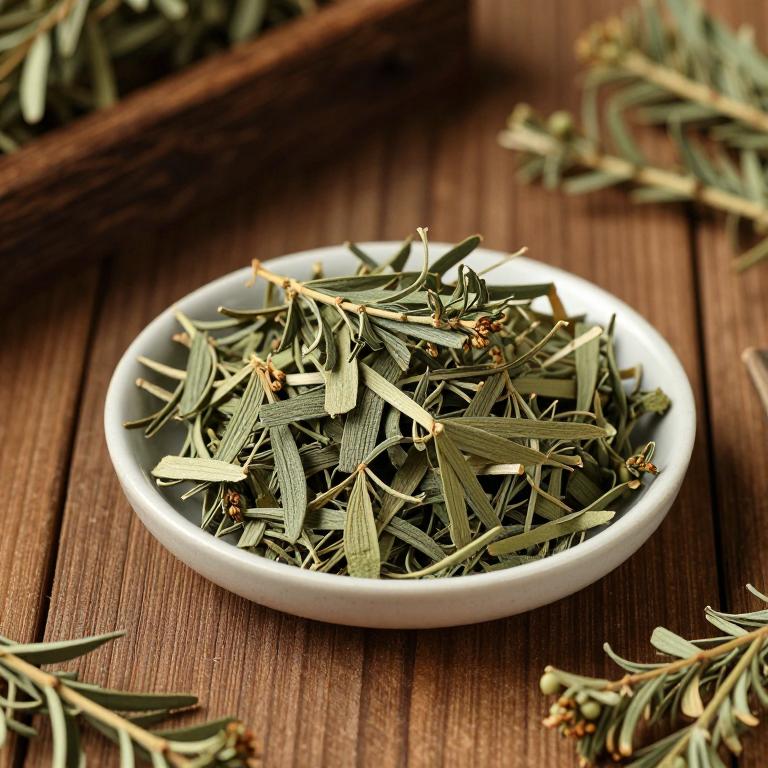
Chinese Yew, scientifically known as Taxus chinensis, is a versatile evergreen conifer native to East Asia. Renowned for its ornamental beauty and dense foliage, it also holds significant pharmacological importance. The plant contains bioactive alkaloids, which are extensively researched for their potential therapeutic properties in modern medicinal applications.
- Family
- Taxaceae
- Native range
- Asia-Temperate
- Parts used
- Leaf · Seed
- Common names
- Chinese Yew
- Scientific synonyms
- Taxus Wallichiana Var. Chinensis · Taxus Sumatrana Subsp. Chinensis · 4 more
Names and Synonyms
Common Names
- Chinese Yew
Scientific Names
Accepted name
Taxus chinensisSynonyms
- Taxus wallichiana var. chinensis
- Taxus sumatrana subsp. chinensis
- Taxus baccata var. sinensis
- Taxus baccata var. chinensis
- Taxus cuspidata var. chinensis
- Taxus chinensis f. baokangsis
Regional and Traditional Names
German:
- Chinesische Eibe
Sources: Wikidata, Catalogue of Life
Taxonomical Classification
This plant belongs to the kingdom Plantae and the phylum Streptophyta within the class Equisetopsida. Classified under the subclass Pinidae and order Pinales, it is a member of the Taxaceae family. Finally, it is categorized under the genus Taxus as the species Taxus chinensis.
| Rank | Classification |
|---|---|
| Kingdom | Plantae |
| Phylum | Streptophyta |
| Class | Equisetopsida |
| Subclass | Pinidae |
| Order | Pinales |
| Family | Taxaceae |
| Genus | Taxus |
Sources: The World Checklist of Vascular Plants (WCVP)
Distribution
This plant, known as Taxus chinensis, exhibits a specific distribution pattern across various regions of China. It can be found growing within the landscapes of China South-Central. Additionally, the species is present in the territories of China North-Central. Its natural range also extends into the areas of China Southeast. Consequently, these three distinct regions define the primary geographical presence of this medicinal species.
| Region | Area |
|---|---|
| China | China South-Central |
| China | China North-Central |
| China | China Southeast |
Sources: The World Checklist of Vascular Plants (WCVP)
Botanical Identification
Ecology
The ecology of Taxus chinensis is characterized by its preference for high-altitude montane environments, where it occupies a specialized niche within temperate forest ecosystems. This species is primarily distributed across specific altitudinal belts, thriving within an elevational range that begins at 2000 m AMSL and extends up to a maximum of 3000 m AMSL. Within this vertical zone, the plant is adapted to the unique microclimates provided by mountain slopes, often favoring shaded, moist, and well-drained soils typical of subalpine or montane coniferous and mixed forests. Its presence in these high-elevation habitats dictates its physiological adaptations to cooler temperatures and shorter growing seasons, making it a vital component of the high-altitude biodiversity found in its native range.
- Elevational range max:
- 3000 m AMSL
- Elevational range min:
- 2000 m AMSL
Life history
The life history of Taxus chinensis is characterized by a perennial growth strategy, specifically categorized under the life forms of phanerophyte and nanophanerophyte. As a phanerophyte, the plant maintains its photosynthetic organs on elevated branches above the soil surface, protecting its buds through seasonal changes. Its development typically begins with seed germination in shaded, moist forest understories, progressing through a slow growth phase typical of long-lived gymnosperms. Throughout its life cycle, it functions as a robust woody perennial, utilizing its structural height to compete for light within its ecological niche. The transition between its nanophanerophytic and phanerophytic states reflects its capacity to maintain perennial woody structures that persist through various environmental conditions, ensuring long-term survival and reproductive stability within its habitat.
- Life form :
- phanerophyte
Morphology
The morphology of Taxus chinensis is characterized by its structural growth habit as a woody perennial, exhibiting a robust and permanent lignified framework. Unlike climbing species, it functions as a self-supporting plant, maintaining its upright stature through its own structural integrity rather than relying on external supports. It is an independent organism, neither acting as a parasite nor as an epiphyte, and instead maintains a strictly terrestrial existence, rooting firmly in the soil to establish its lifecycle.
- Climber :
- self-supporting
- Epiphyte :
- terrestrial
- Parasite :
- independent
- Woodiness :
- woody
Physiology
The physiology of Taxus chinensis is characterized by a slow growth rate and a highly efficient structural composition designed for long-term survival in temperate environments. A critical physiological indicator of its structural integrity and wood density is its stem specific density (SSD), which maintains a measured SSD_mean of 761 mg/cm³. This relatively high density reflects a dense arrangement of tracheids and cellular structures within the xylem, contributing to the plant's ability to withstand mechanical stresses and manage hydraulic conductivity under varying environmental conditions. The metabolic processes of the plant are closely tied to this structural density, as the investment in carbon-rich, dense tissues supports its perennial nature and slow developmental pace. Additionally, the plant's physiological resilience is supported by its specialized secondary metabolites, which are integrated into its complex tissue matrix, facilitating both chemical defense and structural stability.
- Stem specific density (SSD) mean:
- 761 mg/cm³
Sources: Global Inventory of Floras and Traits (GIFT)
Plant Parts
Taxus chinensis has 3 reported plant parts identified across 5 scientific publications and several other databases that are studied for medicinal purposes. The most consistently reported plant part include leaf, seed, stem.
| Plant part | Supporting sources | Consensus |
|---|---|---|
| Leaf | 3 supporting sources | ★★☆☆☆ |
| Seed | 1 supporting sources | ★☆☆☆☆ |
| Stem | 1 supporting sources | ★☆☆☆☆ |
Leaf
- Frontiers in plant science
- BMC plant biology
- Journal of natural products
Seed
- Drug development and industrial pharmacy
Stem
- Journal of natural products
Chemicals
Taxus chinensis has 52 reported phytochemicals identified across 5 scientific publications and several other databases. The most consistently reported chemicals include TAXOL, paclitaxel, Baccatin III, Cephalomannine, Ginkgetin.
| Chemical | Supporting sources | Consensus |
|---|---|---|
| TAXOL | 6 supporting sources | ★★★☆☆ |
| paclitaxel | 5 supporting sources | ★★★☆☆ |
| Baccatin III | 4 supporting sources | ★★☆☆☆ |
| Cephalomannine | 2 supporting sources | ★☆☆☆☆ |
| Ginkgetin | 2 supporting sources | ★☆☆☆☆ |
| RUTIN | 2 supporting sources | ★☆☆☆☆ |
| Taxane | 2 supporting sources | ★☆☆☆☆ |
| Terpenoids | 2 supporting sources | ★☆☆☆☆ |
| 10-Deacetyl baccatin III | 1 supporting sources | ★☆☆☆☆ |
| 10-Deacetyl taxinine B | 1 supporting sources | ★☆☆☆☆ |
TAXOL
- Sheng wu gong cheng xue bao = Chinese journal of biotechnology
- Stem cells (Dayton, Ohio)
- Frontiers in plant science
- Biotechnology progress
- Yao xue xue bao = Acta pharmaceutica Sinica
View 1 additional sources
- BMC plant biology
paclitaxel
- Phytomedicine : international journal of phytotherapy and phytopharmacology
- Frontiers in plant science
- Journal of separation science
- BMC plant biology
- Phytochemistry
Baccatin III
- Journal of separation science
- Biotechnology progress
- BMC plant biology
- Yao xue xue bao = Acta pharmaceutica Sinica
Cephalomannine
- Journal of separation science
- BMC plant biology
Ginkgetin
- Journal of ethnopharmacology
- Frontiers in chemistry
RUTIN
- Journal of ethnopharmacology
- Frontiers in chemistry
Taxane
- Phytomedicine : international journal of phytotherapy and phytopharmacology
- Zhong yao cai = Zhongyaocai = Journal of Chinese medicinal materials
Terpenoids
- Journal of ethnopharmacology
- Plant physiology and biochemistry : PPB
10-Deacetyl baccatin III
- Frontiers in chemistry
10-Deacetyl taxinine B
- Phytochemistry
Activities
Taxus chinensis has 1 reported activities identified across 5 scientific publications and several other databases. The most consistently reported activities include Anticancer.
| Activity | Supporting sources | Consensus |
|---|---|---|
| Anticancer | 2 supporting sources | ★☆☆☆☆ |
Anticancer
- Frontiers in plant science
- BMC plant biology
Conditions
Taxus chinensis has 13 reported investigations on conditions identified across 5 scientific publications and several other databases. The most consistently reported conditions include cancer, Triple-negative breast cancer, breast cancer, colorectal cancer, heart.
| Condition | Supporting sources | Consensus |
|---|---|---|
| Cancer | 2 supporting sources | ★☆☆☆☆ |
| Triple-negative breast cancer | 1 supporting sources | ★☆☆☆☆ |
| Breast cancer | 1 supporting sources | ★☆☆☆☆ |
| Colorectal cancer | 1 supporting sources | ★☆☆☆☆ |
| Heart | 1 supporting sources | ★☆☆☆☆ |
| Inflammation | 1 supporting sources | ★☆☆☆☆ |
| Lung cancer | 1 supporting sources | ★☆☆☆☆ |
| Neuroinflammation | 1 supporting sources | ★☆☆☆☆ |
| Ovarian cancer | 1 supporting sources | ★☆☆☆☆ |
| Oxidative stress | 1 supporting sources | ★☆☆☆☆ |
Cancer
- Zhongguo ying yong sheng li xue za zhi = Zhongguo yingyong shenglixue zazhi = Chinese journal of applied physiology
- BMC plant biology
Triple-negative breast cancer
- Bioactive materials
Breast cancer
- Phytomedicine : international journal of phytotherapy and phytopharmacology
Colorectal cancer
- Non-coding RNA research
Heart
- Zhongguo ying yong sheng li xue za zhi = Zhongguo yingyong shenglixue zazhi = Chinese journal of applied physiology
Inflammation
- Zhongguo ying yong sheng li xue za zhi = Zhongguo yingyong shenglixue zazhi = Chinese journal of applied physiology
Lung cancer
- Wei sheng wu xue bao = Acta microbiologica Sinica
Neuroinflammation
- Journal of ethnopharmacology
Ovarian cancer
- Phytomedicine : international journal of phytotherapy and phytopharmacology
Oxidative stress
- Journal of ethnopharmacology
Preparations
Taxus chinensis has 12 reported preparations identified across 5 scientific publications and several other databases. The most consistently reported preparations include EtOH extract of the aerial parts, Taxus chinensis extracts, aqueous extracts, cell suspension cultures, ethanol extract.
| Preparation | Supporting sources | Consensus |
|---|---|---|
| Etoh extract of the aerial parts | 1 supporting sources | ★☆☆☆☆ |
| Taxus chinensis extracts | 1 supporting sources | ★☆☆☆☆ |
| Aqueous extracts | 1 supporting sources | ★☆☆☆☆ |
| Cell suspension cultures | 1 supporting sources | ★☆☆☆☆ |
| Ethanol extract | 1 supporting sources | ★☆☆☆☆ |
| Exosomes | 1 supporting sources | ★☆☆☆☆ |
| Extract from cell cultures | 1 supporting sources | ★☆☆☆☆ |
| Suspended cell culture | 1 supporting sources | ★☆☆☆☆ |
| Trna fragment of trna |
1 supporting sources | ★☆☆☆☆ |
| Taxane extract | 1 supporting sources | ★☆☆☆☆ |
Etoh extract of the aerial parts
- Cancer letters
Taxus chinensis extracts
- Phytomedicine : international journal of phytotherapy and phytopharmacology
Aqueous extracts
- Life sciences
Cell suspension cultures
- Frontiers in plant science
Ethanol extract
- Drug development and industrial pharmacy
Exosomes
- Bioactive materials
Extract from cell cultures
- Yao xue xue bao = Acta pharmaceutica Sinica
Suspended cell culture
- Sheng wu gong cheng xue bao = Chinese journal of biotechnology
Trna fragment of trna
- Non-coding RNA research
Taxane extract
- Phytomedicine : international journal of phytotherapy and phytopharmacology