American yew
Taxus canadensis · Accepted scientific name
Scientific literature: Very Sparse (22 studies) · ★☆☆☆☆
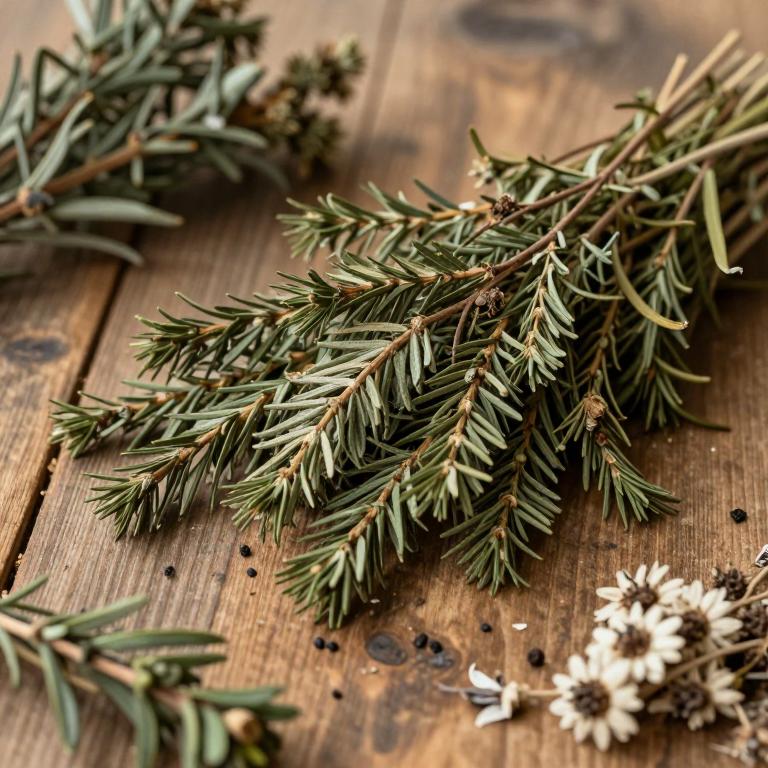
American yew, scientifically known as Taxus canadensis, is a resilient evergreen conifer native to North American forests. Renowned for its dense, needle-like foliage and bright red arils, this species holds historical significance in traditional herbalism. While visually striking, its alkaloids require careful study due to their potent biological activity.
Names and Synonyms
Common Names
- American yew
- Canada yew
- ground-hemlock
- shinwood
- Canadian Yew
Scientific Names
Accepted name
Taxus canadensisSynonyms
- Taxus minor
- Taxus canadensis var. minor
- Taxus baccata subsp. minor
- Taxus canadensis f. stricta
- Taxus baccata var. adpressa
- Taxus canadensis var. stricta
- Taxus canadensis variegata
- Taxus baccata var. procumbens
- Taxus canadensis var. adpressa
- Taxus baccata subsp. canadensis
- Taxus baccata var. canadensis
- Taxus baccata var. minor
Regional and Traditional Names
German:
- Kanadische Eibe
French:
- If du Canada
- If du canada
- If Du Canada
- buis
- buis de sapin
- if du Canada
- sapin traînard
Sources: Wikidata, Catalogue of Life
Taxonomical Classification
This plant belongs to the kingdom Plantae within the phylum Streptophyta and the class Equisetopsida. It is further classified under the subclass Pinidae and the order Pinales, falling into the family Taxaceae. Finally, its specific taxonomic identification is placed within the genus Taxus.
| Rank | Classification |
|---|---|
| Kingdom | Plantae |
| Phylum | Streptophyta |
| Class | Equisetopsida |
| Subclass | Pinidae |
| Order | Pinales |
| Family | Taxaceae |
| Genus | Taxus |
Sources: The World Checklist of Vascular Plants (WCVP)
Distribution
This plant exhibits a broad geographical distribution across the diverse landscapes of Canada. In the western region, its presence can be identified within the province of Manitoba. Moving toward the east, it is found throughout the rugged terrain of Labrador. The species also inhabits the coastal and forested areas of New Brunswick. Finally, its range extends to the Atlantic provinces of Newfoundland and Nova Scotia.
| Region | Area |
|---|---|
| Western Canada | Manitoba |
| Eastern Canada | Labrador |
| Eastern Canada | New Brunswick |
| Eastern Canada | Newfoundland |
| Eastern Canada | Nova Scotia |
| Eastern Canada | Ontario |
| Eastern Canada | Prince Edward I. |
| Eastern Canada | Québec |
| North-Central U.S.A. | Illinois |
| North-Central U.S.A. | Iowa |
Sources: The World Checklist of Vascular Plants (WCVP)
Botanical Identification
Life history
The life history of Taxus canadensis is characterized by its status as a perennial organism, allowing it to persist in its environment through multiple growing seasons. In terms of its structural growth habits and ecological positioning, the species exhibits characteristics consistent with both phanerophyte and nanophanerophyte life forms, depending on the specific environmental conditions and the resulting height of its woody stems. As a phanerophyte, it maintains its buds well above the ground level, while its classification as a nanophanerophyte reflects its ability to function as a low-growing woody plant with relatively short stems.
- Life form :
- nanophanerophyte
- Life form :
- phanerophyte
- Lifecycle :
- perennial
Morphology
The morphology of Taxus canadensis is characterized by a woody structure with a growth form primarily classified as a shrub. It is a self-supporting plant that does not function as a climber or a liana, maintaining an upright posture through its own structural integrity. The plant typically reaches an average height of approximately 1.5 m. As a terrestrial species, it grows in soil environments rather than being aquatic, semiaquatic, or epiphytic. Furthermore, it is an independent organism, meaning it does not exhibit parasitic behavior, relying instead on its own physiological processes for sustenance and growth.
- Aquatic :
- terrestrial
- Climber :
- self-supporting
- Epiphyte :
- terrestrial
- Growth form :
- shrub
- Parasite :
- independent
- Plant height mean:
- 1.5 m
- Woodiness :
- woody
Physiology
The physiology of Taxus canadensis is characterized by a slow growth rate and high metabolic efficiency adapted to the shaded, moist environments of coniferous forests. Central to its energy production is its photosynthetic pathway, which utilizes the C3 mechanism, involving the direct fixation of atmospheric carbon dioxide by the enzyme RuBisCO during the Calvin cycle. This C3 pathway is highly efficient under the cool, temperate, and often low-light conditions in which the species thrives, though it requires careful regulation of transpiration to manage water use. The plant's metabolic processes are further defined by the synthesis of complex taxane diterpenoids, which serve as specialized secondary metabolites for chemical defense. Its physiological resilience is supported by a robust root system capable of nutrient uptake in acidic forest soils and a slow-cycling carbon metabolism that allows for long-term survival in competitive understory niches.
- Photosynthetic pathway :
- C3
Reproduction
The reproduction of Taxus canadensis is characterized by a specialized dispersal strategy and specific seed morphology. The plant utilizes a zoochorous dispersal syndrome, relying on animals to facilitate the movement of its reproductive units. The seeds produced exhibit a relatively consistent mass, with a measured mean seed mass of 0.02642 g. Individual seed sizes vary within a narrow range, with a minimum recorded mass of 0.0217 g and a maximum mass reaching 0.0304 g.
- Dispersal syndrome :
- zoochorous
- Seed mass max:
- 0.0304 g
- Seed mass mean:
- 0.02642 g
- Seed mass min:
- 0.0217 g
Sources: Global Inventory of Floras and Traits (GIFT)
Plant Parts
Taxus canadensis has 1 reported plant parts identified across 1 scientific publications and several other databases that are studied for medicinal purposes. The most consistently reported plant part include root.
| Plant part | Supporting sources | Consensus |
|---|---|---|
| Root | 1 supporting sources | ★☆☆☆☆ |
Root
- Journal of natural products
Chemicals
Taxus canadensis has 15 reported phytochemicals identified across 1 scientific publications and several other databases. The most consistently reported chemicals include TAXOL, 13-Acetyl-9-dihydrobaccatin III, 5alpha,10beta-Dihydroxy-2alpha,9alpha,13alpha-triacetoxytaxa-4(20),11-diene, 5alpha,9alpha-Dihydroxy-2alpha,10beta,13alpha-triacetoxytaxa-4(20),11-diene, Acetyl CoA.
| Chemical | Supporting sources | Consensus |
|---|---|---|
| TAXOL | 2 supporting sources | ★☆☆☆☆ |
| 13-Acetyl-9-dihydrobaccatin III | 1 supporting sources | ★☆☆☆☆ |
| 5alpha,10beta-Dihydroxy-2alpha,9alpha,13alpha-triacetoxytaxa-4(20),11-diene | 1 supporting sources | ★☆☆☆☆ |
| 5alpha,9alpha-Dihydroxy-2alpha,10beta,13alpha-triacetoxytaxa-4(20),11-diene | 1 supporting sources | ★☆☆☆☆ |
| Acetyl CoA | 1 supporting sources | ★☆☆☆☆ |
| Baccatin VI | 1 supporting sources | ★☆☆☆☆ |
| Methyl jasmonate | 1 supporting sources | ★☆☆☆☆ |
| Paclitaxel (Taxol) | 1 supporting sources | ★☆☆☆☆ |
| Taxa-4(5),11(12)-diene | 1 supporting sources | ★☆☆☆☆ |
| Taxane | 1 supporting sources | ★☆☆☆☆ |
TAXOL
- Archives of biochemistry and biophysics
- Zhongguo Zhong yao za zhi = Zhongguo zhongyao zazhi = China journal of Chinese materia medica
13-Acetyl-9-dihydrobaccatin III
- Biotechnology and bioengineering
5alpha,10beta-Dihydroxy-2alpha,9alpha,13alpha-triacetoxytaxa-4(20),11-diene
- Journal of natural products
5alpha,9alpha-Dihydroxy-2alpha,10beta,13alpha-triacetoxytaxa-4(20),11-diene
- Journal of natural products
Acetyl CoA
- Biotechnology progress
Baccatin VI
- Biotechnology and bioengineering
Methyl jasmonate
- Biotechnology progress
Paclitaxel (Taxol)
- Biotechnology and bioengineering
Taxa-4(5),11(12)-diene
- Archives of biochemistry and biophysics
Taxane
- Zhongguo Zhong yao za zhi = Zhongguo zhongyao zazhi = China journal of Chinese materia medica
Preparations
Taxus canadensis has 5 reported preparations identified across 1 scientific publications and several other databases. The most consistently reported preparations include Cell suspension cultures, Suspension cultures, methanol extract, needles, rooted cuttings.
| Preparation | Supporting sources | Consensus |
|---|---|---|
| Cell suspension cultures | 1 supporting sources | ★☆☆☆☆ |
| Suspension cultures | 1 supporting sources | ★☆☆☆☆ |
| Methanol extract | 1 supporting sources | ★☆☆☆☆ |
| Needles | 1 supporting sources | ★☆☆☆☆ |
| Rooted cuttings | 1 supporting sources | ★☆☆☆☆ |
Cell suspension cultures
- Biotechnology and bioengineering
Suspension cultures
- Biotechnology progress
Methanol extract
- Journal of natural products
Needles
- Zhongguo Zhong yao za zhi = Zhongguo zhongyao zazhi = China journal of Chinese materia medica
Rooted cuttings
- Journal of natural products