Pacific yew
Taxus brevifolia · Accepted scientific name
Scientific literature: Sparse (93 studies) · ★★☆☆☆
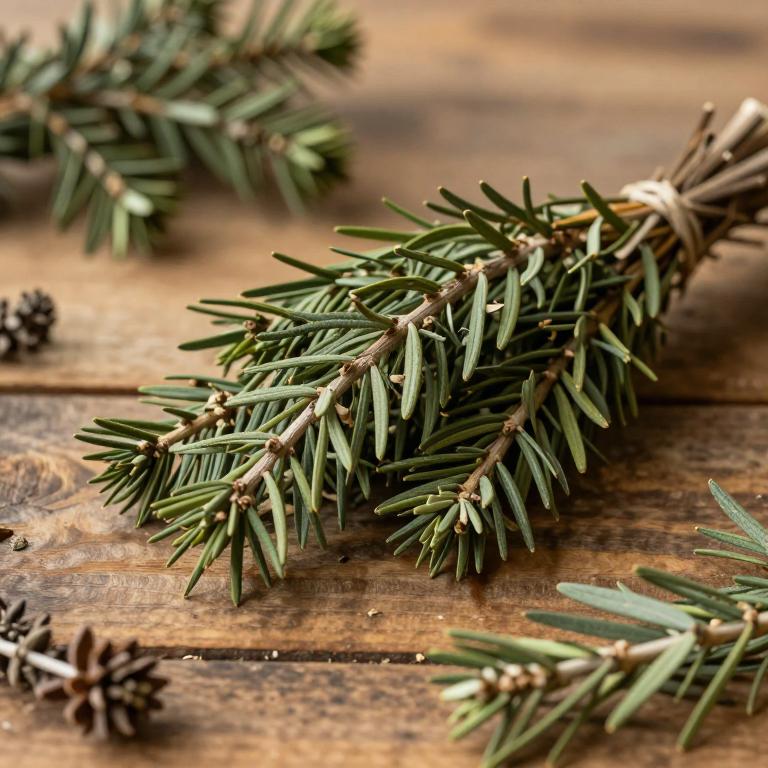
Pacific yew, scientifically known as Taxus brevifolia, is a distinctive evergreen conifer native to the coastal regions of the Pacific Northwest. Renowned for its dense, dark foliage and small red arils, this resilient species holds significant ecological value and historical importance in traditional botanical studies and medicinal research.
Names and Synonyms
Common Names
- Pacific yew
- western yew
- Canadian Yew
Scientific Names
Accepted name
Taxus brevifoliaSynonyms
- Taxus bourcieri
- Taxus occidentalis
- Taxus lindleyana
- Taxus baccata var. brevifolia
- Taxus baccata subsp. brevifolia
- Taxus brevifolia var. polychaeta
- Taxus brevifolia var. reptaneta
- Taxus brevifolia subsp. reptaneta
- Taxus brevifolia subsp. polychaeta
Regional and Traditional Names
Spanish:
- tejo del Pacífico
German:
- Pazifische Eibe
- Pazifische Eibe
French:
- If de l'Ouest
- if de l'Ouest
- if occidental
- if de l’Ouest
Sources: Wikidata, Catalogue of Life
Taxonomical Classification
This plant belongs to the kingdom Plantae and the phylum Streptophyta, falling under the class Equisetopsida and subclass Pinidae. Within the order Pinales, it is classified under the family Taxaceae. Finally, it is identified by its genus, Taxus.
| Rank | Classification |
|---|---|
| Kingdom | Plantae |
| Phylum | Streptophyta |
| Class | Equisetopsida |
| Subclass | Pinidae |
| Order | Pinales |
| Family | Taxaceae |
| Genus | Taxus |
Sources: The World Checklist of Vascular Plants (WCVP)
Distribution
This plant is primarily distributed across the northern reaches of western North America. In the subarctic region of America, its presence can be found within Alaska. Moving south, it inhabits parts of Western Canada, specifically within the provinces of Alberta and British Columbia. The species also extends into the Northwestern United States, covering areas such as Idaho. Finally, its geographical range includes the mountainous terrain of Montana.
| Region | Area |
|---|---|
| Subarctic America | Alaska |
| Western Canada | Alberta |
| Western Canada | British Columbia |
| Northwestern U.S.A. | Idaho |
| Northwestern U.S.A. | Montana |
| Northwestern U.S.A. | Oregon |
| Northwestern U.S.A. | Washington |
| Southwestern U.S.A. | California |
Sources: The World Checklist of Vascular Plants (WCVP)
Botanical Identification
Life history
The life history of Taxus brevifolia is characterized by its status as a perennial organism, allowing it to persist in its environment through multiple growing seasons. As a member of the phanerophyte life forms, specifically categorized under both phanerophyte classifications, it maintains its photosynthetic buds well above the ground level, typically growing as a woody shrub or small tree. This growth habit enables the plant to withstand seasonal variations by protecting its vital structures, supporting its long-term survival strategy within its natural ecological niche.
- Life form :
- phanerophyte
- Lifecycle :
- perennial
Morphology
The morphology of Taxus brevifolia is characterized by its growth form as a woody tree, which typically reaches a mean height of approximately 12 m. As a terrestrial species, it does not exhibit aquatic or semiaquatic tendencies and functions as an independent organism rather than a parasite. Furthermore, it is not an epiphyte and possesses a self-supporting structure, meaning it does not function as a climber, liana, or vine.
- Aquatic :
- terrestrial
- Climber :
- self-supporting
- Epiphyte :
- terrestrial
- Growth form :
- tree
- Parasite :
- independent
- Plant height mean:
- 12 m
- Woodiness :
- woody
Physiology
The physiology of Taxus brevifolia is characterized by a slow metabolic rate and specialized biochemical processes adapted to its temperate forest habitat. A fundamental component of its energy acquisition is its photosynthetic pathway, which follows the C3 mechanism; this involves the direct fixation of atmospheric carbon dioxide by the enzyme RuBisCO within the mesophyll cells, typically resulting in the production of three-carbon compounds during the Calvin cycle. This C3 pathway dictates the plant's water-use efficiency and gas exchange strategies, which are closely linked to its environmental response to light availability and moisture levels. Furthermore, the physiological profile of the species is defined by the complex biosynthesis of taxane diterpenoids, a secondary metabolic process that requires highly coordinated enzymatic pathways to produce bioactive compounds. The plant's resource allocation is geared toward long-term survival and structural integrity, supported by a slow growth physiology that prioritizes the synthesis of dense lignified tissues and defensive chemical metabolites.
- Photosynthetic pathway :
- C3
Reproduction
The reproduction of Taxus brevifolia is characterized by a specific seed morphology and a specialized dispersal strategy. The seeds produced by this species exhibit a highly consistent mass, with a recorded mean of 0.0297851 g, ranging from a minimum of 0.0294 g to a maximum of 0.031752 g. Regarding its reproductive ecology, the plant utilizes a zoochorous dispersal syndrome, indicating that its seeds are primarily distributed by animals, which plays a critical role in the spatial spread and colonization of the species within its habitat.
- Dispersal syndrome :
- zoochorous
- Seed mass max:
- 0.031752 g
- Seed mass mean:
- 0.0297851 g
- Seed mass min:
- 0.0294 g
Sources: Global Inventory of Floras and Traits (GIFT)
Plant Parts
Taxus brevifolia has 3 reported plant parts identified across 3 scientific publications and several other databases that are studied for medicinal purposes. The most consistently reported plant part include fruit, leaf, seed.
| Plant part | Supporting sources | Consensus |
|---|---|---|
| Fruit | 1 supporting sources | ★☆☆☆☆ |
| Leaf | 1 supporting sources | ★☆☆☆☆ |
| Seed | 1 supporting sources | ★☆☆☆☆ |
Fruit
- Foodborne pathogens and disease
Leaf
- Foodborne pathogens and disease
Seed
- Foodborne pathogens and disease
Chemicals
Taxus brevifolia has 15 reported phytochemicals identified across 3 scientific publications and several other databases. The most consistently reported chemicals include TAXOL, paclitaxel, Taxanes, Cephalomannine, Taxa-4(5),11(12)-diene.
| Chemical | Supporting sources | Consensus |
|---|---|---|
| TAXOL | 11 supporting sources | ★★★★★ |
| paclitaxel | 8 supporting sources | ★★★★☆ |
| Taxanes | 3 supporting sources | ★★☆☆☆ |
| Cephalomannine | 2 supporting sources | ★☆☆☆☆ |
| Taxa-4(5),11(12)-diene | 2 supporting sources | ★☆☆☆☆ |
| 10-Deacetylbaccatin III | 1 supporting sources | ★☆☆☆☆ |
| 10-Deacetyltaxol | 1 supporting sources | ★☆☆☆☆ |
| 10-Deacetyltaxol 7-Xyloside | 1 supporting sources | ★☆☆☆☆ |
| 10-deacetyl taxol | 1 supporting sources | ★☆☆☆☆ |
| 10-deacetyl taxol C | 1 supporting sources | ★☆☆☆☆ |
TAXOL
- Biomedicine & pharmacotherapy = Biomedecine & pharmacotherapie
- Archives of biochemistry and biophysics
- Trends in plant science
- Journal of ethnopharmacology
- Journal of natural products
View 6 additional sources
- Journal of clinical pharmacology
- Applied microbiology and biotechnology
- Pharmaceutical research
- Chemistry & biology
- Journal of the Medical Association of Thailand = Chotmaihet thangphaet
- Zhongguo Zhong yao za zhi = Zhongguo zhongyao zazhi = China journal of Chinese materia medica
paclitaxel
- Australian family physician
- Polski merkuriusz lekarski : organ Polskiego Towarzystwa Lekarskiego
- Biomedicine & pharmacotherapy = Biomedecine & pharmacotherapie
- Phytotherapy research : PTR
- Oxidative medicine and cellular longevity
View 3 additional sources
- International journal of molecular sciences
- Journal of natural products
- Sheng wu gong cheng xue bao = Chinese journal of biotechnology
Taxanes
- The oncologist
- Pharmaceutical research
- Journal of natural products
Cephalomannine
- Journal of natural products
- Pharmaceutical research
Taxa-4(5),11(12)-diene
- The Journal of organic chemistry
- Archives of biochemistry and biophysics
10-Deacetylbaccatin III
- Pharmaceutical research
10-Deacetyltaxol
- Pharmaceutical research
10-Deacetyltaxol 7-Xyloside
- Pharmaceutical research
10-deacetyl taxol
- Pharmaceutical research
10-deacetyl taxol C
- Pharmaceutical research
Activities
Taxus brevifolia has 2 reported activities identified across 3 scientific publications and several other databases. The most consistently reported activities include Anticancer, Antineoplastic.
| Activity | Supporting sources | Consensus |
|---|---|---|
| Anticancer | 5 supporting sources | ★★★☆☆ |
| Antineoplastic | 1 supporting sources | ★☆☆☆☆ |
Anticancer
- Biomedicine & pharmacotherapy = Biomedecine & pharmacotherapie
- Trends in plant science
- Oxidative medicine and cellular longevity
- Journal of natural products
- Zhongguo Zhong yao za zhi = Zhongguo zhongyao zazhi = China journal of Chinese materia medica
Antineoplastic
- Journal of clinical pharmacology
Conditions
Taxus brevifolia has 8 reported investigations on conditions identified across 3 scientific publications and several other databases. The most consistently reported conditions include ovarian cancer, breast cancer, cancer, lung cancer, malignant melanoma.
| Condition | Supporting sources | Consensus |
|---|---|---|
| Ovarian cancer | 4 supporting sources | ★★☆☆☆ |
| Breast cancer | 3 supporting sources | ★★☆☆☆ |
| Cancer | 3 supporting sources | ★★☆☆☆ |
| Lung cancer | 3 supporting sources | ★★☆☆☆ |
| Malignant melanoma | 1 supporting sources | ★☆☆☆☆ |
| Melanoma | 1 supporting sources | ★☆☆☆☆ |
| Non-small cell lung cancer | 1 supporting sources | ★☆☆☆☆ |
| Tumor | 1 supporting sources | ★☆☆☆☆ |
Ovarian cancer
- Polski merkuriusz lekarski : organ Polskiego Towarzystwa Lekarskiego
- Journal of the National Cancer Institute. Monographs
- Biomedicine & pharmacotherapy = Biomedecine & pharmacotherapie
- Oxidative medicine and cellular longevity
Breast cancer
- Journal of the National Cancer Institute. Monographs
- Biomedicine & pharmacotherapy = Biomedecine & pharmacotherapie
- Oxidative medicine and cellular longevity
Cancer
- Australian family physician
- Drug news & perspectives
- Journal of natural products
Lung cancer
- Polski merkuriusz lekarski : organ Polskiego Towarzystwa Lekarskiego
- Biomedicine & pharmacotherapy = Biomedecine & pharmacotherapie
- Oxidative medicine and cellular longevity
Malignant melanoma
- Polski merkuriusz lekarski : organ Polskiego Towarzystwa Lekarskiego
Melanoma
- Journal of clinical pharmacology
Non-small cell lung cancer
- Journal of clinical pharmacology
Tumor
- Journal of ethnopharmacology
Preparations
Taxus brevifolia has 7 reported preparations identified across 3 scientific publications and several other databases. The most consistently reported preparations include bark, Taxus brevifolia extracts, aqueous extracts, bark extracts, cultured needles.
| Preparation | Supporting sources | Consensus |
|---|---|---|
| Bark | 2 supporting sources | ★☆☆☆☆ |
| Taxus brevifolia extracts | 1 supporting sources | ★☆☆☆☆ |
| Aqueous extracts | 1 supporting sources | ★☆☆☆☆ |
| Bark extracts | 1 supporting sources | ★☆☆☆☆ |
| Cultured needles | 1 supporting sources | ★☆☆☆☆ |
| Hplc fractions of these extracts | 1 supporting sources | ★☆☆☆☆ |
| Needle extracts | 1 supporting sources | ★☆☆☆☆ |
Bark
- Pharmaceutical research
- Journal of natural products
Taxus brevifolia extracts
- Journal of natural products
Aqueous extracts
- Phytotherapy research : PTR
Bark extracts
- Journal of natural products
Cultured needles
- Journal of natural products
Hplc fractions of these extracts
- Journal of natural products
Needle extracts
- Journal of natural products