Taxillus liquidambaricola
Taxillus liquidambaricola · Accepted scientific name
Scientific literature: Very Sparse (13 studies) · ★☆☆☆☆
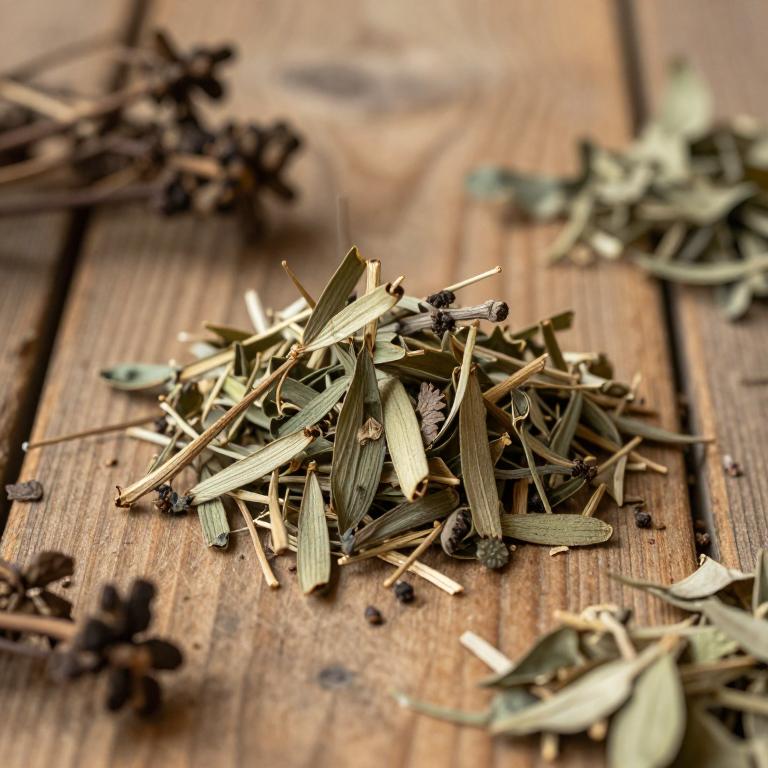
Taxillus liquidambaricola, scientifically known as Taxillus liquidambaricola, is a remarkable medicinal plant found in specialized forest ecosystems. Renowned for its unique phytochemical profile, this species holds significant potential in traditional healing practices. Research continues to explore its bioactive compounds for their therapeutic properties in modern pharmacological applications.
- Family
- Loranthaceae
- Native range
- Asia-Temperate
- Parts used
- Not available
- Common names
- Not available
- Scientific synonyms
- Taxillus Limprichtii Var. Liquidambaricola · Loranthus Liquidambaricola · 1 more
Names and Synonyms
Scientific Names
Accepted name
Taxillus liquidambaricolaSynonyms
- Taxillus limprichtii var. liquidambaricola
- Loranthus liquidambaricola
- Scurrula liquidambaricola
Sources: Wikidata, Catalogue of Life
Taxonomical Classification
This plant belongs to the kingdom Plantae and is classified within the phylum Streptophyta and the class Equisetopsida. As a member of the subclass Magnoliidae and the order Santalales, it falls under the family Loranthaceae. Specifically, it is identified by its genus name, Taxiillus, and its species designation, liquidambaricola.
| Rank | Classification |
|---|---|
| Kingdom | Plantae |
| Phylum | Streptophyta |
| Class | Equisetopsida |
| Subclass | Magnoliidae |
| Order | Santalales |
| Family | Loranthaceae |
| Genus | Taxillus |
Sources: The World Checklist of Vascular Plants (WCVP)
Distribution
This plant exhibits a specific geographical distribution concentrated within several key regions of East Asia. In mainland China, its presence is documented across the South-Central territories. It is also found within the Southeast regions of the country. Furthermore, the species inhabits the island province of Hainan. Finally, its range extends to the island of Taiwan in Eastern Asia.
| Region | Area |
|---|---|
| China | China South-Central |
| China | Hainan |
| China | China Southeast |
| Eastern Asia | Taiwan |
Sources: The World Checklist of Vascular Plants (WCVP)
Chemicals
Taxillus liquidambaricola has 2 reported phytochemicals identified across 0 scientific publications and several other databases. The most consistently reported chemicals include Flavonoid, Polyphenol.
| Chemical | Supporting sources | Consensus |
|---|---|---|
| Flavonoid | 1 supporting sources | ★☆☆☆☆ |
| Polyphenol | 1 supporting sources | ★☆☆☆☆ |
Flavonoid
- Journal of ethnopharmacology
Polyphenol
- Journal of ethnopharmacology
Activities
Taxillus liquidambaricola has 4 reported activities identified across 0 scientific publications and several other databases. The most consistently reported activities include Analgesic, Antinociceptive, Antioxidant, Free-Radical Scavenging.
| Activity | Supporting sources | Consensus |
|---|---|---|
| Analgesic | 1 supporting sources | ★☆☆☆☆ |
| Antinociceptive | 1 supporting sources | ★☆☆☆☆ |
| Antioxidant | 1 supporting sources | ★☆☆☆☆ |
| Free-Radical Scavenging | 1 supporting sources | ★☆☆☆☆ |
Analgesic
- Journal of ethnopharmacology
Antinociceptive
- Journal of ethnopharmacology
Antioxidant
- Journal of ethnopharmacology
Free-Radical Scavenging
- Journal of ethnopharmacology
Conditions
Taxillus liquidambaricola has 4 reported investigations on conditions identified across 0 scientific publications and several other databases. The most consistently reported conditions include hypertension, inflammation, pain, threatened abortion.
| Condition | Supporting sources | Consensus |
|---|---|---|
| Hypertension | 1 supporting sources | ★☆☆☆☆ |
| Inflammation | 1 supporting sources | ★☆☆☆☆ |
| Pain | 1 supporting sources | ★☆☆☆☆ |
| Threatened abortion | 1 supporting sources | ★☆☆☆☆ |
Hypertension
- Journal of ethnopharmacology
Inflammation
- Journal of ethnopharmacology
Pain
- Journal of ethnopharmacology
Threatened abortion
- Journal of ethnopharmacology
Preparations
Taxillus liquidambaricola has 1 reported preparations identified across 0 scientific publications and several other databases. The most consistently reported preparations include ethanolic extracts.
| Preparation | Supporting sources | Consensus |
|---|---|---|
| Ethanolic extracts | 1 supporting sources | ★☆☆☆☆ |
Ethanolic extracts
- Journal of ethnopharmacology