Taxillus kaempferi
Taxillus kaempferi · Accepted scientific name
Scientific literature: Very Sparse (9 studies) · ★☆☆☆☆
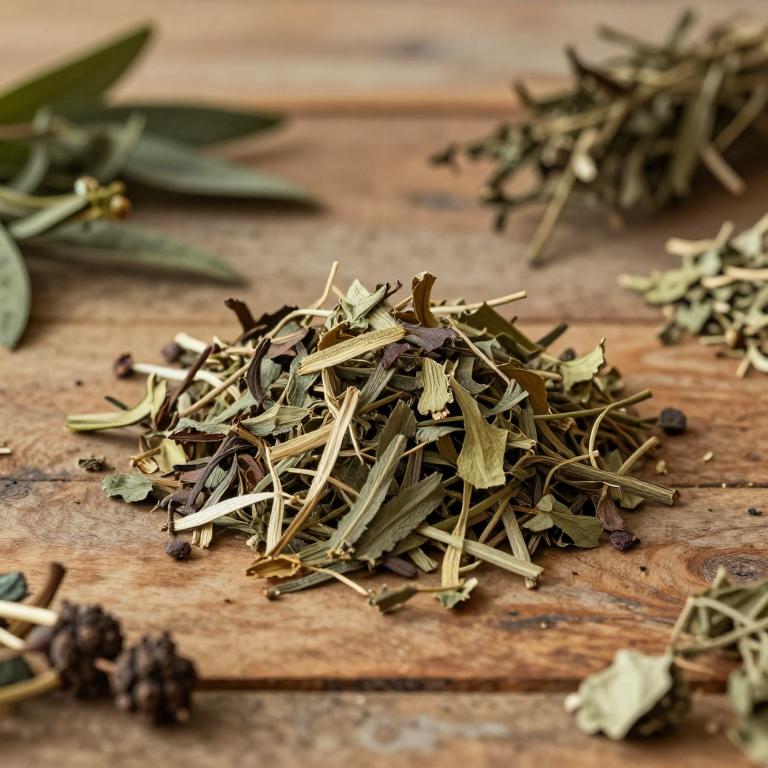
, scientifically known as Taxillus kaempferi, is a renowned medicinal root frequently utilized in traditional East Asian medicine. Often referred to as ginger lily or Japanese ginger, this potent botanical is prized for its anti-inflammatory, antioxidant, and adaptogenic properties, serving as a vital ingredient in various therapeutic herbal formulations.
- Family
- Loranthaceae
- Native range
- Asia-Temperate
- Parts used
- Leaf · Stem
- Common names
- Not available
- Scientific synonyms
- Loranthus Kaempferi · Viscum Kaempferi · 1 more
Names and Synonyms
Scientific Names
Accepted name
Taxillus kaempferiSynonyms
- Loranthus kaempferi
- Viscum kaempferi
- Phyllodesmis kaempferi
Sources: Wikidata, Catalogue of Life
Taxonomical Classification
This plant belongs to the kingdom Plantae and is classified under the phylum Streptophyta within the class Equisetopsida. Further taxonomic details place it in the subclass Magnoliidae and the order Santalales. Ultimately, Taxillus kaempferi is a member of the family Loranthaceae and the genus Taxillus.
| Rank | Classification |
|---|---|
| Kingdom | Plantae |
| Phylum | Streptophyta |
| Class | Equisetopsida |
| Subclass | Magnoliidae |
| Order | Santalales |
| Family | Loranthaceae |
| Genus | Taxillus |
Sources: The World Checklist of Vascular Plants (WCVP)
Distribution
This plant exhibits a diverse range of habitats across several major regions in Asia. Within China, its presence is documented across both the South-Central and Southeast territories. Moving eastward, it is a well-established species found throughout Japan in Eastern Asia. Additionally, its range extends to the Indian Subcontinent, specifically within the East Himalaya region. Collectively, these areas define the primary geographical distribution of Taxillus kaempferi.
| Region | Area |
|---|---|
| China | China South-Central |
| China | China Southeast |
| Eastern Asia | Japan |
| Indian Subcontinent | East Himalaya |
Sources: The World Checklist of Vascular Plants (WCVP)
Botanical Identification
Ecology
The ecology of Taxillus kaempferi is characterized by its preference for high-altitude environments, specifically occupying a niche within montane ecosystems. This species is ecologically constrained to a specialized elevational range, thriving primarily between a minimum altitude of 2100 m AMSL and a maximum altitude of 2600 m AMSL. Such distribution suggests that the plant is adapted to the unique microclimates found in these high-elevation zones, likely requiring the cooler temperatures and specific moisture regimes associated with these altitudinal bands.
- Elevational range max:
- 2600 m AMSL
- Elevational range min:
- 2100 m AMSL
Morphology
The morphology of Taxillus kaempferi is characterized by its growth form as a herb, displaying a non-woody structure throughout its development. As a terrestrial organism, it grows in soil rather than as an epiphyte. The plant exhibits a self-supporting climbing habit, functioning as a climber that does not rely on external structures for primary support.
- Climber :
- self-supporting
- Epiphyte :
- terrestrial
- Growth form :
- herb
- Woodiness :
- non-woody
Sources: Global Inventory of Floras and Traits (GIFT)
Plant Parts
Taxillus kaempferi has 2 reported plant parts identified across 2 scientific publications and several other databases that are studied for medicinal purposes. The most consistently reported plant part include leaf, stem.
| Plant part | Supporting sources | Consensus |
|---|---|---|
| Leaf | 1 supporting sources | ★☆☆☆☆ |
| Stem | 1 supporting sources | ★☆☆☆☆ |
Leaf
- Yakugaku zasshi : Journal of the Pharmaceutical Society of Japan
Stem
- Yakugaku zasshi : Journal of the Pharmaceutical Society of Japan
Chemicals
Taxillus kaempferi has 7 reported phytochemicals identified across 2 scientific publications and several other databases. The most consistently reported chemicals include (+)-catechin, Avicularin, Hyperin, Procyanidin B-3, Taxillusin.
| Chemical | Supporting sources | Consensus |
|---|---|---|
| (+)-catechin | 1 supporting sources | ★☆☆☆☆ |
| Avicularin | 1 supporting sources | ★☆☆☆☆ |
| Hyperin | 1 supporting sources | ★☆☆☆☆ |
| Procyanidin B-3 | 1 supporting sources | ★☆☆☆☆ |
| Taxillusin | 1 supporting sources | ★☆☆☆☆ |
| procyanidin B-1 | 1 supporting sources | ★☆☆☆☆ |
| quercitrin | 1 supporting sources | ★☆☆☆☆ |
(+)-catechin
- Yakugaku zasshi : Journal of the Pharmaceutical Society of Japan
Avicularin
- Yakugaku zasshi : Journal of the Pharmaceutical Society of Japan
Hyperin
- Yakugaku zasshi : Journal of the Pharmaceutical Society of Japan
Procyanidin B-3
- Yakugaku zasshi : Journal of the Pharmaceutical Society of Japan
Taxillusin
- Yakugaku zasshi : Journal of the Pharmaceutical Society of Japan
procyanidin B-1
- Yakugaku zasshi : Journal of the Pharmaceutical Society of Japan
quercitrin
- Yakugaku zasshi : Journal of the Pharmaceutical Society of Japan