mountain pepper
Tasmannia lanceolata · Accepted scientific name
Scientific literature: Very Sparse (13 studies) · ★☆☆☆☆
Mountain pepper, scientifically known as Tasmannia lanceolata, is a resilient evergreen shrub native to the cool, temperate rainforests of Australia. Renowned for its pungent, spicy berries, this medicinal plant offers potent antioxidant and antimicrobial properties, traditionally used by Indigenous Australians to treat various ailments and enhance culinary flavors.
- Family
- Winteraceae
- Native range
- Australasia
- Parts used
- Fruit · Leaf
- Common names
- Not available
- Scientific synonyms
- Tasmannia Aromatica · Austrodrimys Lanceolata · 4 more
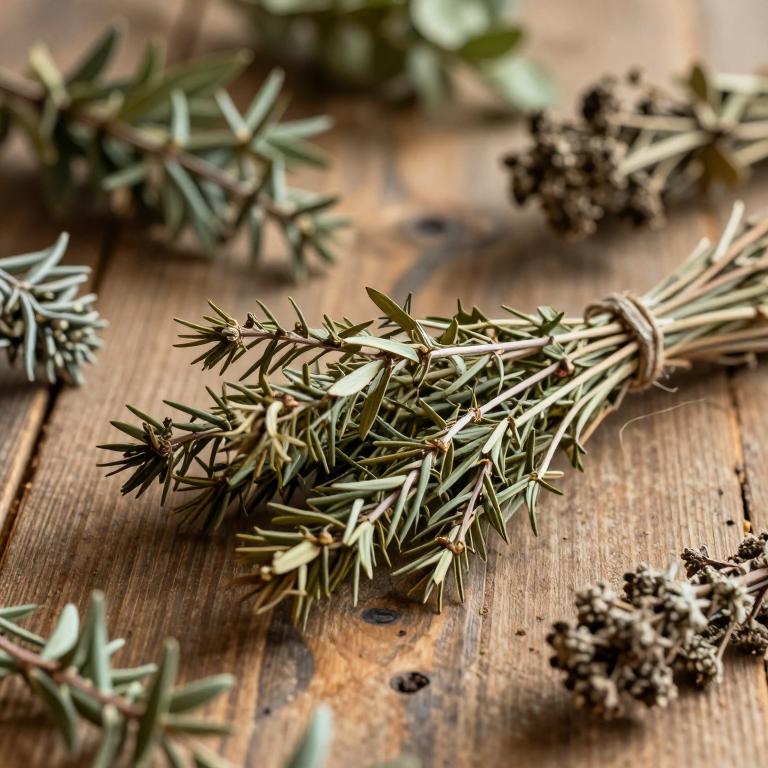
Names and Synonyms
Scientific Names
Accepted name
Tasmannia lanceolataSynonyms
- Tasmannia aromatica
- Austrodrimys lanceolata
- Drimys lanceolata
- Drimys xerophila var. aromatica
- Winterana lanceolata
- Beyeria loranthoides
Regional and Traditional Names
Spanish:
- Tasmannia aromatica
- Winterana lanceolata
- Drimys lanceolata
Sources: Wikidata
Taxonomical Classification
This plant, known scientifically as Tasmannia lanceolata, belongs to the kingdom Plantae and the phylum Streptophyta. Within the class Equisetopsida and subclass Magnoliidae, it is classified under the order Canellales and the family Winteraceae. It is further categorized under the genus Tasmannia.
| Rank | Classification |
|---|---|
| Kingdom | Plantae |
| Phylum | Streptophyta |
| Class | Equisetopsida |
| Subclass | Magnoliidae |
| Order | Canellales |
| Family | Winteraceae |
| Genus | Tasmannia |
Sources: The World Checklist of Vascular Plants (WCVP)
Distribution
This plant is found in specific regions across the southeastern part of the Australian continent. Its primary distribution includes the diverse landscapes of New South Wales. Additionally, it is widely documented throughout the island state of Tasmania. The species can also be located within the temperate zones of Victoria. Together, these areas define the natural geographical range of Tasmannia lanceolata.
| Region | Area |
|---|---|
| Australia | New South Wales |
| Australia | Tasmania |
| Australia | Victoria |
Sources: The World Checklist of Vascular Plants (WCVP)
Botanical Identification
Life history
The life history of Tasmannia lanceolata is characterized by its status as a perennial species, allowing it to persist in its natural habitat over many successive growing seasons. As a long-lived woody shrub, it does not follow the rapid turnover of annual or biennial cycles but instead establishes a stable presence within its ecosystem. Its developmental stages involve the gradual accumulation of biomass, leading to the production of small, fragrant white flowers that facilitate reproduction through insect pollination. Following successful fertilization, the plant produces small, dark berries that serve as a primary mechanism for seed dispersal, often aided by local fauna. This perennial nature enables the plant to endure varying environmental conditions, maintaining its structural integrity and reproductive capacity year after year.
- Lifecycle :
- perennial
Morphology
The morphology of Tasmannia lanceolata is characterized by its growth form as a woody shrub that functions as a self-supporting, independent organism. It is a terrestrial plant, meaning it does not exhibit aquatic or epiphytic tendencies. In terms of stature, the plant typically reaches a height ranging from a minimum of 1.5 meters to a maximum of 4 meters. As a woody species, it maintains a sturdy structural framework, allowing it to thrive in its natural habitat without the need for climbing or parasitic associations.
- Aquatic :
- terrestrial
- Climber :
- self-supporting
- Epiphyte :
- terrestrial
- Growth form :
- shrub
- Parasite :
- independent
- Plant height max:
- 4 m
- Plant height min:
- 1.5 m
- Woodiness :
- woody
Physiology
The physiology of Tasmannia lanceolata is characterized by specific morphological dimensions and a distinct metabolic framework. The plant utilizes the C3 photosynthetic pathway, a standard mechanism for carbon fixation in many temperate species, which dictates its energy acquisition and gas exchange processes. Its leaf morphology is highly specialized, displaying a lanceolate shape with dimensions that vary significantly. The leaves typically range in length from a minimum of 5 cm to a maximum of 8 cm, while their width is notably narrow, fluctuating between a minimum of 0.7 cm and a maximum of 2 cm. These specific leaf size parameters play a crucial role in the plant's transpiration rates and overall light interception efficiency within its natural habitat.
- Leaf length max:
- 8 cm
- Leaf length min:
- 5 cm
- Leaf width max:
- 2 cm
- Leaf width min:
- 0.7 cm
- Photosynthetic pathway :
- C3
Reproduction
The reproduction of Tasmannia lanceolata is characterized by the production of fruit categorized as a berry, which remains indehiscent upon maturity. The dispersal of its progeny follows a zoochorous syndrome, relying on animals for the spread of its seeds. The seeds themselves are notably lightweight, with a mean seed mass of approximately 0.0024716665 g, and they typically range in mass between a minimum of 0.00171 g and a maximum of 0.00223 g.
- Dehiscence :
- indehiscent
- Dispersal syndrome :
- zoochorous
- Fruit type :
- berry
- Seed mass max:
- 0.00223 g
- Seed mass mean:
- 0.0024716665 g
- Seed mass min:
- 0.00171 g
Sources: Global Inventory of Floras and Traits (GIFT)
Plant Parts
Tasmannia lanceolata has 2 reported plant parts identified across 2 scientific publications and several other databases that are studied for medicinal purposes. The most consistently reported plant part include fruit, leaf.
| Plant part | Supporting sources | Consensus |
|---|---|---|
| Fruit | 1 supporting sources | ★☆☆☆☆ |
| Leaf | 1 supporting sources | ★☆☆☆☆ |
Fruit
- Pharmacognosy magazine
Leaf
- Bioorganic & medicinal chemistry letters
Chemicals
Tasmannia lanceolata has 7 reported phytochemicals identified across 2 scientific publications and several other databases. The most consistently reported chemicals include Polygodial, Caryophyllene oxide, Guaiol, Linalool, Methyl isodrimeninol.
| Chemical | Supporting sources | Consensus |
|---|---|---|
| Polygodial | 2 supporting sources | ★☆☆☆☆ |
| Caryophyllene oxide | 1 supporting sources | ★☆☆☆☆ |
| Guaiol | 1 supporting sources | ★☆☆☆☆ |
| Linalool | 1 supporting sources | ★☆☆☆☆ |
| Methyl isodrimeninol | 1 supporting sources | ★☆☆☆☆ |
| cineole | 1 supporting sources | ★☆☆☆☆ |
| resveratrol | 1 supporting sources | ★☆☆☆☆ |
Polygodial
- Bioorganic & medicinal chemistry letters
- Inflammopharmacology
Caryophyllene oxide
- Inflammopharmacology
Guaiol
- Inflammopharmacology
Linalool
- Inflammopharmacology
Methyl isodrimeninol
- Bioorganic & medicinal chemistry letters
cineole
- Inflammopharmacology
resveratrol
- Pharmacognosy magazine
Conditions
Tasmannia lanceolata has 3 reported investigations on conditions identified across 2 scientific publications and several other databases. The most consistently reported conditions include fungal infections, inflammation, rheumatoid arthritis.
| Condition | Supporting sources | Consensus |
|---|---|---|
| Fungal infections | 1 supporting sources | ★☆☆☆☆ |
| Inflammation | 1 supporting sources | ★☆☆☆☆ |
| Rheumatoid arthritis | 1 supporting sources | ★☆☆☆☆ |
Fungal infections
- Journal de mycologie medicale
Inflammation
- Pharmacognosy magazine
Rheumatoid arthritis
- Pharmacognosy magazine
Preparations
Tasmannia lanceolata has 2 reported preparations identified across 2 scientific publications and several other databases. The most consistently reported preparations include extracts, methanolic extract.
| Preparation | Supporting sources | Consensus |
|---|---|---|
| Extracts | 1 supporting sources | ★☆☆☆☆ |
| Methanolic extract | 1 supporting sources | ★☆☆☆☆ |
Extracts
- Pharmacognosy magazine
Methanolic extract
- Bioorganic & medicinal chemistry letters