Balsamita vulgaris
Tanacetum balsamita · Accepted scientific name
Scientific literature: Extensive (176 studies) · ★★★★☆
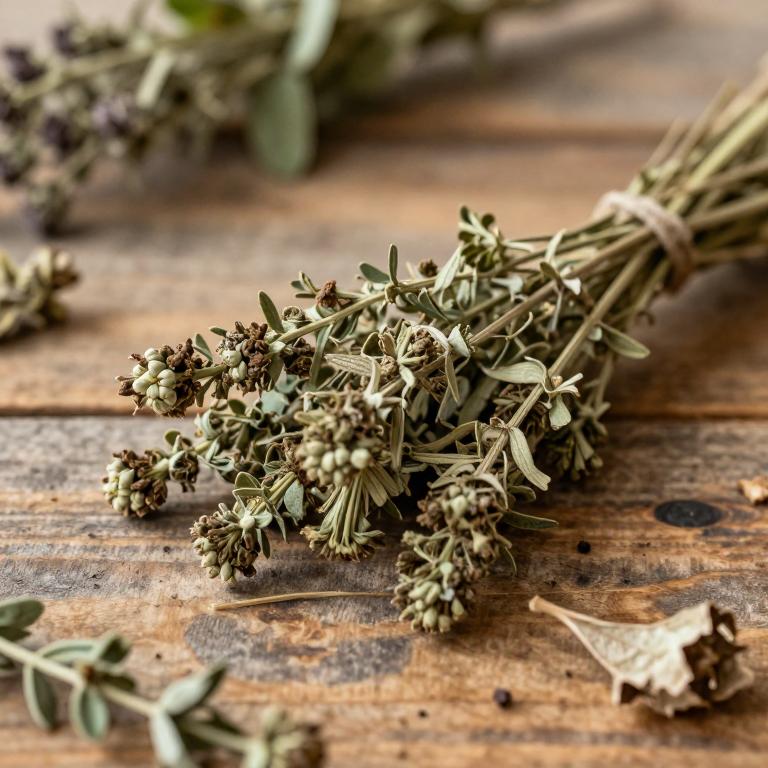
Balsamita vulgaris, scientifically known as Tanacetum balsamita, is a fragrant perennial herb belonging to the Asteraceae family. Often called sweet chamomile, it is cherished for its aromatic, lemon-scented leaves. Traditionally used in herbal medicine, this plant offers soothing properties, supporting digestive health and promoting relaxation through its gentle essence.
Names and Synonyms
Common Names
- costmary
- costmary chrysanthemum
- mint-geranium
Scientific Names
Accepted name
Tanacetum balsamitaSynonyms
- Chrysanthemum majus
- Pyrethrum tanacetum
- Pyrethrum balsamita var. tanacetoides
- Balsamita major var. tanacetoides
- Pyrethrum majus
- Balsamita major
- Chamaemelum balsamita
- Chrysanthemum balsamita f. tanacetoides
- Leucanthemum balsamita
- Matricaria balsamita
Regional and Traditional Names
Spanish:
- Balsamita major var. tanacetoides
- Chrysanthemum balsamita
- Chrysanthemum balsamita var. tanacetoides
- Pyrethrum majus
- Balsamita major var tanacetoides
- Chrysanthemum balsamita var tanacetoides
- Balsamita mayor
- Balsamita olorosa
- Costo de los huertos
- Costo hortense
- Hierba buena romana
- Hierba de huerto
- Menta greca
- Hierba santa romana
- Hoja de romana
- Hoja romana
- Hojicas de Santa María
- Yerba romana
- Menta sarracena
- Menta sarracénica
- Yerba buena romana
- Yerba santa romana
- Balsamita balsamita
- Balsamita balsamitoides
- Balsamita major
- Balsamita major subsp. balsamitoides
- Balsamita suaveolens
- Balsamita vulgaris
- Chamaemelum balsamita
- Chrysanthemum balsamitoides
- Chrysanthemum grande
- Chrysanthemum grandiflorum
- Chrysanthemum majus
- Chrysanthemum tanacetifolium
- Chrysanthemum tanacetum
- Leucanthemum balsamita
- Matricaria balsamita
- Pyrethrum balsamita
- Pyrethrum balsamita var. tanacetoides
- Pyrethrum balsamitoides
- Pyrethrum tanacetum
- Tanacetum balsamita subsp. balsamitoides
- Tanacetum balsamitoides
- Hojicas de Santa Maria
- Menta sarracenica
German:
- Frauenminze
- Balsamkraut
- Marienblatt
- Balsam-Wucherblume
- Balsamkraut
French:
- Menthe-coq
- Balsamita major
- Grande balsamite
- Menthe-Coq
- balsamite
- chrysanthème balsamique
- grande balsamite
- herbe-au-coq
- menthe-coq
- menthe-de-Notre-Dame
- tanaisie balsamite
- Herbe au coq
- Menthe de Notre-Dame
Sources: Wikidata, Catalogue of Life
Taxonomical Classification
This plant belongs to the kingdom Plantae within the phylum Streptophyta and is classified under the class Equisetopsida and subclass Magnoliidae. Following the order Asterales, it is a member of the Asteraceae family. Finally, it is categorized under the genus Tanacetum.
| Rank | Classification |
|---|---|
| Kingdom | Plantae |
| Phylum | Streptophyta |
| Class | Equisetopsida |
| Subclass | Magnoliidae |
| Order | Asterales |
| Family | Asteraceae |
| Genus | Tanacetum |
Sources: The World Checklist of Vascular Plants (WCVP)
Distribution
This plant exhibits a widespread presence across several regions in Northern Europe. It can be found growing throughout Great Britain and Ireland. Its range extends further north into the territories of Norway and Sweden. Additionally, the species is distributed within Middle Europe, specifically in Belgium. These diverse locations highlight the plant's ability to thrive in varied European environments.
| Region | Area |
|---|---|
| Northern Europe | Great Britain |
| Northern Europe | Ireland |
| Northern Europe | Norway |
| Northern Europe | Sweden |
| Middle Europe | Belgium |
| Middle Europe | Germany |
| Middle Europe | Hungary |
| Middle Europe | Poland |
| Middle Europe | Switzerland |
| Southwestern Europe | Corse |
Sources: The World Checklist of Vascular Plants (WCVP)
Botanical Identification
Ecology
The ecology of Tanacetum balsamita is characterized by its presence in low-lying landscapes, specifically occupying an elevational range that extends from sea level up to a maximum of 500 m AMSL. This species is commonly found inhabiting disturbed environments, with a notable preference for growing along roadsides.
- Elevational range max:
- 500 m AMSL
- Elevational range min:
- 0 m AMSL
- Habitat :
- roadsides
Life history
The life history of Tanacetum balsamita is characterized by its classification as a perennial plant, allowing it to persist through multiple growing seasons rather than completing its cycle in a single year. Morphologically, the species exhibits a hemicryptophyte life form, meaning that its perennial buds and overwintering organs are located at the soil surface, protected by leaf litter or snow during the dormant period. This specific life form, consistent across both its structural and functional classifications as a hemicryptophyte, enables the plant to re-emerge reliably each spring to continue its reproductive and vegetative cycles.
- Life form :
- hemicryptophyte
- Lifecycle :
- perennial
Morphology
The morphology of Tanacetum balsamita is characterized by its growth form as a non-woody herb, specifically classified as a forb. It is a self-supporting plant that does not function as a climber or a liana, nor does it exhibit any parasitic behavior, growing instead as an independent organism. In terms of its ecological habitat and life habit, it is a terrestrial species rather than an aquatic, semiaquatic, or epiphytic one. The plant typically reaches a height ranging from a minimum of 0.3 m to a maximum of 1.2 m.
- Aquatic :
- terrestrial
- Climber :
- self-supporting
- Epiphyte :
- terrestrial
- Growth form :
- herb
- Growth form :
- forb
- Parasite :
- independent
- Plant height max:
- 1.2 m
- Plant height min:
- 0.3 m
- Woodiness :
- non-woody
Physiology
The physiology of Tanacetum balsamita is characterized by a metabolic framework governed by the C3 photosynthetic pathway, which dictates its carbon fixation processes and resource acquisition strategies. As a C3 plant, it utilizes the enzyme Rubisco to fix atmospheric carbon dioxide directly into three-carbon organic compounds during the Calvin cycle, a mechanism that is highly efficient under temperate, moist, and shaded environmental conditions. This physiological mode influences the plant's stomatal conductance and transpiration rates, as it must balance the intake of CO2 with the risk of water loss through transpiration. Furthermore, its physiological processes are closely linked to the biosynthesis of volatile secondary metabolites, such as essential oils, which are integrated into its metabolic pathways to serve roles in chemical defense and environmental adaptation. The energy budget of the plant is thus a complex interplay between its C3 carbon assimilation and the metabolic demands of producing specialized phytochemicals.
- Photosynthetic pathway :
- C3
Reproduction
The reproduction of Tanacetum balsamita is characterized by a specific flowering window and distinct seed morphology. The plant typically begins its flowering period in August and concludes in September. The resulting fruits are classified as achenes, which are notably indehiscent in nature. Regarding the progeny, the seeds produced are highly uniform in size, with a mean, minimum, and maximum seed mass all recorded at approximately 2e-04 g.
- Dehiscence :
- indehiscent
- Flowering time :
- Aug
- Flowering time :
- Sep
- Fruit type :
- achene
- Seed mass mean:
- 2e-04 g
Sources: Global Inventory of Floras and Traits (GIFT)
Chemicals
Tanacetum balsamita has 16 reported phytochemicals identified across 0 scientific publications and several other databases. The most consistently reported chemicals include CARVONE, 1,8-Cineole, ALPHA-PINENE, BETA-PINENE, Borneol.
| Chemical | Supporting sources | Consensus |
|---|---|---|
| CARVONE | 2 supporting sources | ★☆☆☆☆ |
| 1,8-Cineole | 1 supporting sources | ★☆☆☆☆ |
| ALPHA-PINENE | 1 supporting sources | ★☆☆☆☆ |
| BETA-PINENE | 1 supporting sources | ★☆☆☆☆ |
| Borneol | 1 supporting sources | ★☆☆☆☆ |
| CAMPHENE | 1 supporting sources | ★☆☆☆☆ |
| EO | 1 supporting sources | ★☆☆☆☆ |
| Isoborneol | 1 supporting sources | ★☆☆☆☆ |
| LIMONENE | 1 supporting sources | ★☆☆☆☆ |
| Monoterpenes | 1 supporting sources | ★☆☆☆☆ |
CARVONE
- Journal of agricultural and food chemistry
- Veterinary research forum : an international quarterly journal
1,8-Cineole
- Dr. Duke
ALPHA-PINENE
- Dr. Duke
BETA-PINENE
- Dr. Duke
Borneol
- Dr. Duke
CAMPHENE
- Dr. Duke
EO
- Dr. Duke
Isoborneol
- Dr. Duke
LIMONENE
- Dr. Duke
Monoterpenes
- Journal of agricultural and food chemistry
Activities
Tanacetum balsamita has 151 reported activities identified across 0 scientific publications and several other databases. The most consistently reported activities include Analgesic, Antioxidant, (-)-Chronotropic, (-)-Inotropic, AChE-Inhibitor.
| Activity | Supporting sources | Consensus |
|---|---|---|
| Analgesic | 2 supporting sources | ★☆☆☆☆ |
| Antioxidant | 2 supporting sources | ★☆☆☆☆ |
| (-)-Chronotropic | 1 supporting sources | ★☆☆☆☆ |
| (-)-Inotropic | 1 supporting sources | ★☆☆☆☆ |
| AChE-Inhibitor | 1 supporting sources | ★☆☆☆☆ |
| Acaricide | 1 supporting sources | ★☆☆☆☆ |
| Allelochemic | 1 supporting sources | ★☆☆☆☆ |
| Allelopathic | 1 supporting sources | ★☆☆☆☆ |
| Allergenic | 1 supporting sources | ★☆☆☆☆ |
| Anesthetic | 1 supporting sources | ★☆☆☆☆ |
Analgesic
- Dr. Duke
- Veterinary research forum : an international quarterly journal
Antioxidant
- Dr. Duke
- Veterinary research forum : an international quarterly journal
(-)-Chronotropic
- Dr. Duke
(-)-Inotropic
- Dr. Duke
AChE-Inhibitor
- Dr. Duke
Acaricide
- Dr. Duke
Allelochemic
- Dr. Duke
Allelopathic
- Dr. Duke
Allergenic
- Dr. Duke
Anesthetic
- Dr. Duke
Conditions
Tanacetum balsamita has 1 reported investigations on conditions identified across 0 scientific publications and several other databases. The most consistently reported conditions include abdominal pain.
| Condition | Supporting sources | Consensus |
|---|---|---|
| Abdominal pain | 1 supporting sources | ★☆☆☆☆ |
Abdominal pain
- Veterinary research forum : an international quarterly journal
Preparations
Tanacetum balsamita has 1 reported preparations identified across 0 scientific publications and several other databases. The most consistently reported preparations include essential oil.
| Preparation | Supporting sources | Consensus |
|---|---|---|
| Essential oil | 1 supporting sources | ★☆☆☆☆ |
Essential oil
- Veterinary research forum : an international quarterly journal