Smyrna Tamarisk
Tamarix smyrnensis · Accepted scientific name
Scientific literature: Very Sparse (6 studies) · ★☆☆☆☆
Smyrna Tamarisk, scientifically known as Tamarix smyrnensis, is a resilient shrub valued for its diverse therapeutic properties. Native to coastal and arid regions, it contains bioactive compounds with antioxidant and anti-inflammatory potential. Traditionally used in various medicinal practices, this plant offers significant interest for modern pharmacological research and development.
- Family
- Tamaricaceae
- Native range
- Europe
- Parts used
- Flower
- Common names
- Smyrna Tamarisk
- Scientific synonyms
- Tamarix Bachtiarica · Tamarix Lessingii · 6 more
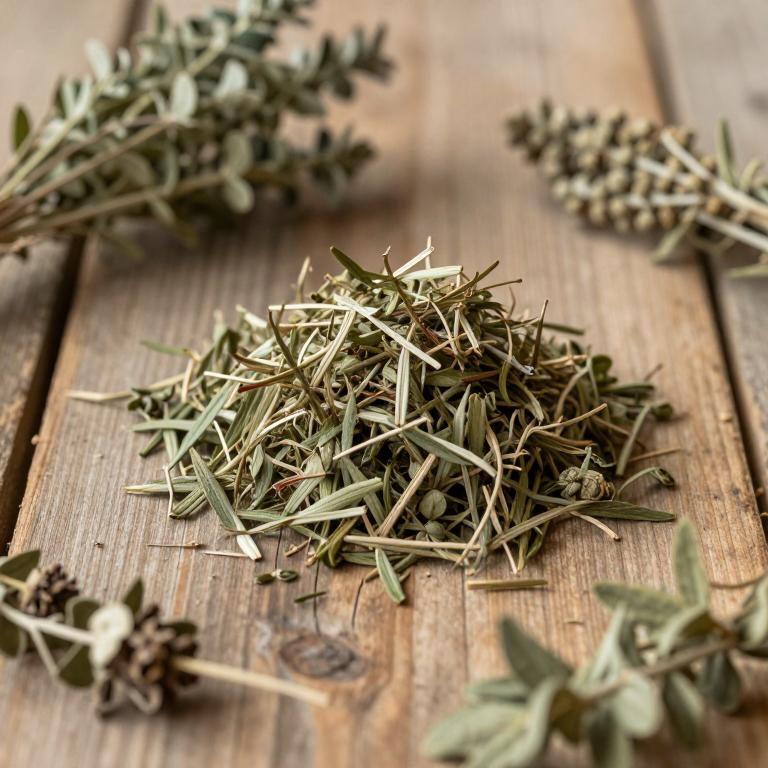
Names and Synonyms
Common Names
- Smyrna Tamarisk
Scientific Names
Accepted name
Tamarix smyrnensisSynonyms
- Tamarix bachtiarica
- Tamarix lessingii
- Tamarix gallica var. pycnostachys
- Tamarix florida var. rosea
- Tamarix pallasii var. albiflora
- Tamarix pallasii var. effusa
- Tamarix pallasii var. macrostemon
- Tamarix pallasii var. smyrnensis
Sources: Wikidata, Catalogue of Life
Taxonomical Classification
This plant belongs to the kingdom Plantae and is classified under the phylum Streptophyta and the class Equisetopsida. Within the subclass Magnoliidae, it falls under the order Caryophyllales and the family Tamaricaceae. Finally, it is categorized under the genus Tamarix, specifically as the species Tamarix smyrnenis.
| Rank | Classification |
|---|---|
| Kingdom | Plantae |
| Phylum | Streptophyta |
| Class | Equisetopsida |
| Subclass | Magnoliidae |
| Order | Caryophyllales |
| Family | Tamaricaceae |
| Genus | Tamarix |
Sources: The World Checklist of Vascular Plants (WCVP)
Distribution
This plant, known as Tamarix smyrnenis, is primarily distributed across various regions of Southeastern Europe. Its presence is well-documented in the coastal and inland areas of Albania and Bulgaria. Furthermore, the species can be found throughout the diverse landscapes of Greece. It also occupies specific ecological niches on the island of Kriti. Finally, the geographical range of this medicinal plant extends into the territories of Romania.
| Region | Area |
|---|---|
| Southeastern Europe | Albania |
| Southeastern Europe | Bulgaria |
| Southeastern Europe | Greece |
| Southeastern Europe | Kriti |
| Southeastern Europe | Romania |
| Southeastern Europe | Türkiye-in-Europe |
| Eastern Europe | Krym |
| Eastern Europe | South European Russia |
| Caucasus | Transcaucasus |
| Western Asia | Afghanistan |
Sources: The World Checklist of Vascular Plants (WCVP)
Botanical Identification
Ecology
The ecology of Tamarix smyrnenis is characterized by its specialized adaptation to coastal and arid environments, specifically thriving in habitats composed of sand, sea, and shorelines. This species demonstrates a significant vertical distribution capacity, occupying an elevational range that extends from a minimum of 900 m AMSL to a maximum of 2700 m AMSL. Its ability to persist in saline and sandy substrates highlights its resilience within these specific ecological niches.
- Elevational range max:
- 2700 m AMSL
- Elevational range min:
- 900 m AMSL
- Habitat :
- sand, sea, shores
Life history
The life history of Tamarix smyrnenis is characterized by a perennial growth pattern primarily categorized as a phanerophyte, though it can exhibit variations across the life form spectrum including nanophanerophyte and chamaephyte depending on environmental stressors and habitat conditions. As a woody perennial, it establishes itself through a robust developmental cycle that often begins with seed germination in saline or riparian substrates, eventually developing a persistent woody structure that allows it to withstand fluctuating water availability. The plant's life cycle is heavily influenced by its ability to manage salt through specialized physiological mechanisms, enabling it to occupy niches that are inhospitable to many other species. Throughout its life, it undergoes seasonal cycles of vegetative growth and flowering, utilizing its perennial nature to survive periods of drought or high salinity, ensuring long-term persistence in its specialized ecological niche.
- Life form :
- phanerophyte
Morphology
The morphology of Tamarix smyrnensis is characterized by a woody growth form, typically manifesting as a tree. This species exhibits a versatile habitat preference, ranging from aquatic and semiaquatic environments to terrestrial settings. In terms of stature, the plant reaches a height ranging from a minimum of 1 meter to a maximum of 3 meters.
- Aquatic :
- terrestrial
- Growth form :
- tree
- Plant height max:
- 3 m
- Plant height min:
- 1 m
- Woodiness :
- woody
Physiology
The physiology of Tamarix smyrnensis is characterized by specialized adaptations that allow it to thrive in saline and arid environments, primarily driven by its efficient water management and salt tolerance mechanisms. Centrally, the plant utilizes a C3 photosynthetic pathway, which dictates its carbon fixation processes and dictates its reliance on specific stomatal behaviors to balance gas exchange with transpirational water loss. To mitigate the osmotic stress imposed by high salinity, the species employs advanced salt excretion through specialized salt glands located on its leaves, which actively transport excess sodium and chloride ions out of the metabolic tissues to prevent toxicity. Furthermore, its physiological resilience is supported by a deep, extensive root system capable of accessing subterranean water tables and maintaining high osmotic potential within its cells, ensuring turgor pressure is maintained even under significant environmental drought and saline stress.
- Photosynthetic pathway :
- C3
Reproduction
The reproduction of Tamarix smyrnensis is characterized by a specific phenological window for its flowering stage. The flowering process typically begins in April and concludes in May, though the overall timing can be variable depending on environmental conditions. This seasonal flowering period is essential for the plant's reproductive cycle, facilitating the transition from vegetative growth to the production of floral structures necessary for sexual reproduction.
- Flowering time :
- Apr
- Flowering time :
- May
Sources: Global Inventory of Floras and Traits (GIFT)
Plant Parts
Tamarix smyrnensis has 1 reported plant parts identified across 1 scientific publications and several other databases that are studied for medicinal purposes. The most consistently reported plant part include flower.
| Plant part | Supporting sources | Consensus |
|---|---|---|
| Flower | 1 supporting sources | ★☆☆☆☆ |
Flower
- PloS one
Chemicals
Tamarix smyrnensis has 5 reported phytochemicals identified across 1 scientific publications and several other databases. The most consistently reported chemicals include 4-HYDROXYBENZOIC ACID, CATECHIN, CHLOROGENIC ACID, Gallic acid, p-coumaric acid.
| Chemical | Supporting sources | Consensus |
|---|---|---|
| 4-HYDROXYBENZOIC ACID | 1 supporting sources | ★☆☆☆☆ |
| CATECHIN | 1 supporting sources | ★☆☆☆☆ |
| CHLOROGENIC ACID | 1 supporting sources | ★☆☆☆☆ |
| Gallic acid | 1 supporting sources | ★☆☆☆☆ |
| p-coumaric acid | 1 supporting sources | ★☆☆☆☆ |
4-HYDROXYBENZOIC ACID
- PloS one
CATECHIN
- PloS one
CHLOROGENIC ACID
- PloS one
Gallic acid
- PloS one
p-coumaric acid
- PloS one