Nile tamarisk
Tamarix nilotica · Accepted scientific name
Scientific literature: Very Sparse (17 studies) · ★☆☆☆☆
Nile tamarisk, scientifically known as Tamarix nilotica, is a resilient, salt-tolerant shrub native to arid regions. Renowned for its medicinal properties, it is traditionally used to treat inflammatory conditions, skin ailments, and digestive issues. This versatile plant offers significant pharmacological potential for developing natural therapeutic treatments in desert ecosystems.
- Family
- Tamaricaceae
- Native range
- Europe
- Parts used
- Flower · Leaf
- Common names
- Not available
- Scientific synonyms
- Tamarix Gallica Var. Nilotica · Tamarix Gallica F. Cinerea · 26 more
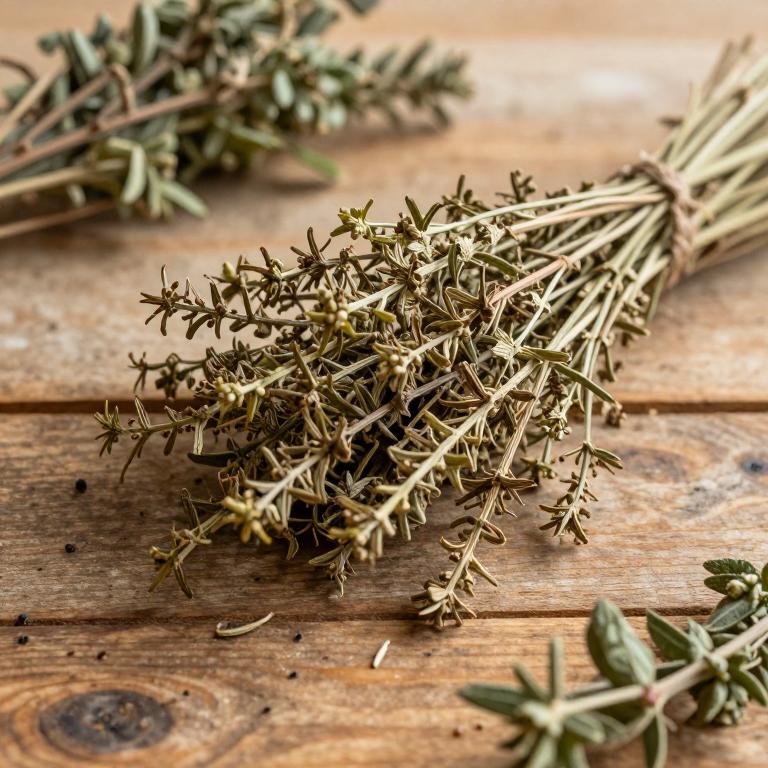
Names and Synonyms
Scientific Names
Accepted name
Tamarix niloticaSynonyms
- Tamarix gallica var. nilotica
- Tamarix gallica f. cinerea
- Tamarix nilotica var. arabica
- Tamarix gallica f. glaucescens
- Tamarix nilotica var. tenuior
- Tamarix nilotica var. microcarpa
- Tamarix nilotica var. micrantha
- Tamarix nilotica var. eilathensis
- Tamarix nilotica var. brevispica
- Tamarix arabica
- Tamarix maris-mortui
- Tamarix scebelensis
- Tamarix nilotica var. abyssinica
- Tamarix gallica subsp. nilotica
- Tamarix gallica var. abiadensis
- Tamarix gallica var. brevispica
- Tamarix gallica var. ascalonica
- Tamarix gallica var. divergens
- Tamarix gallica var. erythrocarpa
- Tamarix gallica var. longispica
- Tamarix gallica var. maris-mortui
- Tamarix gallica var. subpatens
- Tamarix gallica var. tenuior
- Tamarix gallica var. microcarpa
- Tamarix gallica var. anisandra
- Tamarix gallica var. eilathensis
- Tamarix nilotica var. anisandra
- Tamarix nilotica var. divergens
Sources: Wikidata, Catalogue of Life
Taxonomical Classification
This plant, Tamarix nilotica, belongs to the kingdom Plantae and the phylum Streptophyta. It is classified under the class Equisetopsida and the subclass Magnoliidae within the order Caryophyllales. Finally, it is a member of the family Tamaricaceae and falls under the genus Tamarix.
| Rank | Classification |
|---|---|
| Kingdom | Plantae |
| Phylum | Streptophyta |
| Class | Equisetopsida |
| Subclass | Magnoliidae |
| Order | Caryophyllales |
| Family | Tamaricaceae |
| Genus | Tamarix |
Sources: The World Checklist of Vascular Plants (WCVP)
Distribution
This plant exhibits a broad distribution spanning across several distinct regions of Europe and Africa. In Southeastern Europe, its presence can be documented in Greece and on the island of Kriti. Moving toward the African continent, it is widely found throughout Northern Africa, specifically within Egypt and Libya. Additionally, the species extends into Northeast Tropical Africa, where it is located in Chad. This wide-ranging habitat demonstrates the plant's ability to thrive in diverse Mediterranean and African environments.
| Region | Area |
|---|---|
| Southeastern Europe | Greece |
| Southeastern Europe | Kriti |
| Northern Africa | Egypt |
| Northern Africa | Libya |
| Northeast Tropical Africa | Chad |
| Northeast Tropical Africa | Djibouti |
| Northeast Tropical Africa | Eritrea |
| Northeast Tropical Africa | Ethiopia |
| Northeast Tropical Africa | Somalia |
| Northeast Tropical Africa | Sudan-South Sudan |
Sources: The World Checklist of Vascular Plants (WCVP)
Botanical Identification
Ecology
The ecology of Tamarix nilotica is fundamentally defined by its preference for riparian environments, specifically colonizing the banks of seasonal rivers and the shores of lakes. This species thrives in these transitional zones where water availability is seasonally variable, maintaining a distinct niche in habitats situated at elevations above 180 m. By occupying these lacustrine and fluvial margins, the plant plays a critical role in stabilizing soil along watercourses and managing the interface between aquatic and terrestrial ecosystems.
- Habitat :
- banks of seasonal rivers and shores of lakes (above 180 m)
Life history
The life history of Tamarix nilotica is characterized by its long-lived nature as a perennial organism, allowing it to establish a permanent presence within its ecological niche. As a phanerophyte, its regenerative buds are located high above the ground on woody stems, a structural adaptation that enables it to maintain significant height and withstand various environmental stresses. This growth strategy supports a robust life cycle capable of enduring seasonal fluctuations, ensuring the plant can persist through multiple growing seasons.
- Life form :
- phanerophyte
- Lifecycle :
- perennial
Morphology
The morphology of Tamarix nilotica is characterized by its robust and perennial structural development. It presents as a woody plant, exhibiting a strong, lignified framework that supports its stature. Depending on the specific environmental conditions and developmental stage, the plant can manifest in various growth forms, ranging from a shrub to a larger tree. It is a self-supporting species, possessing the structural integrity to grow upright without the need for external support or climbing mechanisms. In terms of its ecological habitat and moisture relationship, the plant is primarily terrestrial, though it is capable of existing in semiaquatic or aquatic environments. Furthermore, Tamarix nilotica is an independent organism, functioning without any parasitic dependency on other host plants.
- Aquatic :
- terrestrial
- Climber :
- self-supporting
- Growth form :
- shrub
- Growth form :
- tree
- Parasite :
- independent
- Woodiness :
- woody
Physiology
The physiology of Tamarix nilotica is characterized by specialized adaptations to saline and arid environments, most notably through its sophisticated salt-secreting mechanisms. The plant employs specialized salt glands located on its scale-like leaves to actively excrete excess sodium and chloride ions, a process that helps maintain osmotic balance and prevents ion toxicity within its tissues. In terms of carbon assimilation, the plant utilizes a C3 photosynthetic pathway, which dictates its metabolic approach to gas exchange and light utilization. To mitigate the high evaporative demand typical of its habitats, Tamarix nilotica exhibits physiological plasticity in its transpiration rates, often relying on a deep root system to access groundwater and maintain turgor pressure. Furthermore, its ability to regulate osmotic potential through the accumulation of compatible solutes allows it to thrive in soils with high salinity that would otherwise inhibit the physiological functions of less specialized vegetation.
- Photosynthetic pathway :
- C3
Reproduction
Reproduction in Tamarix nilotica is characterized by a prolific production of minute seeds, which facilitates widespread dispersal in its natural habitats. The reproductive cycle involves the development of small, inconspicuous flowers that give rise to capsules containing a vast number of tiny seeds. Quantitatively, the seeds are extremely lightweight, exhibiting a consistent seed mass across different samples; the mean seed mass is recorded at 1e-05 g, with both the maximum and minimum seed mass values also measured at 1e-05 g. This uniformity in seed size suggests a highly specialized reproductive strategy optimized for wind or water dispersal, allowing the species to colonize new areas effectively through the release of these micro-scale units.
- Seed mass mean:
- 1e-05 g
Sources: Global Inventory of Floras and Traits (GIFT)
Plant Parts
Tamarix nilotica has 2 reported plant parts identified across 2 scientific publications and several other databases that are studied for medicinal purposes. The most consistently reported plant part include flower, leaf.
| Plant part | Supporting sources | Consensus |
|---|---|---|
| Flower | 1 supporting sources | ★☆☆☆☆ |
| Leaf | 1 supporting sources | ★☆☆☆☆ |
Flower
- BMC complementary medicine and therapies
Leaf
- Journal of natural products
Chemicals
Tamarix nilotica has 11 reported phytochemicals identified across 2 scientific publications and several other databases. The most consistently reported chemicals include 1,2,6-Tri-O-galloyl-beta-D-glucose, D7, F-, Flavonoids, Hirtellin A.
| Chemical | Supporting sources | Consensus |
|---|---|---|
| 1,2,6-Tri-O-galloyl-beta-D-glucose | 1 supporting sources | ★☆☆☆☆ |
| D7 | 1 supporting sources | ★☆☆☆☆ |
| F- | 1 supporting sources | ★☆☆☆☆ |
| Flavonoids | 1 supporting sources | ★☆☆☆☆ |
| Hirtellin A | 1 supporting sources | ★☆☆☆☆ |
| Isohirtellin C | 1 supporting sources | ★☆☆☆☆ |
| Polyphenol | 1 supporting sources | ★☆☆☆☆ |
| Tamarixinin A | 1 supporting sources | ★☆☆☆☆ |
| Tannins | 1 supporting sources | ★☆☆☆☆ |
| d8 | 1 supporting sources | ★☆☆☆☆ |
1,2,6-Tri-O-galloyl-beta-D-glucose
- Journal of natural products
D7
- Journal of natural products
F-
- Journal of natural products
Flavonoids
- BMC complementary medicine and therapies
Hirtellin A
- Journal of natural products
Isohirtellin C
- Journal of natural products
Polyphenol
- Molecules (Basel, Switzerland)
Tamarixinin A
- Journal of natural products
Tannins
- BMC complementary medicine and therapies
d8
- Journal of natural products
Conditions
Tamarix nilotica has 4 reported investigations on conditions identified across 2 scientific publications and several other databases. The most consistently reported conditions include liver cell carcinoma, liver fibrosis, neoplasia, oxidative stress.
| Condition | Supporting sources | Consensus |
|---|---|---|
| Liver cell carcinoma | 1 supporting sources | ★☆☆☆☆ |
| Liver fibrosis | 1 supporting sources | ★☆☆☆☆ |
| Neoplasia | 1 supporting sources | ★☆☆☆☆ |
| Oxidative stress | 1 supporting sources | ★☆☆☆☆ |
Liver cell carcinoma
- BMC complementary medicine and therapies
Liver fibrosis
- Molecules (Basel, Switzerland)
Neoplasia
- BMC complementary and alternative medicine
Oxidative stress
- BMC complementary and alternative medicine
Preparations
Tamarix nilotica has 1 reported preparations identified across 2 scientific publications and several other databases. The most consistently reported preparations include Hydro-alcoholic extracts.
| Preparation | Supporting sources | Consensus |
|---|---|---|
| Hydro-alcoholic extracts | 1 supporting sources | ★☆☆☆☆ |
Hydro-alcoholic extracts
- Journal of ethnopharmacology