Tamarix dioica
Tamarix dioica · Accepted scientific name
Scientific literature: Very Sparse (24 studies) · ★☆☆☆☆
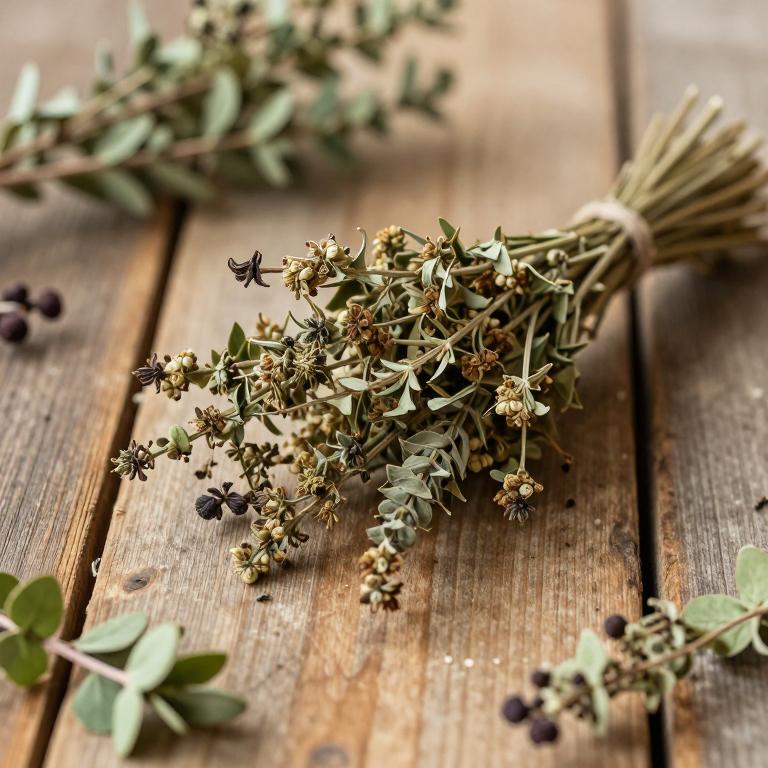
Tamarix dioica, scientifically known as Tamarix dioica, is a resilient, salt-tolerant shrub native to the Mediterranean region. Renowned for its ability to thrive in arid environments, this plant offers significant ethnobotanical value. Historically, its various parts have been utilized in traditional medicine for their diverse therapeutic properties.
- Family
- Tamaricaceae
- Native range
- Asia-Temperate
- Parts used
- Not available
- Common names
- Not available
- Scientific synonyms
- Tamarix Longe-Pedunculata
Names and Synonyms
Scientific Names
Accepted name
Tamarix dioicaSynonyms
- Tamarix longe-pedunculata
Sources: Wikidata, Catalogue of Life
Taxonomical Classification
This plant belongs to the kingdom Plantae and is classified under the phylum Streptophyta and the class Equisetopsida. Within the subclass Magnoliidae, it is organized under the order Caryophyllales and the family Tamaricaceae. Finally, it is identified by the genus Tamarix, specifically as the species Tamarix dioica.
| Rank | Classification |
|---|---|
| Kingdom | Plantae |
| Phylum | Streptophyta |
| Class | Equisetopsida |
| Subclass | Magnoliidae |
| Order | Caryophyllales |
| Family | Tamaricaceae |
| Genus | Tamarix |
Sources: The World Checklist of Vascular Plants (WCVP)
Distribution
This plant exhibits a wide geographical range across several key regions of Asia. In Western Asia, its presence is noted in both Afghanistan and Iran. Moving toward the Indian Subcontinent, it can be found growing in the state of Assam. The species is also distributed throughout Bangladesh within the same subcontinent. Finally, its habitat extends into the rugged terrain of the East Himalaya.
| Region | Area |
|---|---|
| Western Asia | Afghanistan |
| Western Asia | Iran |
| Indian Subcontinent | Assam |
| Indian Subcontinent | Bangladesh |
| Indian Subcontinent | East Himalaya |
| Indian Subcontinent | India |
| Indian Subcontinent | Nepal |
| Indian Subcontinent | Pakistan |
| Indo-China | Myanmar |
Sources: The World Checklist of Vascular Plants (WCVP)
Botanical Identification
Ecology
The ecology of Tamarix dioica is defined by its specific altitudinal distribution, where it thrives within a distinct vertical range in its natural habitat. This species is typically found at elevations starting from a minimum of 200 m AMSL, reaching up to a maximum of 300 m AMSL, with a mean elevational presence centered around 700 m AMSL. This distribution pattern reflects its adaptation to specific topographical and climatic conditions within these altitude zones.
- Elevational range max:
- 300 m AMSL
- Elevational range mean:
- 700 m AMSL
- Elevational range min:
- 200 m AMSL
Life history
The life history of Tamarix dioica is characterized by its status as a perennial species, allowing it to persist in its environment over many successive growing seasons. In terms of its structural development and growth habit, the plant exhibits characteristics of a phanerophyte, possessing elevated woody stems that elevate its photosynthetic organs above the ground level. Depending on the specific environmental context and the degree of woody development, its growth strategy can also be classified as a nanophanerophyte, representing a specialized form of life form within its ecological niche.
- Life form :
- nanophanerophyte
- Life form :
- phanerophyte
- Lifecycle :
- perennial
Morphology
The morphology of Tamarix dioica is characterized by a woody structure that allows it to function as a self-supporting plant. It exhibits a versatile growth form, manifesting as both a tree and a shrub depending on environmental conditions and developmental stages. As an independent organism, it does not rely on other plants for nutrients, functioning neither as a parasite nor as an epiphyte, as it maintains a terrestrial habit. While its habitat can vary, its primary ecological classification within these traits is terrestrial, though it is adapted to various moisture gradients.
- Aquatic :
- terrestrial
- Climber :
- self-supporting
- Epiphyte :
- terrestrial
- Growth form :
- tree
- Growth form :
- shrub
- Parasite :
- independent
- Woodiness :
- woody
Sources: Global Inventory of Floras and Traits (GIFT)
Chemicals
Tamarix dioica has 14 reported phytochemicals identified across 0 scientific publications and several other databases. The most consistently reported chemicals include CATECHIN, GLUTAMIC ACID, RUTIN, Tamaridone, Tamarixetin.
| Chemical | Supporting sources | Consensus |
|---|---|---|
| CATECHIN | 1 supporting sources | ★☆☆☆☆ |
| GLUTAMIC ACID | 1 supporting sources | ★☆☆☆☆ |
| RUTIN | 1 supporting sources | ★☆☆☆☆ |
| Tamaridone | 1 supporting sources | ★☆☆☆☆ |
| Tamarixetin | 1 supporting sources | ★☆☆☆☆ |
| apigenin | 1 supporting sources | ★☆☆☆☆ |
| aspartic acid | 1 supporting sources | ★☆☆☆☆ |
| kaempferol | 1 supporting sources | ★☆☆☆☆ |
| leucine | 1 supporting sources | ★☆☆☆☆ |
| lysine | 1 supporting sources | ★☆☆☆☆ |
CATECHIN
- Plants (Basel, Switzerland)
GLUTAMIC ACID
- Plants (Basel, Switzerland)
RUTIN
- Plants (Basel, Switzerland)
Tamaridone
- Plants (Basel, Switzerland)
Tamarixetin
- Plants (Basel, Switzerland)
apigenin
- Plants (Basel, Switzerland)
aspartic acid
- Plants (Basel, Switzerland)
kaempferol
- Plants (Basel, Switzerland)
leucine
- Plants (Basel, Switzerland)
lysine
- Plants (Basel, Switzerland)
Activities
Tamarix dioica has 6 reported activities identified across 0 scientific publications and several other databases. The most consistently reported activities include Analgesic, Antifungal, Antimicrobial, Carminative, Cytotoxic.
| Activity | Supporting sources | Consensus |
|---|---|---|
| Analgesic | 1 supporting sources | ★☆☆☆☆ |
| Antifungal | 1 supporting sources | ★☆☆☆☆ |
| Antimicrobial | 1 supporting sources | ★☆☆☆☆ |
| Carminative | 1 supporting sources | ★☆☆☆☆ |
| Cytotoxic | 1 supporting sources | ★☆☆☆☆ |
| Diuretic | 1 supporting sources | ★☆☆☆☆ |
Analgesic
- Pakistan journal of pharmaceutical sciences
Antifungal
- Pakistan journal of pharmaceutical sciences
Antimicrobial
- Pakistan journal of pharmaceutical sciences
Carminative
- Pakistan journal of pharmaceutical sciences
Cytotoxic
- Pakistan journal of pharmaceutical sciences
Diuretic
- Pakistan journal of pharmaceutical sciences
Conditions
Tamarix dioica has 4 reported investigations on conditions identified across 0 scientific publications and several other databases. The most consistently reported conditions include diabetes mellitus, gastric cancer, gastritis, peptic ulcer.
| Condition | Supporting sources | Consensus |
|---|---|---|
| Diabetes mellitus | 1 supporting sources | ★☆☆☆☆ |
| Gastric cancer | 1 supporting sources | ★☆☆☆☆ |
| Gastritis | 1 supporting sources | ★☆☆☆☆ |
| Peptic ulcer | 1 supporting sources | ★☆☆☆☆ |
Diabetes mellitus
- Plants (Basel, Switzerland)
Gastric cancer
- Journal of ethnopharmacology
Gastritis
- Journal of ethnopharmacology
Peptic ulcer
- Journal of ethnopharmacology
Preparations
Tamarix dioica has 2 reported preparations identified across 0 scientific publications and several other databases. The most consistently reported preparations include crude methanolic extract, extracts.
| Preparation | Supporting sources | Consensus |
|---|---|---|
| Crude methanolic extract | 2 supporting sources | ★☆☆☆☆ |
| Extracts | 1 supporting sources | ★☆☆☆☆ |
Crude methanolic extract
- Pakistan journal of pharmaceutical sciences
- Plants (Basel, Switzerland)
Extracts
- Journal of ethnopharmacology