Talisia esculenta
Talisia esculenta · Accepted scientific name
Scientific literature: Very Sparse (14 studies) · ★☆☆☆☆
, scientifically known as Taliaesia esculenta, is a versatile tropical plant valued for its nutritional and medicinal properties. Often called the breadnut, its fruit is a staple food source. In traditional medicine, various parts of the plant are utilized to treat ailments ranging from digestive issues to skin inflammations.
- Family
- Sapindaceae
- Native range
- Southern America
- Parts used
- Fruit · Leaf
- Common names
- Not available
- Scientific synonyms
- Meleagrinex Pernambucana · Sapindus Esculentus
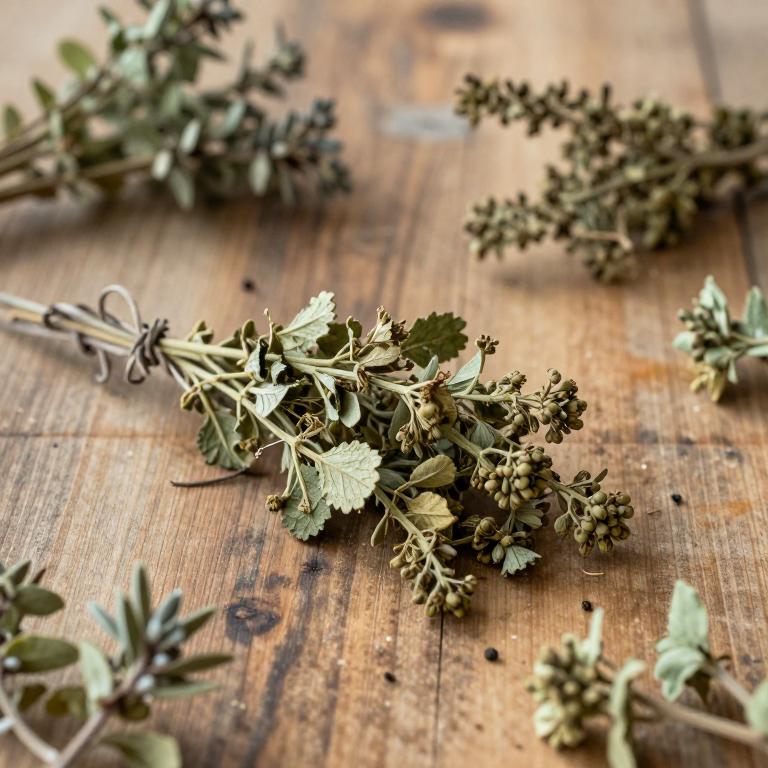
Names and Synonyms
Scientific Names
Accepted name
Talisia esculentaSynonyms
- Meleagrinex pernambucana
- Sapindus esculentus
Sources: Wikidata, Catalogue of Life
Taxonomical Classification
This plant belongs to the kingdom Plantae and the phylum Streptophyta, falling under the class Equisetopsida and subclass Magnoliidae. It is further classified within the order Sapindales and the family Sapindaceae. Finally, it is identified by the genus Talisia.
| Rank | Classification |
|---|---|
| Kingdom | Plantae |
| Phylum | Streptophyta |
| Class | Equisetopsida |
| Subclass | Magnoliidae |
| Order | Sapindales |
| Family | Sapindaceae |
| Genus | Talisia |
Sources: The World Checklist of Vascular Plants (WCVP)
Distribution
This plant is widely distributed across several distinct regions of the South American continent. In Northern South America, its presence is noted within the borders of Guyana. Moving toward the western part of the continent, it can also be found in Bolivia. Within Brazil, the species occupies a broad range that includes the West-Central region. Furthermore, its geographical reach extends to both the Northeast and Southeast regions of Brazil.
| Region | Area |
|---|---|
| Northern South America | Guyana |
| Western South America | Bolivia |
| Brazil | Brazil West-Central |
| Brazil | Brazil Northeast |
| Brazil | Brazil Southeast |
| Brazil | Brazil North |
| Southern South America | Paraguay |
Sources: The World Checklist of Vascular Plants (WCVP)
Botanical Identification
Ecology
The ecology of Talisia esculenta is characterized by its broad adaptability across diverse environmental landscapes, spanning an elevational range from sea level (0 m AMSL) up to a maximum of 1000 m AMSL. This species exhibits significant ecological plasticity, thriving in a variety of distinct ecosystems including the Caatinga (strictu sensu), coastal forests (Floresta Ciliar ou Galeria), and various forest types such as Terra Firme, Várzea, and Ombrophilous (pluvial) forests. Furthermore, its ability to colonize anthropic areas (Área Antrópica) demonstrates its resilience and capacity to persist in disturbed or human-modified environments alongside its natural habitats.
- Elevational range max:
- 1000 m AMSL
- Elevational range min:
- 0 m AMSL
- Habitat :
- Área Antrópica, Caatinga (stricto sensu), Floresta Ciliar ou Galeria, Floresta de Terra Firme, Floresta de Várzea, Floresta Ombrófila (= Floresta Pluvial)
Life history
The life history of Talisia esculenta is characterized by its status as a perennial species, allowing it to maintain a long-term presence within its tropical ecosystem. As a woody climber or shrub, it undergoes a multi-year developmental cycle that begins with seed germination, followed by a period of vigorous vegetative growth where it establishes a robust root system and climbing structures. Throughout its extended lifespan, the plant undergoes seasonal cycles of maturation, producing complex reproductive structures that facilitate long-term survival and dispersal. Unlike annuals or biennials, its perennial nature ensures that it can withstand environmental fluctuations over several years, continually investing energy into both structural stability and periodic reproductive phases.
- Lifecycle :
- perennial
Morphology
The morphology of Talisia esculenta is characterized by its robust, woody growth form, primarily manifesting as a tree. This species reaches significant dimensions, with a mean plant height of approximately 10 m and a maximum potential height of up to 20 m. As a terrestrial plant, it does not exhibit aquatic, semiaquatic, or epiphytic lifestyles, growing independently in its environment rather than as a holoepiphyte, hemiepiphyte, or any other parasitic or climbing form. Although it possesses a sturdy, woody structure, it is categorized as self-supporting rather than acting as a liana, vine, or obligatory climber. Furthermore, the plant is an independent organism, lacking any obligatory or facultative parasitic relationships.
- Aquatic :
- terrestrial
- Climber :
- self-supporting
- Epiphyte :
- terrestrial
- Growth form :
- tree
- Parasite :
- independent
- Plant height max:
- 20 m
- Plant height mean:
- 10 m
- Woodiness :
- woody
Physiology
The physiology of Talisia esculenta is characterized by a C3 photosynthetic pathway, utilizing the standard Calvin cycle to fix atmospheric carbon dioxide through the enzyme Rubisco. This metabolic strategy dictates its resource requirements and environmental adaptations, as it lacks the specialized carbon-concentrating mechanisms found in C4 or CAM plants. Furthermore, this species is not a nitrogen fixer, meaning it does not possess a symbiotic relationship with nitrogen-fixing bacteria to convert atmospheric nitrogen into bioavailable forms, and it relies instead on the uptake of nitrates and ammonium present in the soil substrate to meet its nutritional requirements for growth and development.
- Nitrogen fixer :
- no
- Photosynthetic pathway :
- C3
Sources: Global Inventory of Floras and Traits (GIFT)
Plant Parts
Talisia esculenta has 2 reported plant parts identified across 2 scientific publications and several other databases that are studied for medicinal purposes. The most consistently reported plant part include fruit, leaf.
| Plant part | Supporting sources | Consensus |
|---|---|---|
| Fruit | 1 supporting sources | ★☆☆☆☆ |
| Leaf | 1 supporting sources | ★☆☆☆☆ |
Fruit
- Nutrients
Leaf
- Nutrients
Chemicals
Talisia esculenta has 3 reported phytochemicals identified across 2 scientific publications and several other databases. The most consistently reported chemicals include Gallic acid, RUTIN, quercitrin.
| Chemical | Supporting sources | Consensus |
|---|---|---|
| Gallic acid | 1 supporting sources | ★☆☆☆☆ |
| RUTIN | 1 supporting sources | ★☆☆☆☆ |
| quercitrin | 1 supporting sources | ★☆☆☆☆ |
Gallic acid
- Nutrients
RUTIN
- Nutrients
quercitrin
- Nutrients
Activities
Talisia esculenta has 3 reported activities identified across 2 scientific publications and several other databases. The most consistently reported activities include Antioxidant, Diuretic, Hypotensive.
| Activity | Supporting sources | Consensus |
|---|---|---|
| Antioxidant | 1 supporting sources | ★☆☆☆☆ |
| Diuretic | 1 supporting sources | ★☆☆☆☆ |
| Hypotensive | 1 supporting sources | ★☆☆☆☆ |
Antioxidant
- Nutrients
Diuretic
- Journal of medicinal food
Hypotensive
- Journal of medicinal food
Conditions
Talisia esculenta has 3 reported investigations on conditions identified across 2 scientific publications and several other databases. The most consistently reported conditions include antihypertensive, diuretic, oxidative and nitrosative stress.
| Condition | Supporting sources | Consensus |
|---|---|---|
| Antihypertensive | 1 supporting sources | ★☆☆☆☆ |
| Diuretic | 1 supporting sources | ★☆☆☆☆ |
| Oxidative and nitrosative stress | 1 supporting sources | ★☆☆☆☆ |
Antihypertensive
- Journal of medicinal food
Diuretic
- Journal of medicinal food
Oxidative and nitrosative stress
- Journal of medicinal food
Preparations
Talisia esculenta has 4 reported preparations identified across 2 scientific publications and several other databases. The most consistently reported preparations include hydroethanolic extracts from fruit peels, hydroethanolic extracts from leaves, infusion extracts from fruit peels, infusion extracts from leaves.
| Preparation | Supporting sources | Consensus |
|---|---|---|
| Hydroethanolic extracts from fruit peels | 1 supporting sources | ★☆☆☆☆ |
| Hydroethanolic extracts from leaves | 1 supporting sources | ★☆☆☆☆ |
| Infusion extracts from fruit peels | 1 supporting sources | ★☆☆☆☆ |
| Infusion extracts from leaves | 1 supporting sources | ★☆☆☆☆ |
Hydroethanolic extracts from fruit peels
- Nutrients
Hydroethanolic extracts from leaves
- Nutrients
Infusion extracts from fruit peels
- Nutrients
Infusion extracts from leaves
- Nutrients