southern cone marigold
Tagetes minuta · Accepted scientific name
Scientific literature: Very Extensive (544 studies) · ★★★★★
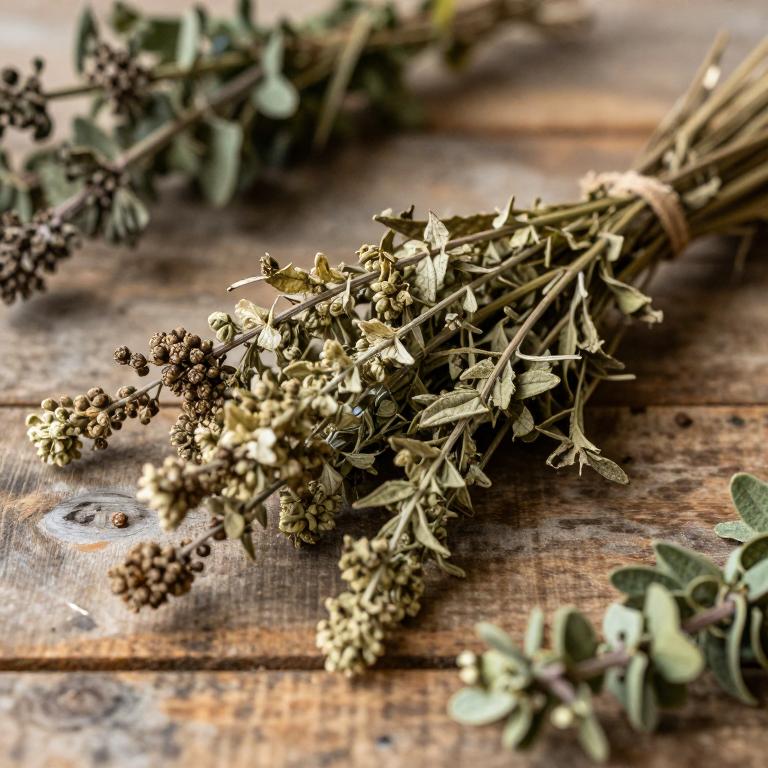
Southern cone marigold, scientifically known as Tagetes minuta, is a versatile perennial herb native to South America. Renowned for its strong, aromatic fragrance, this plant is widely utilized in traditional medicine for its antimicrobial and anti-inflammatory properties, offering significant therapeutic potential in treating various ailments across diverse cultures.
Names and Synonyms
Common Names
- little marigold
- minute marigold
- muster John Henry
- wild marigold
- Southern Marigold
- Aztec marigold
- Mexican marigold
- dwarf marigold
- khakibush
- stinking-Roger
- Kahki Weed
- Khaki Weed
- Khakibos
- Khakibush Weed
- Master John-Henry
- Stinking Roger
- Tall Khaki Weed
Scientific Names
Accepted name
Tagetes minutaSynonyms
- Tagetes glandulifera
- Tagetes glandulosa
- Tagetes montana
- Tagetes porophyllum
- Tagetes bonariensis
- Tagetes tinctoria
Regional and Traditional Names
Spanish:
- Huacatay
- Quinchihue
- Suico
- Chinchu
- Chinchilla
- chinchilla enana
- Suico
- chinchilla
- huacatay
- Ruda gallinaza
German:
- mexikanische Studentenblume
- Mexikanische Gewürztagetes
French:
- tagète
- tagète des décombres
Sources: Wikidata, Catalogue of Life
Taxonomical Classification
This plant belongs to the kingdom Plantae and the phylum Streptophyta, falling under the class Equisetopsida and subclass Magnoliidae. Within the order Asterales, it is classified under the family Asteraceae. Finally, its specific taxonomic identification is placed within the genus Tagetes.
| Rank | Classification |
|---|---|
| Kingdom | Plantae |
| Phylum | Streptophyta |
| Class | Equisetopsida |
| Subclass | Magnoliidae |
| Order | Asterales |
| Family | Asteraceae |
| Genus | Tagetes |
Sources: The World Checklist of Vascular Plants (WCVP)
Distribution
This plant exhibits a wide geographical distribution across several regions of the European continent. In Northern Europe, its presence can be observed in Great Britain as well as throughout Norway and Sweden. Moving toward the center of the continent, the species is also documented within Middle Europe. Specifically, it inhabits the landscapes of Austria and Belgium. This range demonstrates the plant's ability to thrive in diverse European environments.
| Region | Area |
|---|---|
| Northern Europe | Great Britain |
| Northern Europe | Norway |
| Northern Europe | Sweden |
| Middle Europe | Austria |
| Middle Europe | Belgium |
| Middle Europe | Germany |
| Middle Europe | Hungary |
| Middle Europe | Switzerland |
| Southwestern Europe | Baleares |
| Southwestern Europe | Corse |
Sources: The World Checklist of Vascular Plants (WCVP)
Botanical Identification
Ecology
The ecology of Tagetes minuta is characterized by its remarkable adaptability across a vast altitudinal gradient, spanning from sea level (0 m AMSL) up to a maximum elevation of 2500 m AMSL. It exhibits a broad ecological niche with a mean elevation of approximately 2455 m AMSL, suggesting a strong presence in high-altitude environments. Furthermore, the species frequently colonizes anthropic areas (Área Antrópica), indicating a high tolerance for disturbed habitats and human-modified landscapes where it can thrive alongside anthropogenic activity.
- Elevational range max:
- 2500 m AMSL
- Elevational range mean:
- 2455 m AMSL
- Elevational range min:
- 0 m AMSL
- Habitat :
- Área Antrópica
Genetics
The genetics of Tagetes minuta are characterized by a specific karyotypic structure, most notably defined by a chromosome number of 48. This chromosomal configuration plays a fundamental role in the plant's reproductive biology and its capacity for genetic variation. The presence of these 48 chromosomes contributes to the complex genomic architecture that governs the biosynthesis of its various secondary metabolites. Such genetic stability and organization are essential for the inheritance of specific biochemical pathways, ensuring that the plant's phenotypic expression remains consistent across generations within its natural and cultivated habitats.
- Chromosome number :
- 48
Life history
The life history of Tagetes minuta is characterized by its classification as an annual plant, meaning it completes its entire developmental cycle—from germination and vegetative growth to flowering and seed production—within a single growing season. Functioning as a therophyte, the plant survives unfavorable environmental conditions by persisting in the form of seeds, which remain dormant until the onset of favorable seasonal conditions. This strategy allows the species to rapidly colonize disturbed habitats and exploit seasonal resources, ensuring the continuation of its lineage through prolific seed dispersal before the death of the individual plant.
- Life form :
- therophyte
- Lifecycle :
- annual
Morphology
The morphology of Tagetes minuta is characterized by its growth form as a non-woody herb and forb. It is a terrestrial, independent plant that does not function as an epiphyte or a parasite. The plant exhibits a self-supporting climbing habit rather than being a liana or vine, and its shoot orientation is predominantly erect. In terms of stature, it displays significant variation in plant height, with a minimum height of 0.1 m, a mean height of 1.85 m, and a maximum height reaching up to 3 m.
- Aquatic :
- terrestrial
- Climber :
- self-supporting
- Epiphyte :
- terrestrial
- Growth form :
- herb
- Growth form :
- forb
- Parasite :
- independent
- Plant height max:
- 3 m
- Plant height mean:
- 1.85 m
- Plant height min:
- 0.1 m
- Shoot orientation :
- erect
- Woodiness :
- non-woody
Physiology
The physiology of Tagetes minuta is characterized by a C3 photosynthetic pathway, which dictates its carbon fixation processes and metabolic efficiency. The plant's vegetative structure features an alternate leaf arrangement, where the leaves exhibit an elliptic form. These leaves vary in dimensions, with a minimum width of 0.2 cm and a maximum width of 0.9 cm, while the leaf length can reach a maximum of 10 cm. In terms of nutrient acquisition and metabolic specialization, the species is non-carnivorous and does not function as a nitrogen fixer, relying instead on soil-based nitrogen uptake to support its physiological development.
- Carnivory :
- non-carnivorous
- Leaf arrangement :
- alternate
- Leaf form :
- elliptic
- Leaf length max:
- 10 cm
- Leaf width max:
- 0.9 cm
- Leaf width min:
- 0.2 cm
- Nitrogen fixer :
- no
- Photosynthetic pathway :
- C3
Reproduction
The reproduction of Tagetes minuta is primarily a sexual process, as asexual reproduction is noted to be absent. The plant features an inflorescence structured as an umbel, producing green flowers that typically range in length from 0.1 cm to 0.3 cm. The flowering period generally begins in August and concludes in October. Pollination is driven by biotic factors, specifically through an insect pollination syndrome. Following fertilization, the plant develops dry, indehiscent fruits classified as achenes. These fruits vary in size, with a mean length of 0.6 cm (ranging from 0.5 cm to 0.8 cm) and a mean width of 0.1 cm. The seeds contained within these fruits are quite small, possessing a mean mass of 0.001182 g (ranging from 0.00077 g to 0.00202 g) and a consistent seed volume of approximately 1.1 mm³. Dispersal of the seeds is achieved through an anemochorous syndrome, meaning they are dispersed by the wind.
- Dehiscence :
- indehiscent
- Dispersal syndrome :
- anemochorous
- Flower colour :
- green
- Flower length max:
- 0.3 cm
- Flower length min:
- 0.1 cm
- Flowering time :
- Aug
- Flowering time :
- Oct
- Fruit dryness :
- dry
- Fruit length max:
- 0.8 cm
- Fruit length mean:
- 0.6 cm
- Fruit length min:
- 0.5 cm
- Fruit type :
- achene
- Fruit width mean:
- 0.1 cm
- Inflorescence :
- umbel
- Pollination syndrome :
- insect
- Pollination syndrome :
- biotic
- Reproduction asexual :
- absent
- Seed mass max:
- 0.00202 g
- Seed mass mean:
- 0.001182 g
- Seed mass min:
- 0.00077 g
- Seed volume max:
- 1.1 mm³
Sources: Global Inventory of Floras and Traits (GIFT)
Plant Parts
Tagetes minuta has 2 reported plant parts identified across 3 scientific publications and several other databases that are studied for medicinal purposes. The most consistently reported plant part include leaf, flower.
| Plant part | Supporting sources | Consensus |
|---|---|---|
| Leaf | 2 supporting sources | ★☆☆☆☆ |
| Flower | 1 supporting sources | ★☆☆☆☆ |
Leaf
- Natural product research
- Journal of ethnopharmacology
Flower
- BMC complementary and alternative medicine
Chemicals
Tagetes minuta has 104 reported phytochemicals identified across 3 scientific publications and several other databases. The most consistently reported chemicals include Dihydrotagetone, LIMONENE, Tagetone, cis-Ocimene, 1,8-Cineole.
| Chemical | Supporting sources | Consensus |
|---|---|---|
| Dihydrotagetone | 2 supporting sources | ★☆☆☆☆ |
| LIMONENE | 2 supporting sources | ★☆☆☆☆ |
| Tagetone | 2 supporting sources | ★☆☆☆☆ |
| cis-Ocimene | 2 supporting sources | ★☆☆☆☆ |
| 1,8-Cineole | 1 supporting sources | ★☆☆☆☆ |
| 2,3,5-Trimethylfuran | 1 supporting sources | ★☆☆☆☆ |
| 2,6-Dimethyl-7-octen-4-one | 1 supporting sources | ★☆☆☆☆ |
| 2-Hexen-1-al | 1 supporting sources | ★☆☆☆☆ |
| 5-(3-Buten-1-ynyl)-2,2'-bithienyl | 1 supporting sources | ★☆☆☆☆ |
| ALPHA-PINENE | 1 supporting sources | ★☆☆☆☆ |
Dihydrotagetone
- Natural product research
- Biomedical & environmental mass spectrometry
LIMONENE
- Dr. Duke
- Chemosphere
Tagetone
- Dr. Duke
- Biomedical & environmental mass spectrometry
cis-Ocimene
- Dr. Duke
- Chemosphere
1,8-Cineole
- Dr. Duke
2,3,5-Trimethylfuran
- Dr. Duke
2,6-Dimethyl-7-octen-4-one
- Dr. Duke
2-Hexen-1-al
- Dr. Duke
5-(3-Buten-1-ynyl)-2,2'-bithienyl
- Dr. Duke
ALPHA-PINENE
- Dr. Duke
Activities
Tagetes minuta has 368 reported activities identified across 3 scientific publications and several other databases. The most consistently reported activities include Antioxidant, Antibacterial, (-)-Chronotropic, (-)-Inotropic, 11B-HSD-Inhibitor.
| Activity | Supporting sources | Consensus |
|---|---|---|
| Antioxidant | 3 supporting sources | ★★☆☆☆ |
| Antibacterial | 2 supporting sources | ★☆☆☆☆ |
| (-)-Chronotropic | 1 supporting sources | ★☆☆☆☆ |
| (-)-Inotropic | 1 supporting sources | ★☆☆☆☆ |
| 11B-HSD-Inhibitor | 1 supporting sources | ★☆☆☆☆ |
| 5-Alpha-Reductase-Inhibitor | 1 supporting sources | ★☆☆☆☆ |
| 5-Lipoxygenase-Inhibitor | 1 supporting sources | ★☆☆☆☆ |
| ACE-Inhibitor | 1 supporting sources | ★☆☆☆☆ |
| AChE-Inhibitor | 1 supporting sources | ★☆☆☆☆ |
| ATPase-Inhibitor | 1 supporting sources | ★☆☆☆☆ |
Antioxidant
- Dr. Duke
- Scientific reports
- BMC complementary and alternative medicine
Antibacterial
- Dr. Duke
- BMC complementary and alternative medicine
(-)-Chronotropic
- Dr. Duke
(-)-Inotropic
- Dr. Duke
11B-HSD-Inhibitor
- Dr. Duke
5-Alpha-Reductase-Inhibitor
- Dr. Duke
5-Lipoxygenase-Inhibitor
- Dr. Duke
ACE-Inhibitor
- Dr. Duke
AChE-Inhibitor
- Dr. Duke
ATPase-Inhibitor
- Dr. Duke
Conditions
Tagetes minuta has 5 reported investigations on conditions identified across 3 scientific publications and several other databases. The most consistently reported conditions include Aspergillus niger, diuresis, hyperglycemia, hypertension, spasmolytic.
| Condition | Supporting sources | Consensus |
|---|---|---|
| Aspergillus niger | 1 supporting sources | ★☆☆☆☆ |
| Diuresis | 1 supporting sources | ★☆☆☆☆ |
| Hyperglycemia | 1 supporting sources | ★☆☆☆☆ |
| Hypertension | 1 supporting sources | ★☆☆☆☆ |
| Spasmolytic | 1 supporting sources | ★☆☆☆☆ |
Aspergillus niger
- Phytomedicine : international journal of phytotherapy and phytopharmacology
Diuresis
- Planta medica
Hyperglycemia
- Bioresource technology
Hypertension
- Bioresource technology
Spasmolytic
- Genetics and molecular research : GMR
Preparations
Tagetes minuta has 11 reported preparations identified across 3 scientific publications and several other databases. The most consistently reported preparations include Crude organic extracts, EO, EOs, acetone, acetone extract.
| Preparation | Supporting sources | Consensus |
|---|---|---|
| Crude organic extracts | 1 supporting sources | ★☆☆☆☆ |
| Eo | 1 supporting sources | ★☆☆☆☆ |
| Eos | 1 supporting sources | ★☆☆☆☆ |
| Acetone | 1 supporting sources | ★☆☆☆☆ |
| Acetone extract | 1 supporting sources | ★☆☆☆☆ |
| Essential oil flower | 1 supporting sources | ★☆☆☆☆ |
| Extracts with methanol | 1 supporting sources | ★☆☆☆☆ |
| Fractions with different solvents | 1 supporting sources | ★☆☆☆☆ |
| Methanol | 1 supporting sources | ★☆☆☆☆ |
| Organic (oe) and aqueous extracts (ae) | 1 supporting sources | ★☆☆☆☆ |
Crude organic extracts
- Phytomedicine : international journal of phytotherapy and phytopharmacology
Eo
- Natural product research
Eos
- Galen medical journal
Acetone
- Scientific reports
Acetone extract
- Scientific reports
Essential oil flower
- BMC complementary and alternative medicine
Extracts with methanol
- BMC complementary and alternative medicine
Fractions with different solvents
- Journal of ethnopharmacology
Methanol
- Scientific reports
Organic (oe) and aqueous extracts (ae)
- Virology journal