Irish-lace
Tagetes filifolia · Accepted scientific name
Scientific literature: Extensive (179 studies) · ★★★★☆
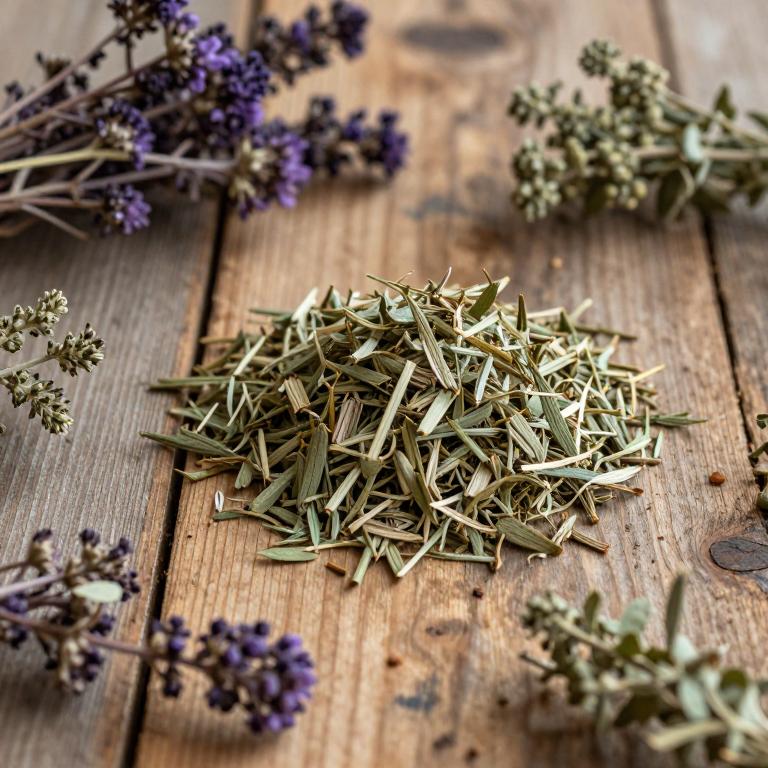
Irish-lace, scientifically known as Tagetes filifolia, is a delicate, thread-leaf marigold cherished for its fine, feathery foliage and vibrant blooms. Native to arid regions, this resilient perennial offers unique medicinal properties, traditionally used in herbal remedies to support skin health and provide soothing, aromatic benefits in wellness practices.
Names and Synonyms
Common Names
- Irish-lace
- Irish-lace marigold
- Irish lace marigold
Scientific Names
Accepted name
Tagetes filifoliaSynonyms
- Tagetes pusilla
- Tagetes scabra
- Tagetes pseudomicrantha
- Tagetes anisata
- Diglossus variabilis
- Enalcida foeniculifolia
- Solenotheca tenella
- Tagetes perretii
- Tagetes silenoides
- Tagetes dichotoma
- Enalcida pilifera
- Tagetes fragrantissima
- Tagetes foeniculacea
- Tagetes congesta
Regional and Traditional Names
Spanish:
- anisillo
- Anís
Sources: Wikidata, Catalogue of Life
Taxonomical Classification
This plant belongs to the kingdom Plantae and the phylum Streptophyta, falling under the class Equisetopsida and subclass Magnoliidae. Within the order Asterales, it is classified under the family Asteraceae and the genus Tagetes.
| Rank | Classification |
|---|---|
| Kingdom | Plantae |
| Phylum | Streptophyta |
| Class | Equisetopsida |
| Subclass | Magnoliidae |
| Order | Asterales |
| Family | Asteraceae |
| Genus | Tagetes |
Sources: The World Checklist of Vascular Plants (WCVP)
Distribution
This plant exhibits a broad geographical distribution that spans across several distinct regions. In the United States, its range extends into the southeastern territory, specifically reaching as far north as Maryland. The species is also widely distributed throughout various parts of Mexico. Its presence is noted in the central and northeastern regions of the country. Furthermore, it can be found across the Mexican Gulf and throughout the northwest.
| Region | Area |
|---|---|
| Southeastern U.S.A. | Maryland |
| Mexico | Mexico Central |
| Mexico | Mexico Northeast |
| Mexico | Mexico Gulf |
| Mexico | Mexico Northwest |
| Mexico | Mexico Southwest |
| Mexico | Mexico Southeast |
| Central America | Costa Rica |
| Central America | El Salvador |
| Central America | Guatemala |
Sources: The World Checklist of Vascular Plants (WCVP)
Botanical Identification
Ecology
The ecology of Tagetes filifolia is characterized by a broad and highly adaptable elevational distribution, allowing it to inhabit a diverse range of altitudinal gradients. It is found across a vast spectrum starting from sea level (0 m AMSL) and ascending to extreme high-altitude environments reaching a maximum of 4400 m AMSL. This wide vertical range indicates a high tolerance for varying climatic conditions and atmospheric pressures. On average, the species thrives at a mean elevation of 1950 m AMSL, suggesting that its optimal ecological niche is situated within mid-altitude montane zones, though its ability to persist from coastal lowlands to alpine heights demonstrates significant environmental plasticity.
- Elevational range max:
- 4400 m AMSL
- Elevational range mean:
- 1950 m AMSL
- Elevational range min:
- 0 m AMSL
Life history
The life history of Tagetes filifolia is characterized by an annual lifecycle, meaning the plant completes its entire biological progression—from germination to seed production—within a single growing season. As an annual species, it initiates its development following seasonal moisture availability, rapidly establishing a root system and producing its distinctive finely divided, thread-like foliage. During its vegetative phase, the plant focuses on accumulating energy to support its reproductive stage, eventually transitioning into a flowering phase where it produces composite blooms. Once pollination is successful and the seeds have matured, the parent plant completes its life cycle and dies, leaving behind a seed bank in the soil to ensure the commencement of the next generation when environmental conditions become favorable.
- Lifecycle :
- annual
Morphology
The morphology of Tagetes filifolia is characterized by a growth form classified as a herb and a forb, exhibiting a non-woody structure. It is a self-supporting plant that does not function as a climber, liana, or vine, and it maintains an independent existence rather than acting as a parasite. Reaching an average plant height of approximately 0.4 m, the species is strictly terrestrial in its habitat, showing no aquatic, semiaquatic, or epiphytic tendencies.
- Aquatic :
- terrestrial
- Climber :
- self-supporting
- Epiphyte :
- terrestrial
- Growth form :
- herb
- Growth form :
- forb
- Parasite :
- independent
- Plant height mean:
- 0.4 m
- Woodiness :
- non-woody
Physiology
The physiology of Tagetes filifolia is characterized by a C3 photosynthetic pathway, which dictates its carbon fixation processes and metabolic efficiency in varying environmental conditions. Unlike plants utilizing C4 or CAM pathways, this species relies on the enzyme Rubisco for initial carbon dioxide fixation within the mesophyll cells, typically favoring environments where moisture and temperature are moderate. Additionally, regarding its nutrient cycling capabilities, Tagetes filifolia is not a nitrogen fixer, meaning it does not possess a symbiotic relationship with nitrogen-fixing bacteria to convert atmospheric nitrogen into a bioavailable form and must instead rely on the uptake of nitrates and ammonium from the soil substrate.
- Nitrogen fixer :
- no
- Photosynthetic pathway :
- C3
Reproduction
The reproduction of Tagetes filifolia is primarily driven by biotic mechanisms, relying on living organisms to facilitate the transfer of pollen. The pollination syndrome of this species is characterized as biotic, indicating a strong evolutionary dependency on biological agents rather than abiotic factors like wind or water. Specifically, the plant utilizes an insect-mediated pollination strategy, where various insect species serve as the primary vectors for genetic exchange. This insect-driven process encompasses a diverse range of pollinators, including bees, butterflies, moths, flies, and beetles, which are attracted to the floral structures to ensure successful fertilization and subsequent seed production.
- Pollination syndrome :
- insect
- Pollination syndrome :
- biotic
Sources: Global Inventory of Floras and Traits (GIFT)
Chemicals
Tagetes filifolia has 39 reported phytochemicals identified across 0 scientific publications and several other databases. The most consistently reported chemicals include Citral, (+)-Limonene, 5-(4-acetoxy-1-butenyl)-2,2'-bithienyl, ALPHA-PINENE, ALPHA-THUJENE.
| Chemical | Supporting sources | Consensus |
|---|---|---|
| Citral | 2 supporting sources | ★☆☆☆☆ |
| (+)-Limonene | 1 supporting sources | ★☆☆☆☆ |
| 5-(4-acetoxy-1-butenyl)-2,2'-bithienyl | 1 supporting sources | ★☆☆☆☆ |
| ALPHA-PINENE | 1 supporting sources | ★☆☆☆☆ |
| ALPHA-THUJENE | 1 supporting sources | ★☆☆☆☆ |
| ANETHOLE | 1 supporting sources | ★☆☆☆☆ |
| Anisaldehyde | 1 supporting sources | ★☆☆☆☆ |
| BETA-CARYOPHYLLENE | 1 supporting sources | ★☆☆☆☆ |
| BETA-PINENE | 1 supporting sources | ★☆☆☆☆ |
| CA | 1 supporting sources | ★☆☆☆☆ |
Citral
- Dr. Duke
- International journal of molecular sciences
(+)-Limonene
- Dr. Duke
5-(4-acetoxy-1-butenyl)-2,2'-bithienyl
- Dr. Duke
ALPHA-PINENE
- Dr. Duke
ALPHA-THUJENE
- Dr. Duke
ANETHOLE
- Dr. Duke
Anisaldehyde
- Dr. Duke
BETA-CARYOPHYLLENE
- Dr. Duke
BETA-PINENE
- Dr. Duke
CA
- Plant foods for human nutrition (Dordrecht, Netherlands)
Activities
Tagetes filifolia has 134 reported activities identified across 0 scientific publications and several other databases. The most consistently reported activities include Antiinflammatory, AChE-Inhibitor, Acaricide, Allelochemic, Allelopathic.
| Activity | Supporting sources | Consensus |
|---|---|---|
| Antiinflammatory | 2 supporting sources | ★☆☆☆☆ |
| AChE-Inhibitor | 1 supporting sources | ★☆☆☆☆ |
| Acaricide | 1 supporting sources | ★☆☆☆☆ |
| Allelochemic | 1 supporting sources | ★☆☆☆☆ |
| Allelopathic | 1 supporting sources | ★☆☆☆☆ |
| Allergenic | 1 supporting sources | ★☆☆☆☆ |
| Analgesic | 1 supporting sources | ★☆☆☆☆ |
| Anesthetic | 1 supporting sources | ★☆☆☆☆ |
| AntiNF-kB | 1 supporting sources | ★☆☆☆☆ |
| AntiTNF | 1 supporting sources | ★☆☆☆☆ |
Antiinflammatory
- Dr. Duke
- Journal of ethnopharmacology
AChE-Inhibitor
- Dr. Duke
Acaricide
- Dr. Duke
Allelochemic
- Dr. Duke
Allelopathic
- Dr. Duke
Allergenic
- Dr. Duke
Analgesic
- Dr. Duke
Anesthetic
- Dr. Duke
AntiNF-kB
- Dr. Duke
AntiTNF
- Dr. Duke
Preparations
Tagetes filifolia has 2 reported preparations identified across 0 scientific publications and several other databases. The most consistently reported preparations include Ethanolic extracts, essential oils.
| Preparation | Supporting sources | Consensus |
|---|---|---|
| Ethanolic extracts | 1 supporting sources | ★☆☆☆☆ |
| Essential oils | 1 supporting sources | ★☆☆☆☆ |
Ethanolic extracts
- Journal of ethnopharmacology
Essential oils
- International journal of molecular sciences