low-veld toadtree
Tabernaemontana elegans · Accepted scientific name
Scientific literature: Very Sparse (39 studies) · ★☆☆☆☆
Low-veld toadtree, scientifically known as Tabernaemontana elegans, is a versatile evergreen shrub native to African subtropical regions. Renowned for its glossy leaves and fragrant white flowers, this medicinal plant is deeply embedded in traditional healing practices, where its various parts are utilized to treat diverse ailments and inflammatory conditions.
- Family
- Apocynaceae
- Native range
- Africa
- Parts used
- Leaf · Root
- Common names
- Low-Veld Toadtree · Lowveld Toadtree · 1 more
- Scientific synonyms
- Leptopharyngia Elegans · Conopharyngia Elegans
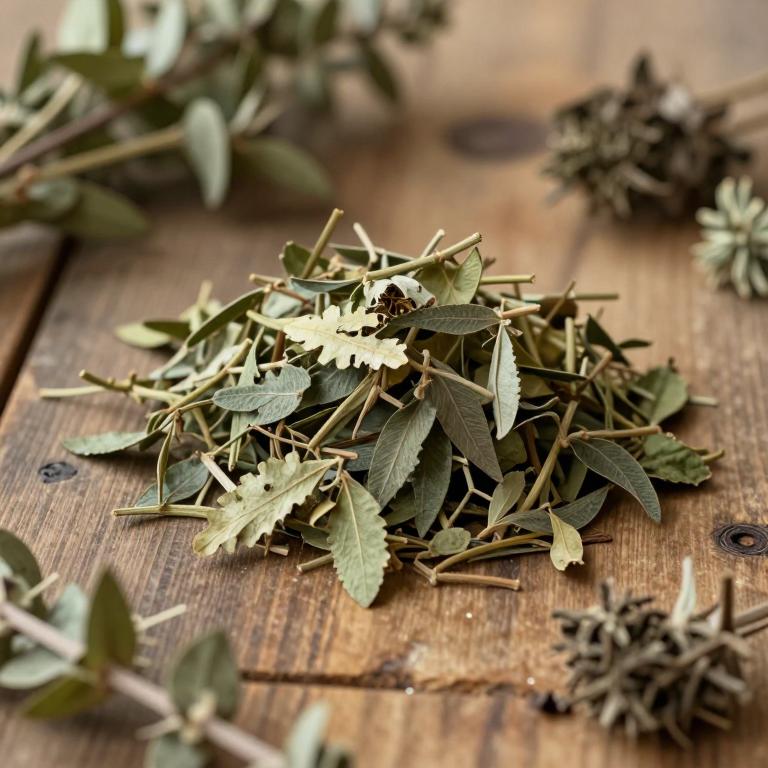
Names and Synonyms
Common Names
- low-veld toadtree
- Lowveld Toadtree
- Warty Toadtree
Scientific Names
Accepted name
Tabernaemontana elegansSynonyms
- Leptopharyngia elegans
- Conopharyngia elegans
Regional and Traditional Names
German:
- Zierlicher Krötenbaum
Sources: Wikidata, Catalogue of Life
Taxonomical Classification
This plant belongs to the kingdom Plantae within the phylum Streptophyta and the class Equisetopsida. It is classified under the subclass Magnoliidae and the order Gentianales, falling into the family Apocynaceae. Finally, it is categorized under the genus Tabernaemontana.
| Rank | Classification |
|---|---|
| Kingdom | Plantae |
| Phylum | Streptophyta |
| Class | Equisetopsida |
| Subclass | Magnoliidae |
| Order | Gentianales |
| Family | Apocynaceae |
| Genus | Tabernaemontana |
Sources: The World Checklist of Vascular Plants (WCVP)
Distribution
This plant exhibits a diverse geographical distribution across several regions of the African continent. In Northeast Tropical Africa, it can be found growing in Somalia. Its presence extends into East Tropical Africa, specifically within the countries of Kenya and Tanzania. Moving southward, the species is also documented in South Tropical Africa. Within this southern region, the plant is located in both Malawi and Mozambique.
| Region | Area |
|---|---|
| Northeast Tropical Africa | Somalia |
| East Tropical Africa | Kenya |
| East Tropical Africa | Tanzania |
| South Tropical Africa | Malawi |
| South Tropical Africa | Mozambique |
| South Tropical Africa | Zimbabwe |
| Southern Africa | KwaZulu-Natal |
| Southern Africa | Eswatini |
| Southern Africa | Northern Provinces |
Sources: The World Checklist of Vascular Plants (WCVP)
Botanical Identification
Ecology
The ecology of Tabernaemontana elegans is characterized by its adaptability to diverse topographical gradients and specific vegetative environments. This species typically thrives within bushland habitats, where it can establish itself amidst various scrubland and woody vegetation structures. Its altitudinal distribution is broad, spanning from sea level up to a maximum elevation of 1370 m AMSL. This significant elevational range, starting from 0 m AMSL, indicates a high tolerance for varying climatic conditions and pressure gradients, allowing the plant to colonize both lowland tropical zones and mid-elevation montane regions.
- Elevational range max:
- 1370 m AMSL
- Elevational range min:
- 0 m AMSL
- Habitat :
- bushland
Life history
The life history of Tabernaemontana elegans is characterized by its status as a perennial plant, allowing it to persist through multiple growing seasons. In terms of its structural growth habit, it is classified as a phanerophyte, meaning its perennating buds are located on aerial shoots well above the ground, typically forming woody shrubs or small trees. Additionally, it can be categorized as a nanophanerophyte, reflecting a growth form where the woody stems remain relatively low to the ground compared to larger forest canopy species.
- Life form :
- nanophanerophyte
- Life form :
- phanerophyte
- Lifecycle :
- perennial
Morphology
The morphology of Tabernaemontana elegans is characterized by its growth form as a woody tree, which functions as a self-supporting structure rather than a climber. As an independent organism, it does not exhibit parasitic behavior and is strictly terrestrial in its habitat, neither being aquatic nor an epiphyte. The plant's stature varies significantly depending on environmental conditions, with a recorded minimum height of 1.5 m, a mean height of approximately 7 m, and a maximum potential height reaching up to 10 m.
- Aquatic :
- terrestrial
- Climber :
- self-supporting
- Epiphyte :
- terrestrial
- Growth form :
- tree
- Parasite :
- independent
- Plant height max:
- 10 m
- Plant height mean:
- 7 m
- Plant height min:
- 1.5 m
- Woodiness :
- woody
Physiology
The physiology of Tabernaemontana elegans is characterized by its specialized metabolic pathways and distinct nutrient acquisition strategies. As a woody shrub or small tree, its physiological processes are centered on efficient photosynthesis and the synthesis of complex secondary metabolites, particularly indole alkaloids, which serve as chemical defense mechanisms against herbivory. Regarding its nutrient cycling and symbiotic relationships, the plant does not exhibit the capacity for biological nitrogen fixation; specifically, it is not a nitrogen fixer, meaning it lacks the symbiotic relationship with diazotrophic bacteria required to convert atmospheric nitrogen into usable forms. Instead, it relies on the uptake of nitrates and ammonium from the soil through its root system to support protein synthesis and overall vegetative growth. Its physiological vigor is closely tied to soil moisture availability and light intensity, which dictate its transpiration rates and the metabolic cost of maintaining its bioactive chemical profile.
- Nitrogen fixer :
- no
Sources: Global Inventory of Floras and Traits (GIFT)
Plant Parts
Tabernaemontana elegans has 3 reported plant parts identified across 5 scientific publications and several other databases that are studied for medicinal purposes. The most consistently reported plant part include leaf, root, stem.
| Plant part | Supporting sources | Consensus |
|---|---|---|
| Leaf | 2 supporting sources | ★☆☆☆☆ |
| Root | 2 supporting sources | ★☆☆☆☆ |
| Stem | 1 supporting sources | ★☆☆☆☆ |
Leaf
- Journal of nematology
- Journal of ethnopharmacology
Root
- Journal of natural products
- Journal of ethnopharmacology
Stem
- Journal of nematology
Chemicals
Tabernaemontana elegans has 9 reported phytochemicals identified across 5 scientific publications and several other databases. The most consistently reported chemicals include CORONARIDINE, Compound 7, Conodurine, Dregamine, Monoterpene Indole Alkaloids.
| Chemical | Supporting sources | Consensus |
|---|---|---|
| CORONARIDINE | 1 supporting sources | ★☆☆☆☆ |
| Compound 7 | 1 supporting sources | ★☆☆☆☆ |
| Conodurine | 1 supporting sources | ★☆☆☆☆ |
| Dregamine | 1 supporting sources | ★☆☆☆☆ |
| Monoterpene Indole Alkaloids | 1 supporting sources | ★☆☆☆☆ |
| Pachysiphine | 1 supporting sources | ★☆☆☆☆ |
| Tabernaemontanine | 1 supporting sources | ★☆☆☆☆ |
| Tabersonine | 1 supporting sources | ★☆☆☆☆ |
| vinblastine | 1 supporting sources | ★☆☆☆☆ |
CORONARIDINE
- Plant physiology and biochemistry : PPB
Compound 7
- Journal of ethnopharmacology
Conodurine
- Plant physiology and biochemistry : PPB
Dregamine
- Journal of ethnopharmacology
Monoterpene Indole Alkaloids
- International journal of molecular sciences
Pachysiphine
- The Plant journal : for cell and molecular biology
Tabernaemontanine
- Journal of ethnopharmacology
Tabersonine
- The Plant journal : for cell and molecular biology
vinblastine
- Plant physiology and biochemistry : PPB
Activities
Tabernaemontana elegans has 4 reported activities identified across 5 scientific publications and several other databases. The most consistently reported activities include Anticancer, Antibacterial, Antihypertensive, Antitumor.
| Activity | Supporting sources | Consensus |
|---|---|---|
| Anticancer | 2 supporting sources | ★☆☆☆☆ |
| Antibacterial | 1 supporting sources | ★☆☆☆☆ |
| Antihypertensive | 1 supporting sources | ★☆☆☆☆ |
| Antitumor | 1 supporting sources | ★☆☆☆☆ |
Anticancer
- The Plant journal : for cell and molecular biology
- Plant physiology and biochemistry : PPB
Antibacterial
- International journal of molecular sciences
Antihypertensive
- The Plant journal : for cell and molecular biology
Antitumor
- The Plant journal : for cell and molecular biology
Conditions
Tabernaemontana elegans has 17 reported investigations on conditions identified across 5 scientific publications and several other databases. The most consistently reported conditions include Helicobacter pylori, Mycobacterium smegmatis, Mycobacterium tuberculosis H37Rv, antihypertensive, cancer.
| Condition | Supporting sources | Consensus |
|---|---|---|
| Helicobacter pylori | 1 supporting sources | ★☆☆☆☆ |
| Mycobacterium smegmatis | 1 supporting sources | ★☆☆☆☆ |
| Mycobacterium tuberculosis h37rv | 1 supporting sources | ★☆☆☆☆ |
| Antihypertensive | 1 supporting sources | ★☆☆☆☆ |
| Cancer | 1 supporting sources | ★☆☆☆☆ |
| Colon cancer | 1 supporting sources | ★☆☆☆☆ |
| Colorectal cancer | 1 supporting sources | ★☆☆☆☆ |
| Gastric cancer | 1 supporting sources | ★☆☆☆☆ |
| Gastric ulcers | 1 supporting sources | ★☆☆☆☆ |
| Gastrointestinal diseases | 1 supporting sources | ★☆☆☆☆ |
Helicobacter pylori
- International journal of molecular sciences
Mycobacterium smegmatis
- Microorganisms
Mycobacterium tuberculosis h37rv
- Journal of ethnopharmacology
Antihypertensive
- The Plant journal : for cell and molecular biology
Cancer
- Journal of ethnopharmacology
Colon cancer
- Journal of ethnopharmacology
Colorectal cancer
- Journal of ethnopharmacology
Gastric cancer
- International journal of molecular sciences
Gastric ulcers
- International journal of molecular sciences
Gastrointestinal diseases
- International journal of molecular sciences
Preparations
Tabernaemontana elegans has 3 reported preparations identified across 5 scientific publications and several other databases. The most consistently reported preparations include Crude methanol and water extracts, ethyl acetate extract, lipophilic extracts.
| Preparation | Supporting sources | Consensus |
|---|---|---|
| Crude methanol and water extracts | 1 supporting sources | ★☆☆☆☆ |
| Ethyl acetate extract | 1 supporting sources | ★☆☆☆☆ |
| Lipophilic extracts | 1 supporting sources | ★☆☆☆☆ |
Crude methanol and water extracts
- Human & experimental toxicology
Ethyl acetate extract
- Journal of ethnopharmacology
Lipophilic extracts
- Journal of ethnopharmacology