Syzygium claviflorum
Syzygium claviflorum · Accepted scientific name
Scientific literature: Moderate (117 studies) · ★★★☆☆
, scientifically known as Syzygium claviflorum, is a remarkable medicinal plant valued for its diverse therapeutic properties. Often found in tropical regions, it is rich in bioactive compounds that offer antioxidant, anti-inflammatory, and antimicrobial benefits. Traditional medicine utilizes various parts of this plant to treat various ailments effectively.
- Family
- Myrtaceae
- Native range
- Asia-Temperate
- Parts used
- Leaf
- Common names
- Not available
- Scientific synonyms
- Acmenosperma Claviflorum · Acmena Wightiana · 32 more
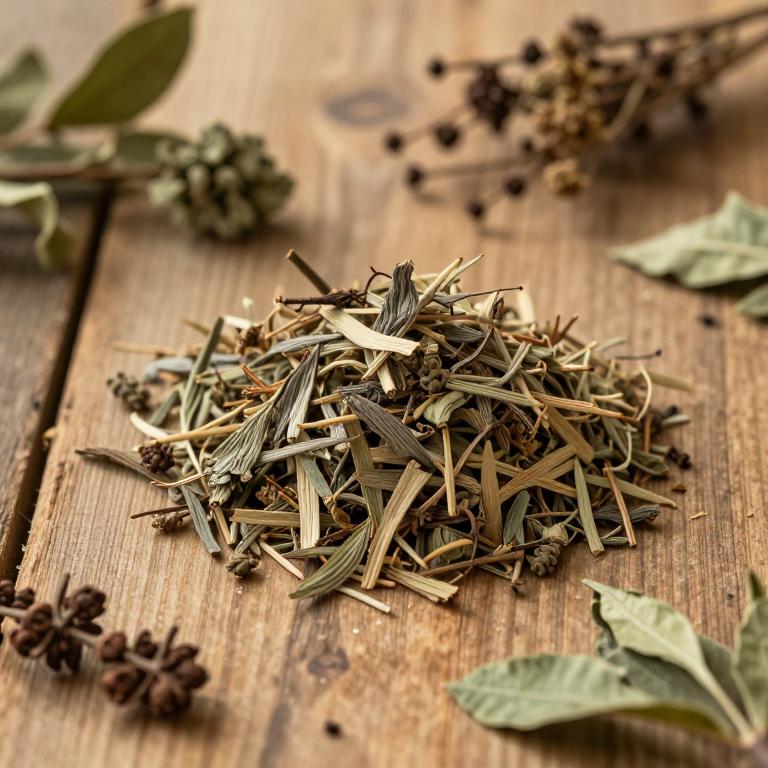
Names and Synonyms
Scientific Names
Accepted name
Syzygium claviflorumSynonyms
- Acmenosperma claviflorum
- Acmena wightiana
- Eugenia wightiana
- Syzygium ruminatum
- Eugenia claviflora var. maingayi
- Syzygium claviflorum var. maingayi
- Acmena leptantha
- Jambosa clavata
- Eugenia viridifolia
- Eugenia ruminata
- Eugenia maingayi
- Eugenia claviflora
- Eugenia claviflora var. excavata
- Eugenia claviflora var. glandulosa
- Eugenia fraseri
- Eugenia baviensis
- Acmena claviflora
- Jambosa borneensis
- Eugenia clavata
- Jambosa melanocarpa
- Clavimyrtus claviflora
- Eugenia leptalea
- Eugenia claviflora var. leptantha
- Eugenia rhododendrifolia
- Eugenia rhododendrifolia f. longifolia
- Syzygium claviflorum var. excavatum
- Syzygium claviflorum var. glandulosum
- Syzygium clavatum
- Syzygium leptanthum
- Syzygium fraseri
- Syzygium baviense
- Syzygium wightianum
- Syzygium viridifolium
- Syzygium rhododendrifolium
Sources: Wikidata, Catalogue of Life
Taxonomical Classification
This plant belongs to the kingdom Plantae and is classified under the phylum Streptophyta and class Equisetopsida. Within the subclass Magnoliidae, it is categorized under the order Myrtales and the family Myrtaceae. Finally, it is placed within the genus Syzygium under the species name Syzygium claviflorum.
| Rank | Classification |
|---|---|
| Kingdom | Plantae |
| Phylum | Streptophyta |
| Class | Equisetopsida |
| Subclass | Magnoliidae |
| Order | Myrtales |
| Family | Myrtaceae |
| Genus | Syzygium |
Sources: The World Checklist of Vascular Plants (WCVP)
Distribution
This plant exhibits a diverse geographical range across several key regions in Asia. In China, its distribution is specifically noted in the South-Central areas as well as on the island of Hainan. The species also extends into the Indian Subcontinent, where it can be found in Assam and throughout Bangladesh. Furthermore, it inhabits the rugged landscapes of the East Himalaya. Together, these locations highlight a broad natural habitat spanning from Southern China to the eastern reaches of the Indian Subcontinent.
| Region | Area |
|---|---|
| China | China South-Central |
| China | Hainan |
| Indian Subcontinent | Assam |
| Indian Subcontinent | Bangladesh |
| Indian Subcontinent | East Himalaya |
| Indian Subcontinent | India |
| Indian Subcontinent | Sri Lanka |
| Indo-China | Andaman Is. |
| Indo-China | Cambodia |
| Indo-China | Laos |
Sources: The World Checklist of Vascular Plants (WCVP)
Botanical Identification
Ecology
The ecology of Syzygium claviflorum is characterized by its specific distribution within low-to-mid altitude tropical ecosystems. This species primarily thrives in environments situated at a mean elevation of 200 m AMSL, with its recorded presence starting from a minimum baseline of 200 m AMSL. While it is most commonly found in these lower elevations, its ecological niche extends vertically up to a maximum elevation of 1000 m AMSL. This altitudinal range suggests a preference for humid, lowland, or sub-montane habitats where it can adapt to varying topographical gradients within its established environmental constraints.
- Elevational range max:
- 1000 m AMSL
- Elevational range mean:
- 200 m AMSL
Life history
The life history of Syzygium claviflorum is characterized by its status as a perennial organism, ensuring its presence in the ecosystem over many successive growing seasons. As a phanerophyte, the plant maintains its photosynthetic organs on elevated woody structures, a life form that allows it to thrive within its specific ecological niche. Furthermore, it exhibits an evergreen deciduousness pattern, meaning it retains its foliage throughout the year rather than shedding it seasonally, contributing to its continuous metabolic activity and structural stability.
- Deciduousness :
- evergreen
- Life form :
- phanerophyte
- Lifecycle :
- perennial
Morphology
The morphology of Syzygium claviflorum is characterized by its robust growth form as a woody tree. This species is a terrestrial, self-supporting plant that does not function as a climber, liana, or vine, nor does it exhibit epiphytic or parasitic behaviors, maintaining an independent life cycle. In terms of stature, the plant displays significant vertical development, with a height ranging from a minimum of 3 meters to a maximum of 15 meters, though it can reach an average height of approximately 20 meters.
- Aquatic :
- terrestrial
- Climber :
- self-supporting
- Epiphyte :
- terrestrial
- Growth form :
- tree
- Parasite :
- independent
- Plant height max:
- 15 m
- Plant height mean:
- 20 m
- Plant height min:
- 3 m
- Woodiness :
- woody
Physiology
The physiology of Syzygium claviflorum is characterized by a C3 photosynthetic pathway, which dictates its metabolic processes and carbon fixation efficiency. The vegetative structure features leaves that exhibit significant morphological variation, with a mean leaf length of 14.25 cm and a minimum length of 9 cm, reaching a maximum of 21 cm. The leaf width also shows a broad range, maintaining a mean of 4.25 cm with a minimum width of 3.5 cm and a maximum width of 8 cm. Furthermore, this species does not function as a nitrogen fixer, relying instead on external soil nutrient availability rather than symbiotic nitrogen fixation to support its physiological development.
- Leaf length max:
- 21 cm
- Leaf length mean:
- 14.25 cm
- Leaf length min:
- 9 cm
- Leaf width max:
- 8 cm
- Leaf width mean:
- 4.25 cm
- Leaf width min:
- 3.5 cm
- Nitrogen fixer :
- no
- Photosynthetic pathway :
- C3
Reproduction
The reproduction of Syzygium claviflorum is driven by biotic pollination syndromes, specifically relying on insects and bees to facilitate the transfer of pollen. The flowering process is characterized by inflorescences that are relatively small, ranging in length from a minimum of 0.015 m to a maximum of 0.02 m. Following successful pollination, the plant produces fruit with varying dimensions; the fruit length typically averages 1.375 cm, with a range spanning from 1 cm to a maximum of 2 cm, while the fruit width averages 0.6 cm, ranging from a minimum of 0.5 cm to a maximum of 0.8 cm. The reproductive cycle concludes with the development of seeds, which exhibit a consistent mass of approximately 0.232318 g, representing both the mean and the maximum/minimum recorded values for the species.
- Fruit length max:
- 2 cm
- Fruit length mean:
- 1.375 cm
- Fruit length min:
- 1 cm
- Fruit width max:
- 0.8 cm
- Fruit width mean:
- 0.6 cm
- Fruit width min:
- 0.5 cm
- Inflorescence length max:
- 0.02 m
- Inflorescence length min:
- 0.015 m
- Pollination syndrome :
- insect
- Pollination syndrome :
- bee
- Pollination syndrome :
- biotic
- Seed mass mean:
- 0.232318 g
Sources: Global Inventory of Floras and Traits (GIFT)
Plant Parts
Syzygium claviflorum has 1 reported plant parts identified across 1 scientific publications and several other databases that are studied for medicinal purposes. The most consistently reported plant part include leaf.
| Plant part | Supporting sources | Consensus |
|---|---|---|
| Leaf | 1 supporting sources | ★☆☆☆☆ |
Leaf
- Journal of natural products
Chemicals
Syzygium claviflorum has 5 reported phytochemicals identified across 1 scientific publications and several other databases. The most consistently reported chemicals include OLEANOLIC ACID, betulinic acid, Arjunolic acid, Asiatic acid, Ursolic acid.
| Chemical | Supporting sources | Consensus |
|---|---|---|
| OLEANOLIC ACID | 2 supporting sources | ★☆☆☆☆ |
| betulinic acid | 2 supporting sources | ★☆☆☆☆ |
| Arjunolic acid | 1 supporting sources | ★☆☆☆☆ |
| Asiatic acid | 1 supporting sources | ★☆☆☆☆ |
| Ursolic acid | 1 supporting sources | ★☆☆☆☆ |
OLEANOLIC ACID
- Dr. Duke
- Journal of natural products
betulinic acid
- Dr. Duke
- Journal of natural products
Arjunolic acid
- Dr. Duke
Asiatic acid
- Dr. Duke
Ursolic acid
- Dr. Duke
Activities
Syzygium claviflorum has 108 reported activities identified across 1 scientific publications and several other databases. The most consistently reported activities include Abortifacient, Analgesic, Anthelmintic, AntiEBV, AntiHIV.
| Activity | Supporting sources | Consensus |
|---|---|---|
| Abortifacient | 1 supporting sources | ★☆☆☆☆ |
| Analgesic | 1 supporting sources | ★☆☆☆☆ |
| Anthelmintic | 1 supporting sources | ★☆☆☆☆ |
| AntiEBV | 1 supporting sources | ★☆☆☆☆ |
| AntiHIV | 1 supporting sources | ★☆☆☆☆ |
| AntiPGE2 | 1 supporting sources | ★☆☆☆☆ |
| AntiTGF-beta | 1 supporting sources | ★☆☆☆☆ |
| Antiallergic | 1 supporting sources | ★☆☆☆☆ |
| Antialzheimeran | 1 supporting sources | ★☆☆☆☆ |
| Antiarrhythmic | 1 supporting sources | ★☆☆☆☆ |
Abortifacient
- Dr. Duke
Analgesic
- Dr. Duke
Anthelmintic
- Dr. Duke
AntiEBV
- Dr. Duke
AntiHIV
- Dr. Duke
AntiPGE2
- Dr. Duke
AntiTGF-beta
- Dr. Duke
Antiallergic
- Dr. Duke
Antialzheimeran
- Dr. Duke
Antiarrhythmic
- Dr. Duke
Conditions
Syzygium claviflorum has 1 reported investigations on conditions identified across 1 scientific publications and several other databases. The most consistently reported conditions include HIV-1.
| Condition | Supporting sources | Consensus |
|---|---|---|
| Hiv-1 | 1 supporting sources | ★☆☆☆☆ |
Hiv-1
- Journal of natural products
Preparations
Syzygium claviflorum has 1 reported preparations identified across 1 scientific publications and several other databases. The most consistently reported preparations include leaves.
| Preparation | Supporting sources | Consensus |
|---|---|---|
| Leaves | 1 supporting sources | ★☆☆☆☆ |
Leaves
- Journal of natural products