Sweetleaf
Symplocos · Accepted scientific name
Scientific literature: Very Sparse (14 studies) · ★☆☆☆☆
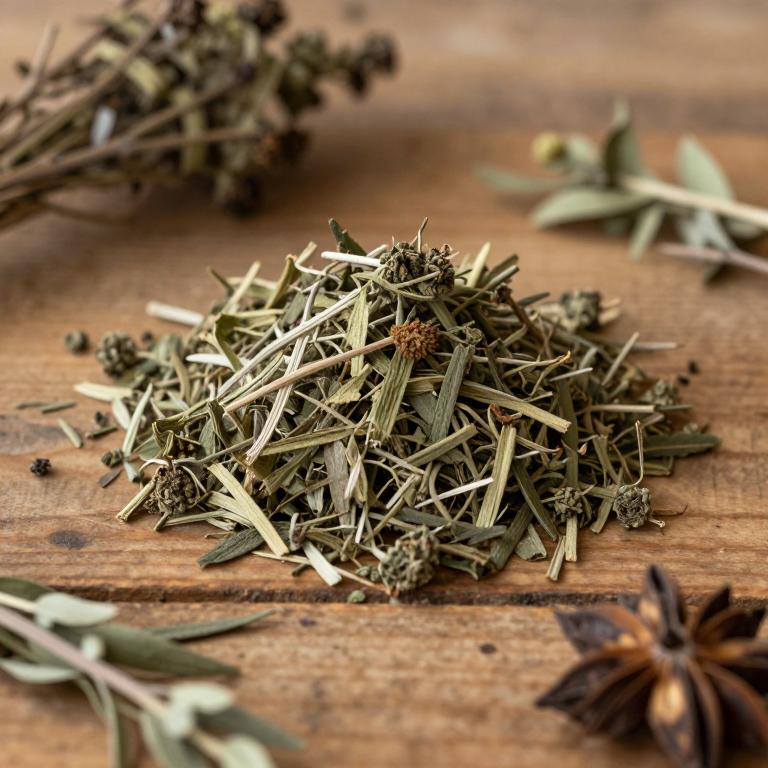
Sweetleaf, scientifically known as Symplocos, is a versatile medicinal plant prized for its diverse therapeutic properties. Renowned in traditional medicine, its leaves and bark contain bioactive compounds that offer antioxidant, anti-inflammatory, and antimicrobial benefits. This resilient shrub remains a vital resource for treating various ailments and enhancing holistic wellness.
- Family
- Symplocaceae
- Native range
- Asia-Temperate
- Parts used
- Not available
- Common names
- Sweetleaf
- Scientific synonyms
- Cordyloblaste · Decadia · 20 more
Names and Synonyms
Common Names
- Sweetleaf
Scientific Names
Accepted name
SymplocosSynonyms
- Cordyloblaste
- Decadia
- Chasseloupia
- Cofer
- Stemmatosiphum
- Mongezia
- Drupatris
- Ciponima
- Hosea
- Bobu
- Hopea
- Suringaria
- Bobua
- Hypopogon
- Dicalix
- Sariava
- Protohopea
- Praealstonia
- Palura
- Barberina
- Carlea
- Lodhra
Sources: Wikidata, Catalogue of Life
Taxonomical Classification
This plant belongs to the kingdom Plantae and the phylum Streptophyta, falling under the class Equisetopsida and subclass Magnoliidae. It is further classified within the order Ericales and the family Symplocaceae. Ultimately, it is identified by the genus Symplocos.
| Rank | Classification |
|---|---|
| Kingdom | Plantae |
| Phylum | Streptophyta |
| Class | Equisetopsida |
| Subclass | Magnoliidae |
| Order | Ericales |
| Family | Symplocaceae |
| Genus | Symplocos |
Sources: The World Checklist of Vascular Plants (WCVP)
Distribution
This plant exhibits a broad geographical distribution across several distinct regions of China. It can be found throughout the China South-Central area, spanning diverse ecological zones. The species is also documented in the tropical environment of Hainan. Moving northward, its range extends into the vast landscapes of Inner Mongolia. Finally, its presence is noted in both Manchuria and the China North-Central regions.
| Region | Area |
|---|---|
| China | China South-Central |
| China | Hainan |
| China | Inner Mongolia |
| China | Manchuria |
| China | China North-Central |
| China | China Southeast |
| China | Tibet |
| Eastern Asia | Japan |
| Eastern Asia | Korea |
| Eastern Asia | Nansei-shoto |
Sources: The World Checklist of Vascular Plants (WCVP)
Chemicals
Symplocos has 7 reported phytochemicals identified across 0 scientific publications and several other databases. The most consistently reported chemicals include CR, Flavonoids, Iridoids, Lignans, Phenols.
| Chemical | Supporting sources | Consensus |
|---|---|---|
| CR | 1 supporting sources | ★☆☆☆☆ |
| Flavonoids | 1 supporting sources | ★☆☆☆☆ |
| Iridoids | 1 supporting sources | ★☆☆☆☆ |
| Lignans | 1 supporting sources | ★☆☆☆☆ |
| Phenols | 1 supporting sources | ★☆☆☆☆ |
| Steroids | 1 supporting sources | ★☆☆☆☆ |
| Terpenoids | 1 supporting sources | ★☆☆☆☆ |
CR
- Food additives & contaminants. Part B, Surveillance
Flavonoids
- Journal of Asian natural products research
Iridoids
- Journal of Asian natural products research
Lignans
- Journal of Asian natural products research
Phenols
- Journal of Asian natural products research
Steroids
- Journal of Asian natural products research
Terpenoids
- Journal of Asian natural products research
Conditions
Symplocos has 6 reported investigations on conditions identified across 0 scientific publications and several other databases. The most consistently reported conditions include fever, hemostasis, leprosy, malaria, menorrhagia.
| Condition | Supporting sources | Consensus |
|---|---|---|
| Fever | 1 supporting sources | ★☆☆☆☆ |
| Hemostasis | 1 supporting sources | ★☆☆☆☆ |
| Leprosy | 1 supporting sources | ★☆☆☆☆ |
| Malaria | 1 supporting sources | ★☆☆☆☆ |
| Menorrhagia | 1 supporting sources | ★☆☆☆☆ |
| Ulcers | 1 supporting sources | ★☆☆☆☆ |
Fever
- Zhongguo Zhong yao za zhi = Zhongguo zhongyao zazhi = China journal of Chinese materia medica
Hemostasis
- Zhongguo Zhong yao za zhi = Zhongguo zhongyao zazhi = China journal of Chinese materia medica
Leprosy
- Journal of Asian natural products research
Malaria
- Journal of Asian natural products research
Menorrhagia
- Journal of Asian natural products research
Ulcers
- Journal of Asian natural products research