Symphoricarpos albus
Symphoricarpos albus · Accepted scientific name
Scientific literature: Very Sparse (0 studies) · ★☆☆☆☆
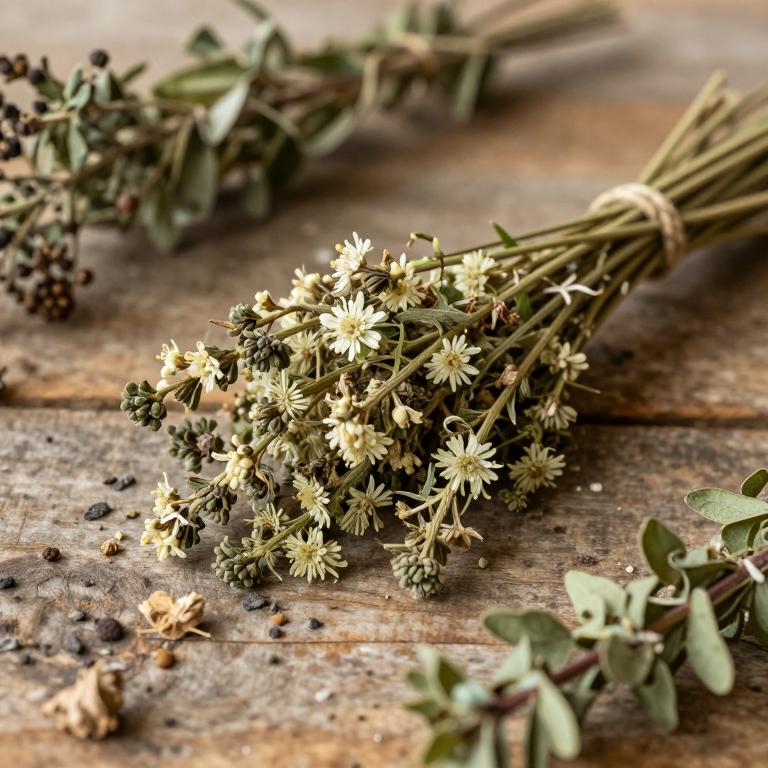
Symphoricarpos albus, commonly known as snowberry, is a versatile deciduous shrub native to various regions of North America. This plant is easily identified by its ability to produce clusters of small, white, berry-like drupes that persist through the winter. While often used for ornamental landscaping, different parts of the plant have historical significance in traditional herbal practices. Specifically, the bark is utilized in certain botanical preparations for its unique medicinal properties. Understanding its growth habits and traditional uses makes this shrub a fascinating subject for both gardeners and ethnobotanists alike.
- Synonyms
- Symphoria Albus · Xylosteon Album
- Common names
- Not available
- Family
- Caprifoliaceae
- Distribution
- Not available
- Plant Parts
- Not available
Classification
Common Names
Symphoricarpos albus is a versatile shrub widely recognized by its English common name, Snowberry. In German-speaking regions, this plant is affectionately known as the Weiße Schneebeere. The species is easily identified by the clusters of white, berry-like fruit that lend it its descriptive titles. Understanding these regional names helps gardeners and botanists connect with the plant across different linguistic landscapes. Whether called Snowberry or Weiße Schneebeere, this hardy shrub remains a beloved feature in many landscapes.
Sources: Catalogue of Life (COL)
Synonyms
Symphoricarpos albus is a botanical subject that is frequently identified by various alternative names in scientific literature. Within different taxonomic discussions, it is recognized by the synonym Symphoria albus. The plant is also occasionally referred to as Vaccinium album in certain historical contexts. Furthermore, the name Xylosteon album serves as another recognized synonym for this species. Understanding these various designations is essential for navigating the complex web of botanical nomenclature.
Sources: The World Checklist of Vascular Plants (WCVP)
Taxonomy
Symphoricarpos albus is a distinctive species belonging to the kingdom Plantae. Within this vast botanical kingdom, the plant is classified under the class Equisetopsida. It further falls into the order Dipsacales, showcasing its specific evolutionary lineage. As a member of the family Caprifoliaceae, it shares structural traits with many well-known honeysuckles. Ultimately, this plant is identified by its specific genus, Symphoricarpos, which defines its unique botanical identity.
| Rank | Classification |
|---|---|
| Kingdom | Plantae |
| Phylum | Streptophyta |
| Class | Equisetopsida |
| Subclass | Magnoliidae |
| Order | Dipsacales |
| Family | Caprifoliaceae |
| Genus | Symphoricarpos |
Sources: The World Checklist of Vascular Plants (WCVP)
Distribution
Geographic Regions
Symphoricarpos albus exhibits a widespread distribution that spans across much of the temperate regions of Eurasia. In Asia, the species can be found throughout Central Asia, specifically within Uzbekistan, as well as across various parts of Siberia including the Altay and West Siberia regions. Its reach extends into Europe, where it is commonly established within the Baltic States. Furthermore, the plant is frequently observed throughout Eastern Europe and Central European Russia. This broad geographic range highlights the adaptability of the species across diverse temperate landscapes.
Sources: The World Checklist of Vascular Plants (WCVP)
Identification
Morphology
Symphoricarpos albus is a versatile shrub that thrives as a sturdy, self-supporting plant in various landscapes. This species typically reaches a modest height, generally ranging between 1 meter and 2.5 meters. More specifically, many specimens settle into a mature stature of at least 1.205 meters. Its structural integrity allows it to maintain a consistent shape without the need for external support. Overall, its manageable size and robust growth form make it an excellent choice for garden borders.
Sources: Global Inventory of Floras and Traits (GIFT)
Biological Activities
Compounds
Conditions
Symphoricarpos albus is utilized by Salishan native elders to treat various dermatological complaints. This specific plant is one of several species whose bark is prepared for medicinal purposes. In traditional practices, the bark of this plant may be processed into infusions or decoctions. These medicinal preparations can be drunk or applied externally to the skin as a wash. This application helps address skin-related ailments within the community.
Preparations
Symphoricarpos albus is prepared as bark to address specific medicinal needs within Salishan traditions. According to interviews with Saanich and Cowichan Coast Salish elders, this particular plant bark is utilized for treating dermatological complaints. These traditional preparations often involve creating infusions or decoctions from the harvested material. Once prepared, the medicine can be consumed as a drink or applied externally to the skin as a wash. This practice highlights the specific role of Symphoricarpos albus bark in managing skin-related ailments.