Swertia speciosa
Swertia speciosa · Accepted scientific name
Scientific literature: Very Sparse (2 studies) · ★☆☆☆☆
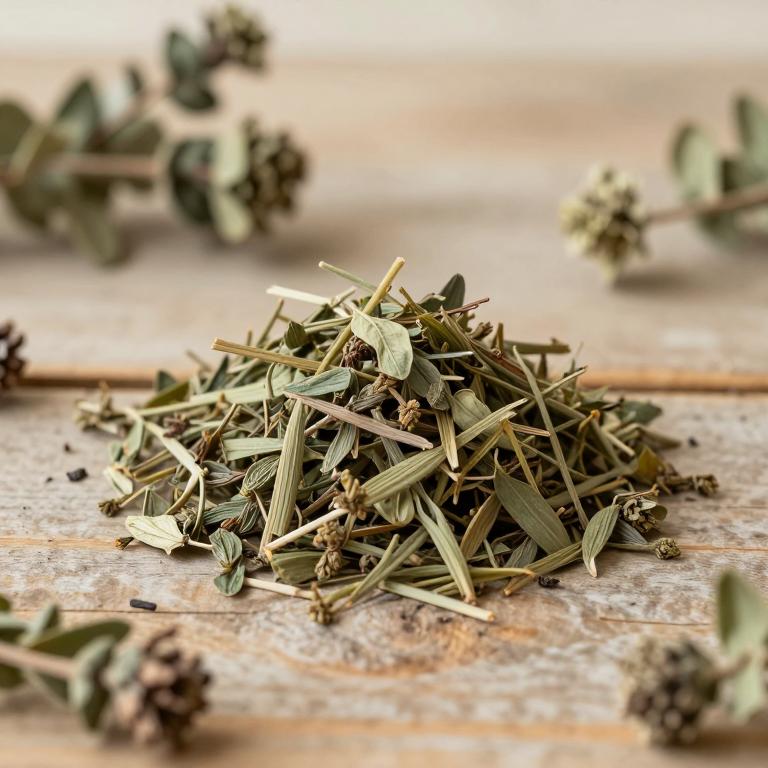
Swertia speciosa, scientifically known as Swertia speciosa, is a significant medicinal herb native to the Himalayan regions. Renowned in Ayurveda as Chirata, it possesses potent bitter properties. This plant is widely utilized for its anti-inflammatory, antipyretic, and digestive benefits, serving as a vital remedy for various metabolic ailments.
- Family
- Gentianaceae
- Native range
- Asia-Temperate
- Parts used
- Rhizome
- Common names
- Not available
- Scientific synonyms
- Not available
Names and Synonyms
Scientific Names
Accepted name
Swertia speciosaSources: Wikidata
Taxonomical Classification
This plant belongs to the kingdom Plantae and is classified under the phylum Streptophyta and class Equisetopsida. Within the subclass Magnoliidae and order Gentianales, it is a member of the Gentianaceae family. Finally, it is taxonomically identified under the genus Swertia.
| Rank | Classification |
|---|---|
| Kingdom | Plantae |
| Phylum | Streptophyta |
| Class | Equisetopsida |
| Subclass | Magnoliidae |
| Order | Gentianales |
| Family | Gentianaceae |
| Genus | Swertia |
Sources: The World Checklist of Vascular Plants (WCVP)
Distribution
This plant exhibits a widespread presence across several key regions of the Asian continent. In China, its distribution is specifically noted within the high-altitude areas of Tibet. Moving into the Indian Subcontinent, it can be found throughout the rugged terrain of the East Himalaya and the West Himalaya. Furthermore, the species is widely distributed across the nation of Nepal. Finally, its geographical range extends into the mountainous regions of Pakistan.
| Region | Area |
|---|---|
| China | Tibet |
| Indian Subcontinent | East Himalaya |
| Indian Subcontinent | Nepal |
| Indian Subcontinent | Pakistan |
| Indian Subcontinent | West Himalaya |
Sources: The World Checklist of Vascular Plants (WCVP)
Botanical Identification
Ecology
The ecology of Swertia speciosa is strictly defined by its preference for high-altitude montane environments, where it thrives within a specific vertical distribution. This species is typically found in alpine and sub-alpine zones, occupying an elevational range that spans from a minimum of 3000 m AMSL to a maximum of 4500 m AMSL. Within these high-elevation habitats, the plant is adapted to the unique climatic pressures of the Himalayan or similar mountain ecosystems, including intense solar radiation, lower temperatures, and thinner atmospheric conditions. Its presence in these specific altitudinal belts indicates an ecological niche specialized for the rocky, often moist, and cool terrains characteristic of high-mountain meadows and slopes.
- Elevational range max:
- 4500 m AMSL
- Elevational range min:
- 3000 m AMSL
Morphology
The morphology of Swertia speciosa is characterized by its growth form as a herb, specifically classified as a non-woody herbaceous plant. It lacks woody tissue, maintaining a soft, succulent, or herbaceous structure throughout its development. While it does not exhibit climbing tendencies, its structural habit is consistent with a self-supporting herb that grows upright without the need for external support or climbing mechanisms.
- Climber :
- self-supporting
- Growth form :
- herb
- Woodiness :
- non-woody
Reproduction
The reproduction of Swertia speciosa is characterized by the production of specialized seeds that facilitate its propagation within its natural habitat. The reproductive output of the plant is defined by a highly consistent seed mass, showing no significant variation across different specimens. Specifically, the seed mass remains constant with a mean value of 3e-04 g, which is mirrored by both the maximum and minimum measured values of 3e-04 g. This uniformity in seed mass suggests a stable reproductive strategy where each seed is produced with a standardized nutritional investment, likely optimized for successful germination and establishment in its specific ecological niche.
- Seed mass mean:
- 3e-04 g
Sources: Global Inventory of Floras and Traits (GIFT)
Plant Parts
Swertia speciosa has 1 reported plant parts identified across 1 scientific publications and several other databases that are studied for medicinal purposes. The most consistently reported plant part include rhizome.
| Plant part | Supporting sources | Consensus |
|---|---|---|
| Rhizome | 1 supporting sources | ★☆☆☆☆ |
Rhizome
- Chemistry & biodiversity
Activities
Swertia speciosa has 1 reported activities identified across 1 scientific publications and several other databases. The most consistently reported activities include Antioxidant.
| Activity | Supporting sources | Consensus |
|---|---|---|
| Antioxidant | 1 supporting sources | ★☆☆☆☆ |
Antioxidant
- Chemistry & biodiversity
Preparations
Swertia speciosa has 2 reported preparations identified across 1 scientific publications and several other databases. The most consistently reported preparations include MeOH extract, acetone extract.
| Preparation | Supporting sources | Consensus |
|---|---|---|
| Meoh extract | 1 supporting sources | ★☆☆☆☆ |
| Acetone extract | 1 supporting sources | ★☆☆☆☆ |
Meoh extract
- Chemistry & biodiversity
Acetone extract
- Chemistry & biodiversity