Swertia pubescens
Swertia pubescens · Accepted scientific name
Scientific literature: Very Sparse (3 studies) · ★☆☆☆☆
Swertia pubescentia, scientifically known as Swertia pubescens, is a perennial herb renowned in traditional Ayurvedic medicine. Characterlızed by its small, delicate flowers, this plant contains potent bitter principles. It is widely utilized for its therapeutic properties, particularly in supporting digestive health, reducing fever, and managing inflammatory conditions.
- Family
- Gentianaceae
- Native range
- Asia-Temperate
- Parts used
- Not available
- Common names
- Not available
- Scientific synonyms
- Not available
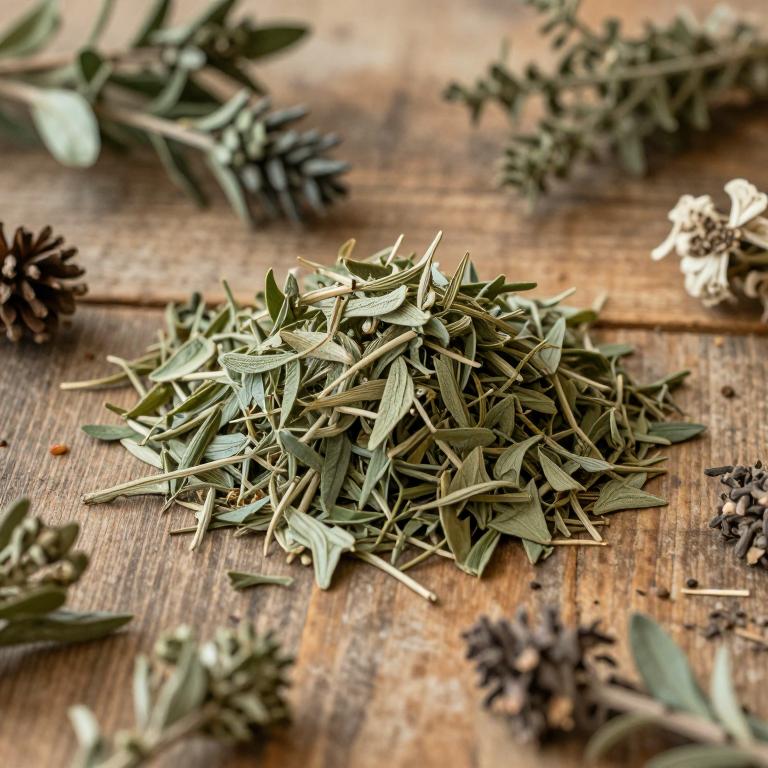
Names and Synonyms
Scientific Names
Accepted name
Swertia pubescensSources: Wikidata
Taxonomical Classification
This plant belongs to the kingdom Plantae and is classified under the phylum Streptophyta and the class Equisetopsida. Within the subclass Magnoliidae, it is organized under the order Gentianales and the family Gentianaceae. Finally, it is identified by the genus Swertia.
| Rank | Classification |
|---|---|
| Kingdom | Plantae |
| Phylum | Streptophyta |
| Class | Equisetopsida |
| Subclass | Magnoliidae |
| Order | Gentianales |
| Family | Gentianaceae |
| Genus | Swertia |
Sources: The World Checklist of Vascular Plants (WCVP)
Distribution
This plant, known scientifically as Swertia pubescens, exhibits a specific geographical distribution within Asia. Its presence is documented primarily within the regional boundaries of China. Specifically, the species is found inhabiting the South-Central portions of the country. This localized range suggests that the plant thrives in the particular ecological conditions found in that area. Consequently, its natural habitat is concentrated in these distinct South-Central Chinese territories.
| Region | Area |
|---|---|
| China | China South-Central |
Sources: The World Checklist of Vascular Plants (WCVP)
Botanical Identification
Ecology
The ecology of Swertia pubescens is defined by its specialized adaptation to high-altitude alpine and subalpine environments. This species thrives within a specific vertical distribution, occupying a montane to alpine niche that allows it to withstand the rigorous conditions of high-elevation ecosystems. Its habitat is characterized by a distinct elevational range, with a minimum occurrence documented at 2800 m AMSL. As the terrain ascends, the plant persists through a broad altitudinal gradient, reaching a mean elevation of 3450 m AMSL, which reflects its preference for the cool, often moist, and high-UV environments typical of these zones. The upper limit of its ecological tolerance is found at a maximum elevation of 4100 m AMSL, marking the threshold where extreme climatic factors and thin atmospheric conditions constrain its growth.
- Elevational range max:
- 4100 m AMSL
- Elevational range mean:
- 3450 m AMSL
- Elevational range min:
- 2800 m AMSL
Life history
The life history of Swertia pubescenta is characterized by a perennial lifecycle, allowing the plant to persist through multiple growing seasons within its natural habitats. As a perennial herb, it establishes a robust root system that facilitates long-term survival, enabling it to withstand environmental fluctuations. Throughout its life stages, the plant undergoes a cycle of vegetative growth followed by a reproductive phase, during which it produces characteristic small, yellowish flowers. The developmental duration can vary depending on environmental stability and resource availability, but its fundamental biological strategy relies on its ability to live beyond a single growing season to ensure consistent propagation and ecological presence.
- Lifecycle :
- annual
Morphology
The morphology of Swertia pubescens is characterized by its growth form as a non-woody herb. This herbaceous plant is self-supporting and does not exhibit climbing habits. In terms of stature, it typically reaches an average height of 0.6 m, though individual specimens can vary in size, ranging from a minimum height of 0.3 m to a maximum height of 0.9 m.
- Climber :
- self-supporting
- Growth form :
- herb
- Plant height max:
- 0.9 m
- Plant height mean:
- 0.6 m
- Plant height min:
- 0.3 m
- Woodiness :
- non-woody
Physiology
The physiological development of the foliage in Swertia pubescens is characterized by significant morphological variability in leaf dimensions, reflecting its adaptive growth patterns. The leaf length exhibits a broad range, with minimum measurements recorded at 2 cm, an average length of 4 cm, and a maximum extension reaching up to 6 cm. Complementing this longitudinal variance, the leaf width fluctuates between a minimum of 0.4 cm and a maximum of 1.5 cm, contributing to the specific surface area available for photosynthetic activity. These dimensional parameters suggest a dynamic leaf structure capable of adjusting its physical proportions within these specified limits to optimize nutrient uptake and environmental interaction.
- Leaf length max:
- 6 cm
- Leaf length mean:
- 4 cm
- Leaf length min:
- 2 cm
- Leaf width max:
- 1.5 cm
- Leaf width min:
- 0.4 cm
Sources: Global Inventory of Floras and Traits (GIFT)
Chemicals
Swertia pubescens has 3 reported phytochemicals identified across 0 scientific publications and several other databases. The most consistently reported chemicals include Gentiopicroside, Sweroside, Swertiamarin.
| Chemical | Supporting sources | Consensus |
|---|---|---|
| Gentiopicroside | 1 supporting sources | ★☆☆☆☆ |
| Sweroside | 1 supporting sources | ★☆☆☆☆ |
| Swertiamarin | 1 supporting sources | ★☆☆☆☆ |
Gentiopicroside
- Zhong yao cai = Zhongyaocai = Journal of Chinese medicinal materials
Sweroside
- Zhong yao cai = Zhongyaocai = Journal of Chinese medicinal materials
Swertiamarin
- Zhong yao cai = Zhongyaocai = Journal of Chinese medicinal materials