Swertia petiolata
Swertia petiolata · Accepted scientific name
Scientific literature: Very Sparse (5 studies) · ★☆☆☆☆
Swertia petiolata, scientifically known as Swertia petiolata, is a significant medicinal herb found in the Himalayan regions. Renowned for its diverse pharmacological properties, this plant is traditionally used in Ayurvedic medicine to treat fever, inflammation, and digestive issues. Its bioactive compounds offer promising potential for modern therapeutic applications.
- Family
- Gentianaceae
- Native range
- Asia-Temperate
- Parts used
- Rhizome
- Common names
- Not available
- Scientific synonyms
- Swertia Petiolata Var. Lahulensis · Swertia Lahulensis
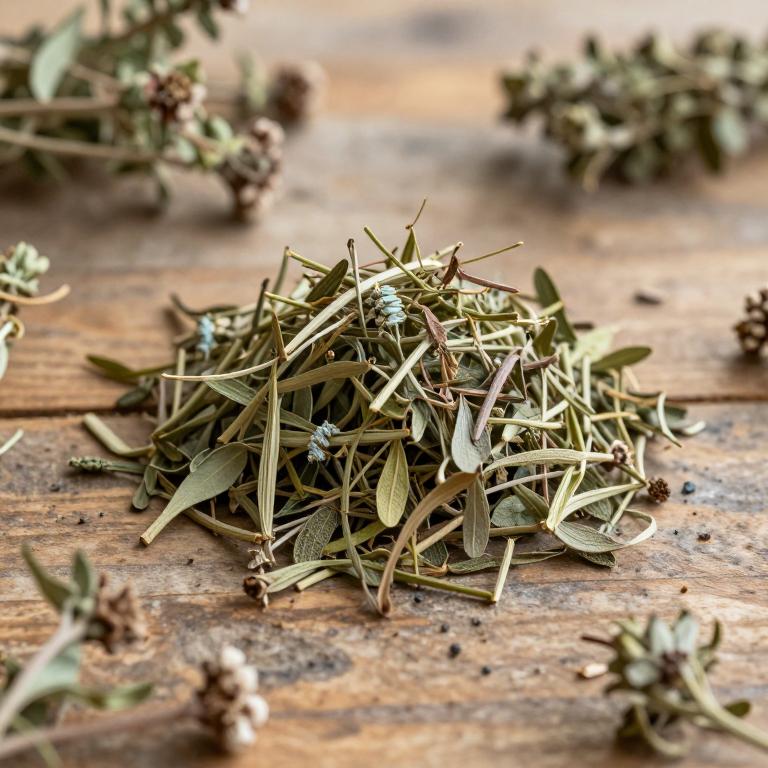
Names and Synonyms
Scientific Names
Accepted name
Swertia petiolataSynonyms
- Swertia petiolata var. lahulensis
- Swertia lahulensis
Sources: Wikidata
Taxonomical Classification
This plant belongs to the kingdom Plantae and the phylum Streptophyta. Within the class Equisetopsida and subclass Magnoliidae, it is categorized under the order Gentianales. Finally, it is a member of the family Gentianaceae and falls under the genus Swertia.
| Rank | Classification |
|---|---|
| Kingdom | Plantae |
| Phylum | Streptophyta |
| Class | Equisetopsida |
| Subclass | Magnoliidae |
| Order | Gentianales |
| Family | Gentianaceae |
| Genus | Swertia |
Sources: The World Checklist of Vascular Plants (WCVP)
Distribution
This plant, Swertia petiolata, exhibits a specific distribution across several mountainous regions. Within Western Asia, it can be found growing in the country of Afghanistan. Its presence extends into the Indian Subcontinent, where it is documented in Nepal. Additionally, the species is located within the territories of Pakistan. Finally, its geographical range includes the distinct ecological zone of the West Himalaya.
| Region | Area |
|---|---|
| Western Asia | Afghanistan |
| Indian Subcontinent | Nepal |
| Indian Subcontinent | Pakistan |
| Indian Subcontinent | West Himalaya |
Sources: The World Checklist of Vascular Plants (WCVP)
Botanical Identification
Ecology
The ecology of Swertia petiolata is defined by its specialization in high-altitude montane environments, where it thrives within specific altitudinal niches. This species is typically found at extreme elevations, characterized by a significant elevational range that reaches an impressive mean of 3900 m AMSL. Occupying these high-elevation zones, the plant is adapted to the unique microclimates of alpine or sub-alpine regions, where it must contend with lower temperatures, intense solar radiation, and thinner atmospheric conditions. Its distribution is closely tied to the specific geological and climatic stability found at these heights, making its habitat relatively niche and dependent on the specialized ecological conditions of high-mountain ecosystems.
- Elevational range mean:
- 3900 m AMSL
Life history
The life history of Swertia petiolata is characterized by its nature as a perennial plant, allowing it to persist through multiple growing seasons rather than completing its cycle within a single year. As a perennial species, it maintains a long-term presence in its natural habitat, often developing robust root systems that enable it to survive periods of dormancy and re-emerge to support successive reproductive cycles. This life cycle allows the plant to establish a stable population over time, as it can invest energy into both vegetative growth and the production of flowers and seeds across various years, depending on environmental conditions and resource availability.
- Lifecycle :
- perennial
Morphology
The morphology of Swertia petiolata is characterized by its growth form as a herb, presenting a non-woody structure throughout its vegetative development. It functions as an independent organism, exhibiting no parasitic tendencies toward host plants. In terms of its climbing habit, the plant is classified as a self-supporting climber, utilizing its structural arrangement to ascend without the need for external attachment or host dependency.
- Climber :
- self-supporting
- Growth form :
- herb
- Parasite :
- independent
- Woodiness :
- non-woody
Reproduction
The reproductive cycle of Swertia petiolata is characterized by a specific seasonal flowering window and the production of highly uniform, minute seeds. The flowering period typically commences in July and extends through September, although the timing can be variable within the broader seasonal context. Following successful pollination, the plant produces seeds that exhibit remarkable consistency in weight; the seed mass is measured at a mean, maximum, and minimum of 0.00027 g, indicating a lack of variance in the mass of individual seeds produced.
- Flowering time :
- Jul
- Flowering time :
- Sep
- Seed mass mean:
- 0.00027 g
Sources: Global Inventory of Floras and Traits (GIFT)
Plant Parts
Swertia petiolata has 1 reported plant parts identified across 1 scientific publications and several other databases that are studied for medicinal purposes. The most consistently reported plant part include rhizome.
| Plant part | Supporting sources | Consensus |
|---|---|---|
| Rhizome | 1 supporting sources | ★☆☆☆☆ |
Rhizome
- Veterinary parasitology
Chemicals
Swertia petiolata has 3 reported phytochemicals identified across 1 scientific publications and several other databases. The most consistently reported chemicals include 1,3-dihydroxy-5,8-dimethoxyxanthone, 1,8-dihydroxy-3,5-dimethoxyxanthone, 1-hydroxy-3,5-dimethoxyxanthone.
| Chemical | Supporting sources | Consensus |
|---|---|---|
| 1,3-dihydroxy-5,8-dimethoxyxanthone | 1 supporting sources | ★☆☆☆☆ |
| 1,8-dihydroxy-3,5-dimethoxyxanthone | 1 supporting sources | ★☆☆☆☆ |
| 1-hydroxy-3,5-dimethoxyxanthone | 1 supporting sources | ★☆☆☆☆ |
1,3-dihydroxy-5,8-dimethoxyxanthone
- Veterinary parasitology
1,8-dihydroxy-3,5-dimethoxyxanthone
- Veterinary parasitology
1-hydroxy-3,5-dimethoxyxanthone
- Veterinary parasitology
Conditions
Swertia petiolata has 1 reported investigations on conditions identified across 1 scientific publications and several other databases. The most consistently reported conditions include parasitic infections.
| Condition | Supporting sources | Consensus |
|---|---|---|
| Parasitic infections | 1 supporting sources | ★☆☆☆☆ |
Parasitic infections
- Veterinary parasitology
Preparations
Swertia petiolata has 3 reported preparations identified across 1 scientific publications and several other databases. The most consistently reported preparations include ethyl acetate extract, hexane extract, methane extract.
| Preparation | Supporting sources | Consensus |
|---|---|---|
| Ethyl acetate extract | 1 supporting sources | ★☆☆☆☆ |
| Hexane extract | 1 supporting sources | ★☆☆☆☆ |
| Methane extract | 1 supporting sources | ★☆☆☆☆ |
Ethyl acetate extract
- Veterinary parasitology
Hexane extract
- Veterinary parasitology
Methane extract
- Veterinary parasitology